

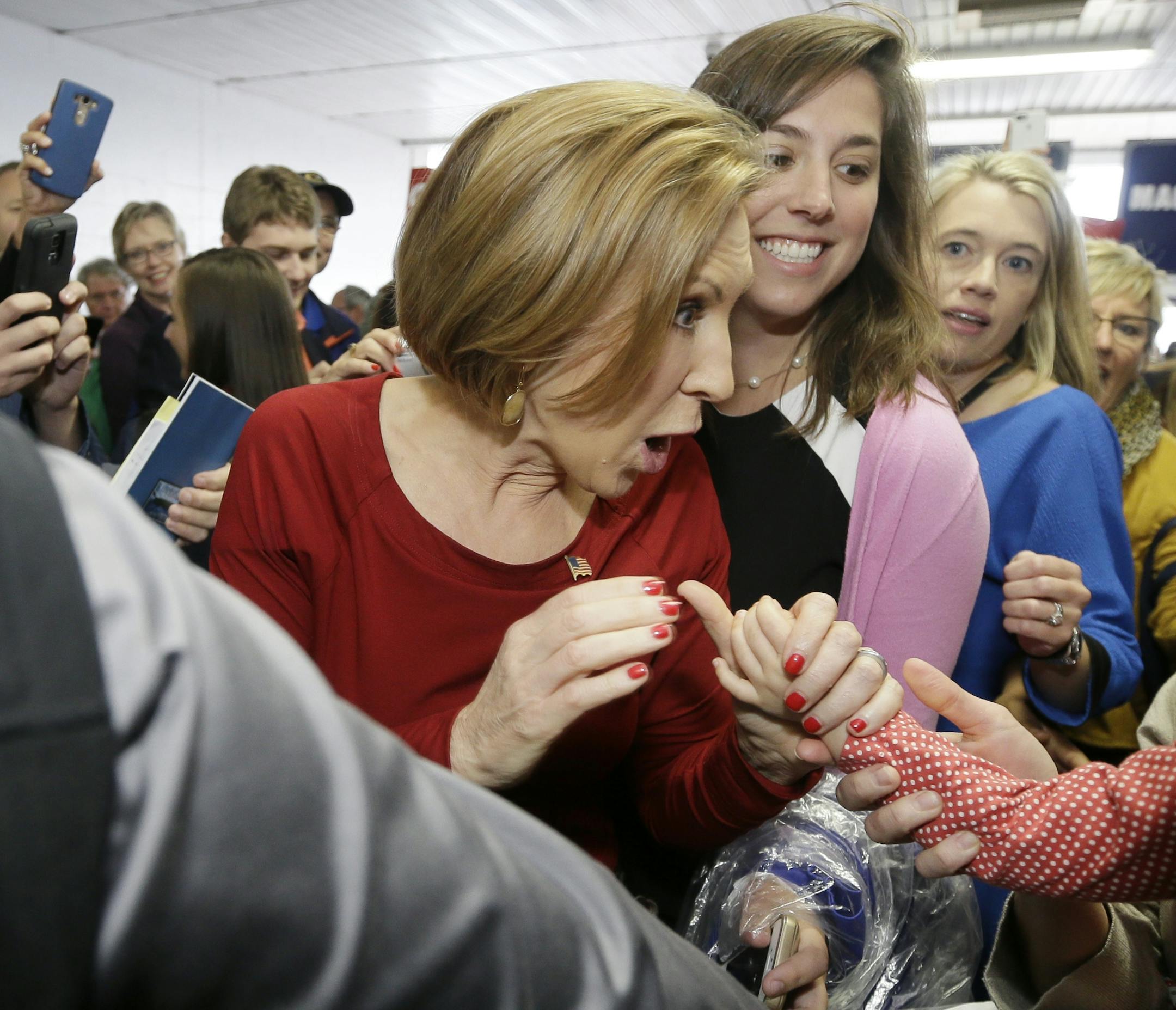
You can tell how well Carly Fiorina is doing by the sudden interest in attacking her. Conservative and liberal columnists are engaged in a raging battle over whether Fiorina, a Republican presidential candidate, slightly misdescribed the contents of a video about Planned Parenthood's late-term abortions, or brazenly made up horrid scenes to score points during the last debate. And, of course, there is a brisk columnist business in debating her tenure at Hewlett-Packard: Was she a blithe failure or a beleaguered CEO doing the best she could with what she had?
The best case for the prosecution is made by Jeffrey Sonnenfeld of Yale, while I think Bloomberg View's own Justin Fox makes the best case for the defense. Who's right?
They both make good points: Fox that HP was in a hard place, Sonnenfeld that Fiorina seems indisposed to admit to and learn from her failures. I find Fox more persuasive when he says that if Fiorina wasn't the best CEO in history, she certainly wasn't the worst, either.
Critiques of Fiorina's tenure seem excessively focused on the outcome. People are far too prone to confuse outcomes with good decision-making. Surgeons who do everything right sometimes see patients die anyway — and many doctors who fail to wash their hands send a happy, healthy patient home. The important thing is to know whether you followed a process that gives you the best odds, not what happened in an individual case. Too many of Fiorina's critics pointed out that the company lost shareholder value, then settled back with a satisfied QED.
I freely admit to the truth of all the prosecution exhibits. The merger she spearheaded with Compaq was costly and did not noticeably improve the company's competitive position. The company stock price certainly did fall a lot from the time she started there to the time she finished (something that unsurprisingly happens to a lot of CEOs before they're forced out). A lot of employees were laid off in the process of making a larger, less profitable company.
But Fox makes this point: The strategy she started paid off much better after she left, but she gets no credit for it. I'd like to make a different, if related point: Sometimes CEOs don't have any good options.
When Fiorina took over, HP made a fine server and a nice workstation and a very good printer. But it had become clear that the hardware business wasn't such a great place to be. That had been true for a while, but until the late 1990s, there was some hope that things would shake down to a few players, prices would stabilize, and things would get better. Hardware remains a brutal commodity business where it's hard to retain a competitive edge — unless you're Apple, which commands a premium price through elegant design and bundling of its software and hardware. Apple is profitable in the consumer segment; however, it has ceded most of the corporate market to others.
Did Fiorina fix this problem? Not really. But it's far from clear that anyone else could have fixed it, given that she presided over a difficult business model during the Great Tech Meltdown and the recession that followed. Her idea to merge with Compaq, to give the company enough scale to take on IBM in the corporate market, didn't work out as hoped, but while that's obvious in hindsight, it was undoubtedly harder to see at the time.


