

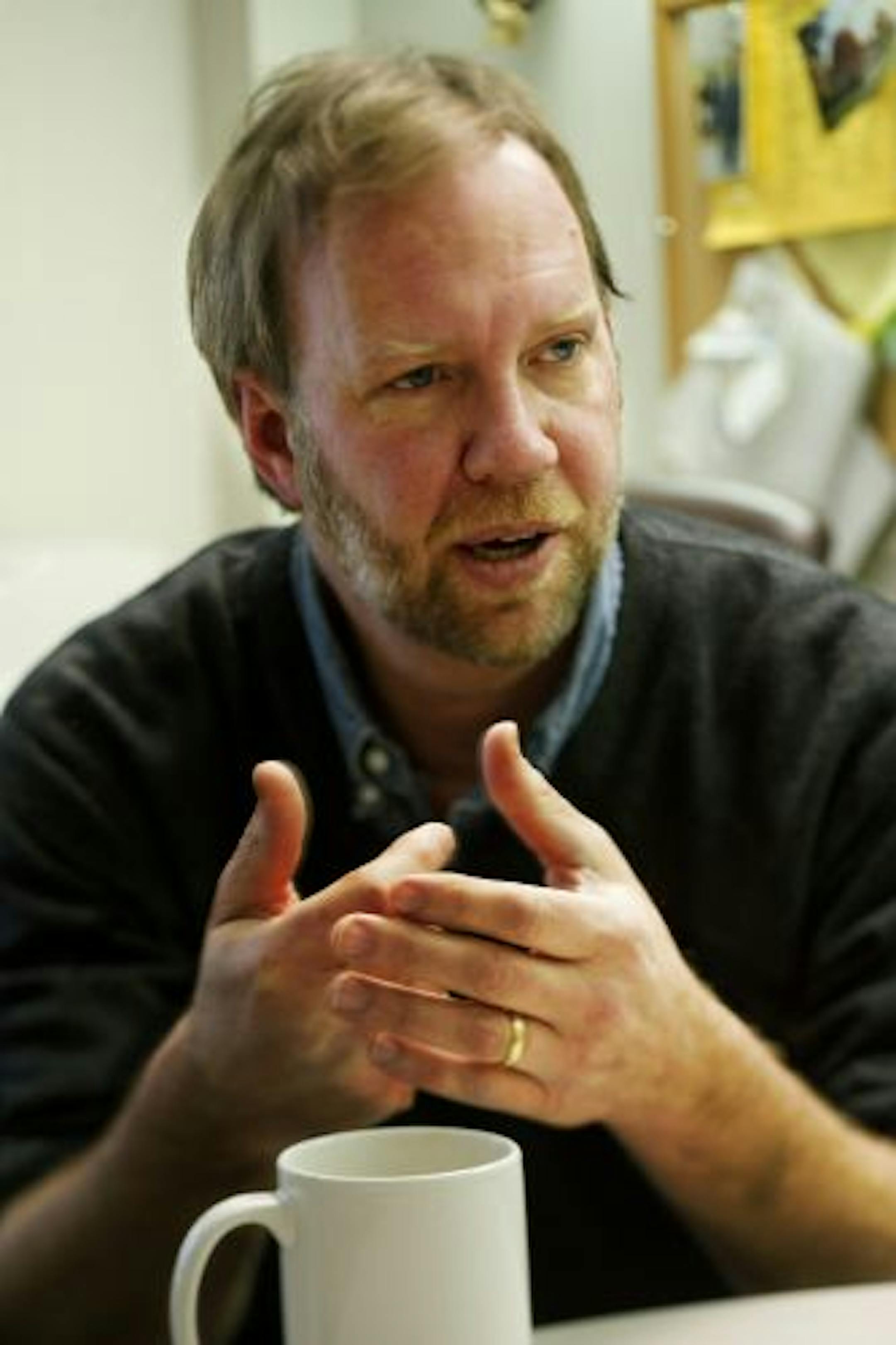
With an unassuming, thoughtful manner, Carl Elliott hardly looks like a rabble-rouser.
But the University of Minnesota bioethics professor is an outspoken critic of the pervasive relationships between pharmaceutical companies and doctors, academics and students. It's a deeply entrenched alliance he documents in his new book, "White Coat, Black Hat, Adventures on the Dark Side of Medicine" (Beacon Press).
Each chapter is devoted to a different constituency in what Elliott sees as a broad-based and highly effective con job perpetuated by Big Pharma to influence drug-prescribing patterns. These include professional "guinea pigs" -- wily patients who enroll in clinical studies for cash -- ghostwriters who anonymously pen positive articles about drugs using someone else's name and other ethically challenged players. Big money is involved at every turn.
A native South Carolinian who retains a slight drawl from his home state, Elliott is a non-practicing physician with a doctorate in philosophy. Beyond penning four books, he's contributed articles to national publications including the New Yorker, the Atlantic and Mother Jones.
Elliott is not afraid to criticize his own employer and colleagues. Recently, he and seven others in the U's Bioethics Department sent a letter to the Board of Regents calling for an investigation into the death of Dan Markingson, a schizophrenic who committed suicide while enrolled in a drug study at the university.
The letter questions whether Markingson was fit to consent to research, and whether financial incentives from drugmaker AstraZeneca, which funded the study, presented a conflict of interest for the researchers.
QHow did you get interested in the relationship between business and medicine?
AI have a medical degree, my brother's a doctor, my father's a doctor, I grew up around drug reps and pharmaceutical stuff. I never liked it, but I wasn't terribly concerned. What got me interested was finding out that bioethicists were working as consultants for pharmaceutical companies. How can ethicists justify this? On the one hand they're saying it's a conflict of interest for doctors to take money from the pharmaceutical industry, but it's fine for me.



