
Canada's ports win as container ships divert on labor concern

Labor unrest on the U.S.'s West Coast has sent East Asian ships north.

Bloomberg News
August 28, 2014 at 1:39AM
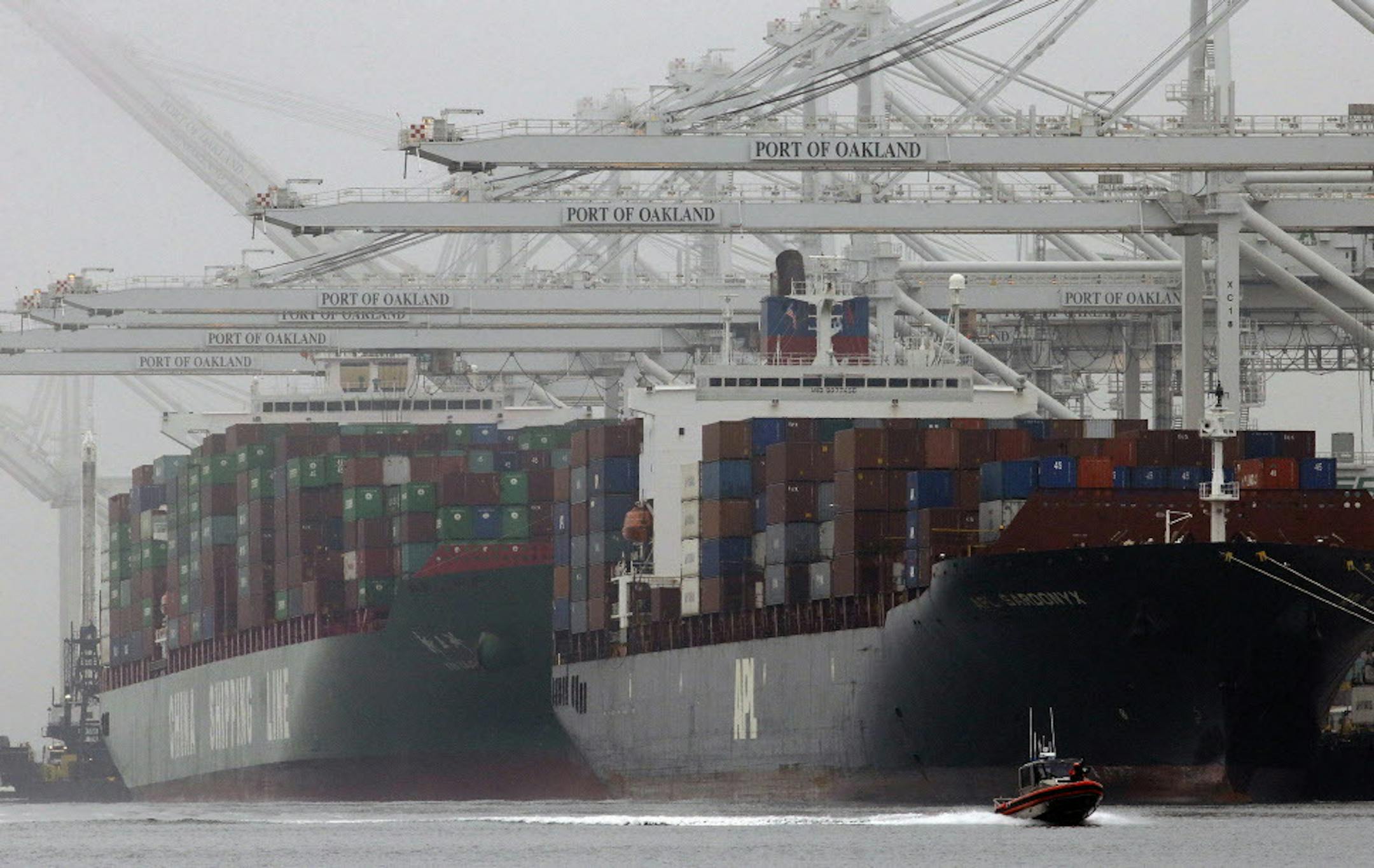
FILE - In this Oct. 23, 2013, file photo, container ships wait to be off-loaded at the Port of Oakland in Oakland, Calif. West Coast dockworkers and their employers say they have reached a tentative agreement on the difficult issue of health care, a major hurdle in contract negotiations at the ports that are vital to U.S. trade. In a joint statement Tuesday, Aug. 26, 2014 announcing the tentative deal, the International Longshore and Warehouse Union and an association representing shipping lines
With cargo traffic heading north to avoid West Coast tension, Canada is coming out ahead, specifically at its Prince Rupert port. (The Minnesota Star Tribune)

VANCOUVER – Prince Rupert, a remote port luring tourists with the slogan "Where Canada's Wilderness Begins," may want to consider a new motto: "Asia's Gateway to Chicago."

Container ships sailing across the northern Pacific are carrying more cargo and are setting course for British Columbia to avoid delays from a possible strike by U.S. West Coast longshoremen. Traffic in Prince Rupert soared 49 percent in July from a year earlier, according to data compiled by Bloomberg Intelligence, while volume dropped 19 percent in Seattle, its nearest major U.S. rival.

Canadian ports are gaining an advantage over their U.S. rivals amid an economic recovery that's increasing container volumes from East Asia. While U.S. West Coast ports are mired in a labor dispute and congestion hobbles local railways, Prince Rupert is winning customers with its shorter sailing times from China and efficient infrastructure that can whisk freight to the U.S. Midwest and beyond.

"If people are using the Canadian ports now out of concern for a slowdown, and they like what they see and they like the processing times and the experience, they'll continue to funnel some of their traffic that way," said Emma Griffith, a director at Fitch Ratings in New York who covers air and sea ports.

One of the companies best positioned to benefit from the added traffic is Canadian National Railway Co. Its shares, which were little changed at $76.94 Canadian in Toronto on Wednesday, have climbed 27 percent this year.

The Montreal-based company has exclusive connections to Prince Rupert and its lines help make the port a linchpin in the quickest sea-and-land route linking East Asia and the U.S. Midwest, according to the Prince Rupert Port Authority.

Container traffic is rising on both sides of the continent. The volume at the biggest U.S. and Canadian ports rose 7.2 percent from a year earlier in May, the latest month for which industrywide data has been published, according to Bloomberg Intelligence. That outpaced April's 5.9 percent gain.

The container volume indicates there's strength in the U.S. economic rebound, according to Tony Hatch, a New York-based transportation analyst at ABH Consulting.
"The underlying demand is pretty strong, and this suggests that the economy is going well," Hatch said in a phone interview.

Prince Rupert may be uniquely positioned to benefit from the situation. The town, which lies ice-free 462 miles northwest of Vancouver, is as many as 68 hours closer to Shanghai in sailing time than is Los Angeles, according to the Prince Rupert Port Authority.

Including rail times, cargo transiting from Shanghai through Prince Rupert would reach Chicago two days quicker than if the ships called at Oakland or Seattle-Tacoma, and three quicker than if they unloaded in Los Angeles, according to Jean-Paul Rodrigue, a professor at Hofstra University's department of global studies and geography.

Prince Rupert, a town of 15,000 that has attracted visitors with summer cruises and grizzly bear tours, is the proposed site for at least two liquefied natural gas export terminals. In 2007 the Canadian government, Canadian National and Maher Terminals of Elizabeth, N.J., opened a dedicated container terminal, and activity this year is booming.

One of Prince Rupert's advantages is that inbound containers can be transferred directly to trains rather than trucks that head to a distribution center, which is what happens at other West Coast ports, according to Kris Schumacher, a spokesman for the port authority.

Furniture to clothing

This kind of traffic, which uses different modes of transportation, is known within the industry as intermodal freight, and it's booming for Canadian National. Its intermodal revenue jumped 17 percent to $716 million Canadian ($659 million U.S.) in the second quarter.

Inbound shipping containers landing at Prince Rupert include a range of goods from furniture to clothing and automotive parts, Schumacher said. Lumber and logs dominate the terminal's outbound shipments, he said.

Volume at Prince Rupert has been increasing for five months, according to the data compiled by Bloomberg Intelligence. In July, Prince Rupert handled 64,355 standard containers, or 20-foot equivalent units (TEUs), a record according to the data.

The port is becoming a victim of its own success. Earlier this month, the time that containers sat on the dock waiting to be loaded onto trains rose to about 10 days, compared with about two days under normal conditions, Schumacher said.

In the U.S., there's no indication when new contracts will be signed for workers at 29 ports from Washington state to California. About 20,000 dockworkers represented by the International Longshore and Warehouse Union have been without a contract since early July. The union and the maritime association are negotiating over work rules, salaries and health care benefits.

Easing bottlenecks

Another factor boosting demand for Canadian port capacity has been congestion on rail lines east of Seattle operated by Burlington Northern Santa Fe, said Fadi Chamoun, a Toronto-based analyst at Bank of Montreal in Toronto.

BNSF, owned by Berkshire Hathaway Inc., unveiled plans in February to invest $5 billion this year — including $2.3 billion for its rail network and equipment such as locomotives — to ease bottlenecks.

"BNSF has been struggling for a year — it will probably take them another year to get out of the woods," Chamoun said by phone.

BNSF's customers will see improvements in the railway's speed and on-time performance as capital projects proceed, said Amy Casas, a Fort Worth, Texas-based spokeswoman for BNSF.

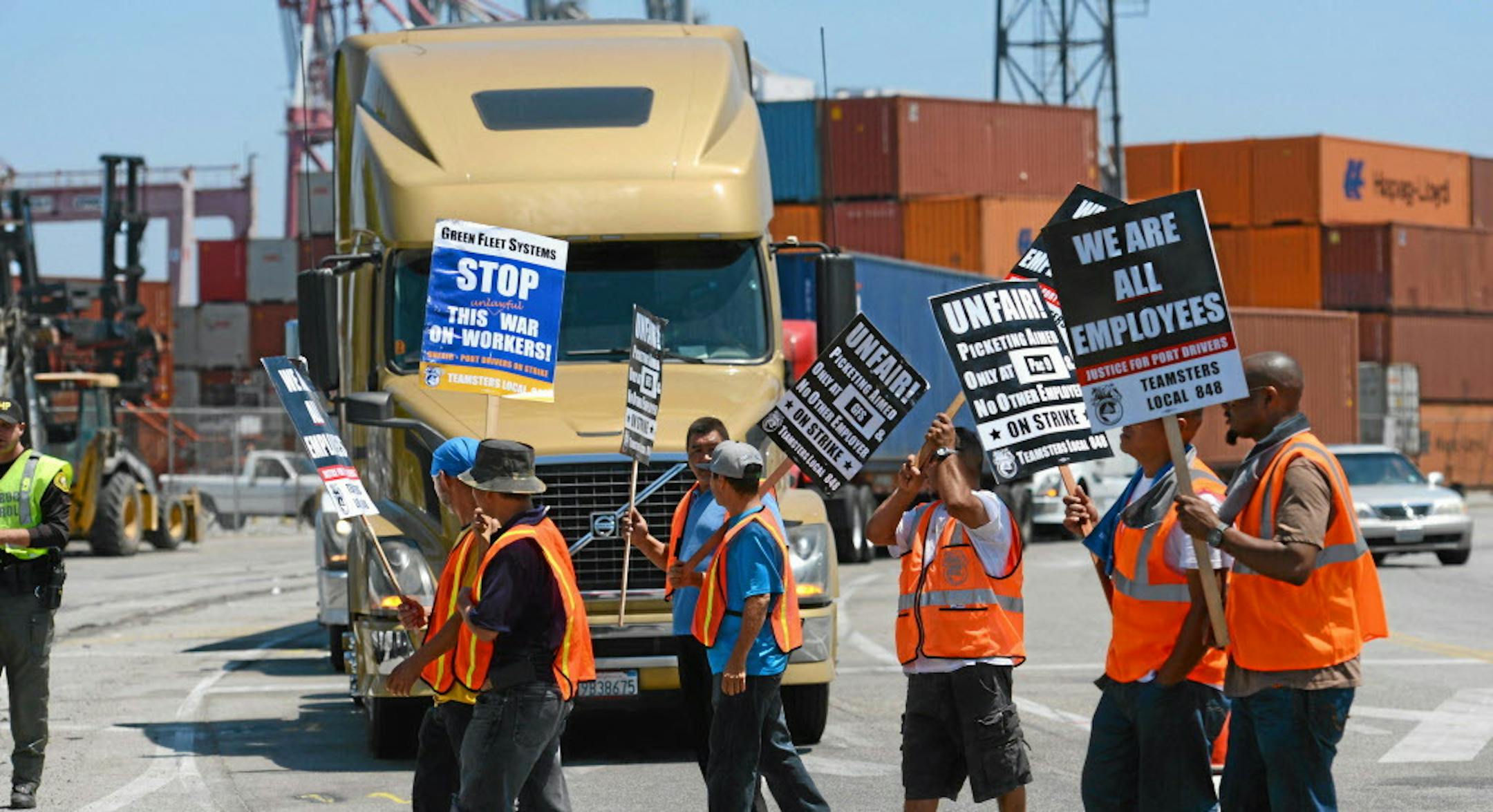
FILE - This July 8, 2014 file photo shows members of the Teamsters Union picketing at the Port of Long Beach, Calif., in support of a strike by port truck drivers. Negotiators seeking to avoid labor unrest at West Coast ports made significant progress with their announcement of a tentative deal on health care benefits, Tuesday, Aug. 26, 2014, a knotty issue that had tied up contract talks for months. (AP Photo/The Daily Breeze, Stephen Carr)
Members of the Teamsters union picketed last month at the Port of Long Beach, Calif., in support of a strike by port truck drivers. Labor unrest at West Coast ports has caused East Asian ships to head north into Canada. (The Minnesota Star Tribune)
about the writers

about the writers

Christopher Donville

Frederic Tomesco

More from Business

See More
card image
card image
