

FORT CHIPEWYAN, ALBERTA – In the Cree language, the word "Athabasca" means "a place where grass is everywhere." Here in northern Alberta, the Athabasca River slices through forests of spruce and birch before spilling into a vast freshwater delta and Lake Athabasca.
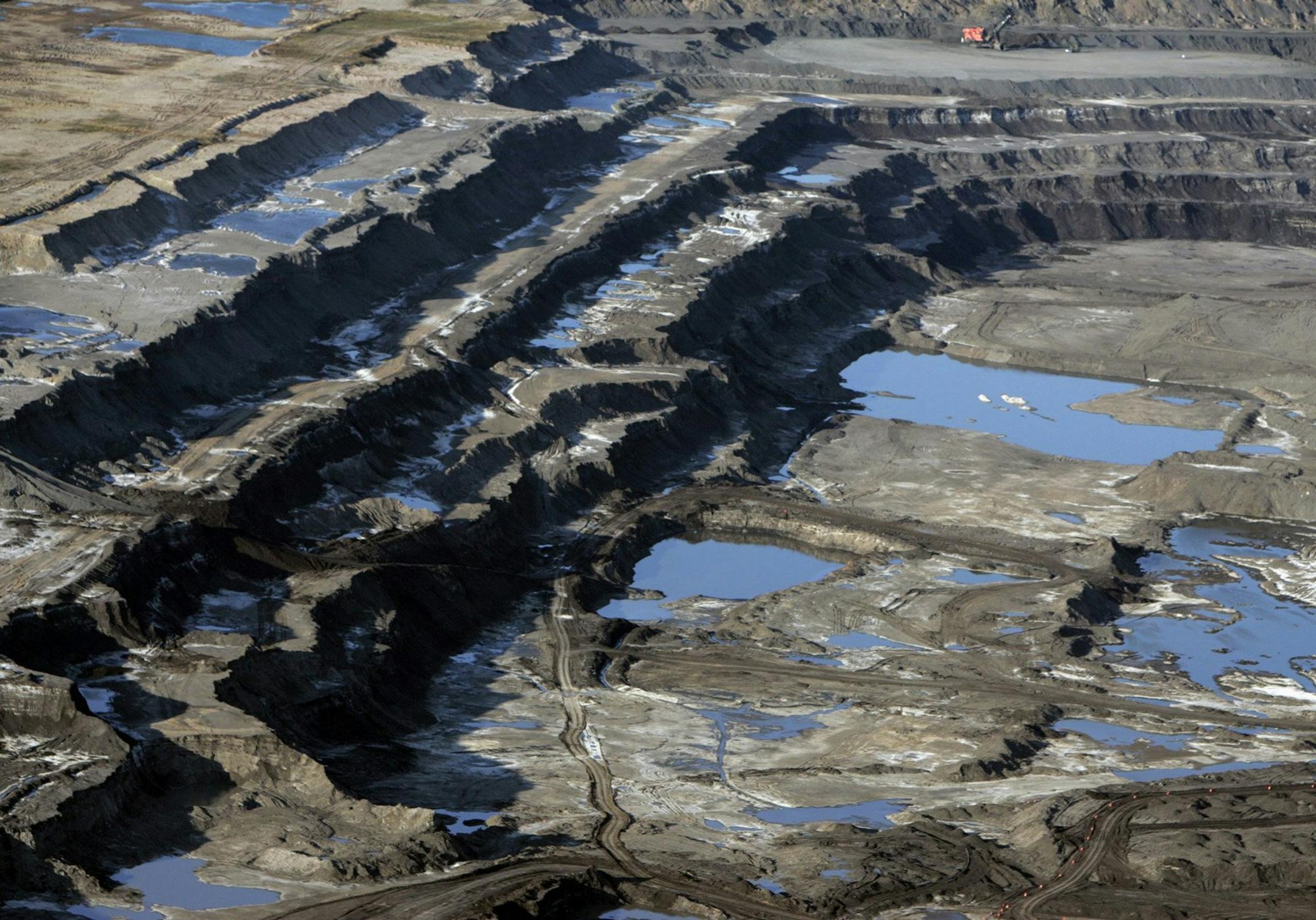
But 100 miles upstream, the boreal forest has been peeled back by enormous strip mines, where massive shovels pick up 100 tons of earth at a time and dump it into yellow trucks as big as houses.
The tarry bitumen that is extracted is eventually shipped to refineries, many in the United States, to be processed into gasoline, diesel and other fuels. But the leftover polluted slurry remains in miles-long impoundments, some high above the banks of the river. Air cannons sound periodically to keep migratory birds from landing on the toxic ponds.
Oil sands production, as the procedure is called, is booming in northeastern Alberta. And it is expected to grow far larger if the Obama administration issues a federal permit for the Keystone XL pipeline from the province.
Debate in the United States over the pipeline has largely focused on whether the oil sands would contribute to climate change, or that oil might spill along the pipeline route. But in northeastern Alberta, the effect of the mining plays out in more complicated ways.
Oil sands are exploited by injecting high-pressure steam into the earth or by strip mining to extract the sticky bitumen, which is then washed away from clay and sand, swiftly heated and diluted with chemicals before being shipped to refineries.
Economic growth, at a cost
The petroleum industry has funneled billions of dollars into Canada's national, provincial and local economies and employs thousands of people in places with few other jobs. But the oil sands boom may also be polluting the air and water, and is stoking fear that it is damaging the health of those in its arc.
"From everything I hear from the indigenous peoples, their thinking seems to be 'It's a choice between whether we starve to death or are poisoned to death,' " said Dr. John O'Connor, a general practitioner who has worked here since 1993.


