

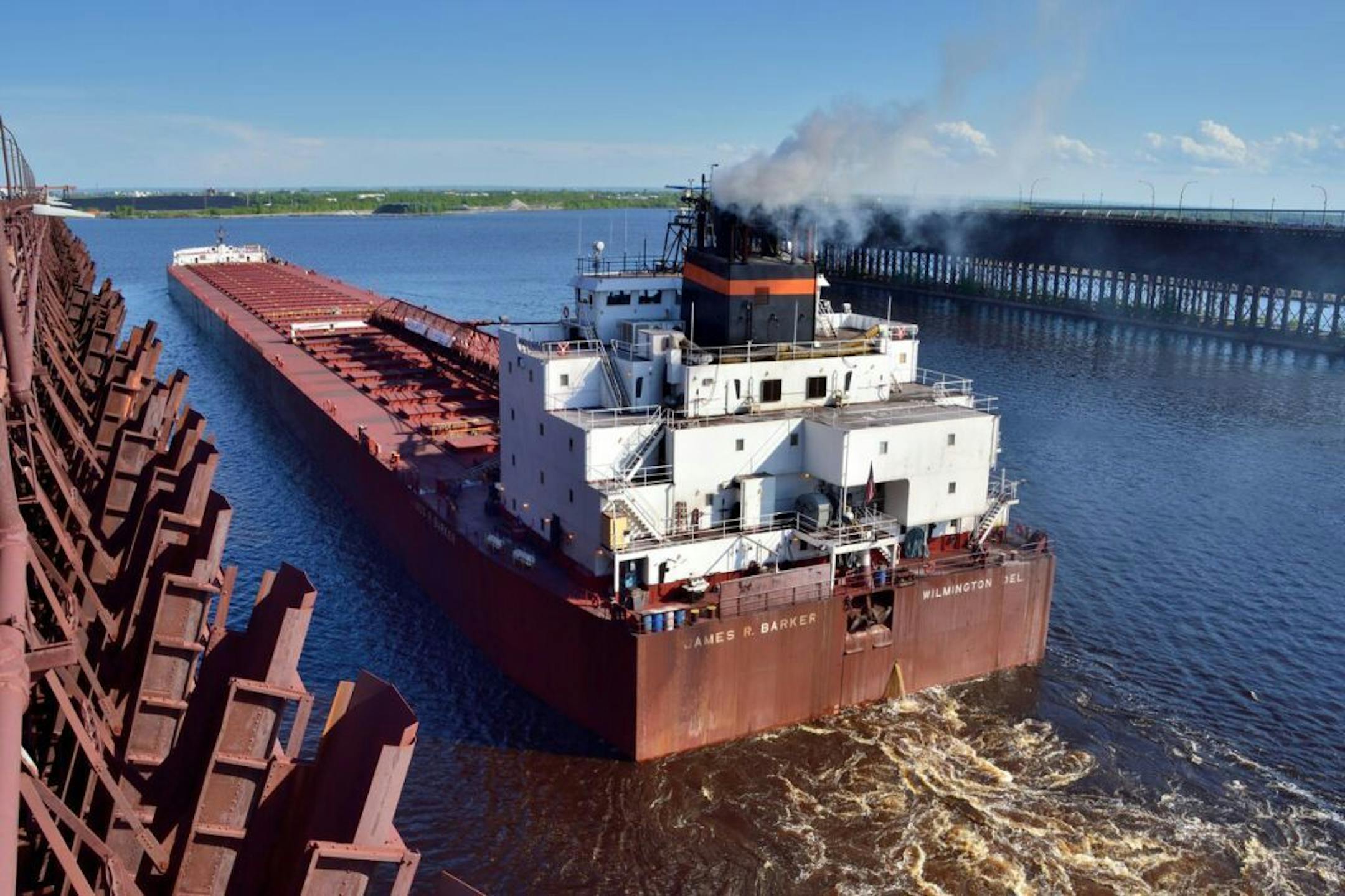
Iron ore shipments traveling from Minnesota across the Great Lakes-St. Lawrence Seaway are at the highest level they have been in a decade, officials said.
The biggest contributors are Canada's largest ship operator, Algoma Central Corp., and other Canadian firms, said officials from the Duluth Port Authority and the international Chamber of Marine Commerce. They not only carried ore shipments to steel mills inside Canada, but also transferred pellets to larger international ships at Canadian Ports on the seaway. Those ships ultimately transported the ore from Minnesota's Iron Range to China, Japan and other overseas destinations.
"We've seen strong volumes in many of our cargoes, but particularly iron-ore pellet exports from Minnesota that our ships are carrying to the Port of Quebec for transshipment overseas," said Gregg Ruhl, Algoma's chief operating officer, in a statement. "We expect those exports to continue in the fourth quarter. Our ships are fully booked for the rest of the 2017 shipping season."
Through September, overall iron-ore shipments out of Duluth jumped 36 percent to 13.7 million tons over the same period in 2016, according to the Duluth Seaway Port Authority. Ore shipments out of Minnesota's Two Harbors and Silver Bay ports, as well as from Superior, Wis., also saw significant increases through September.
Increased iron-pellet shipments are "dominating waterborne commerce in the Port of Duluth-Superior this shipping season," said Vanta Coda, executive director of the Duluth Seaway Port Authority.
This year's shipments have outpaced the port's five-year average by more than 20 percent, with overseas shipments delivering the "lion's share of the rally," Coda said.
At the same time, the Canadian business has increased, U.S. steel mills along the Great Lakes also ratcheted orders for iron ore, the key ingredient to steelmaking, said Port Authority spokeswoman Adele Yorde. "This year, it's just been bucket loads of iron ore" in demand, she said.
The surge in Minnesota ore cargo helped boost total seaway shipments by 10 percent from a year ago.


