

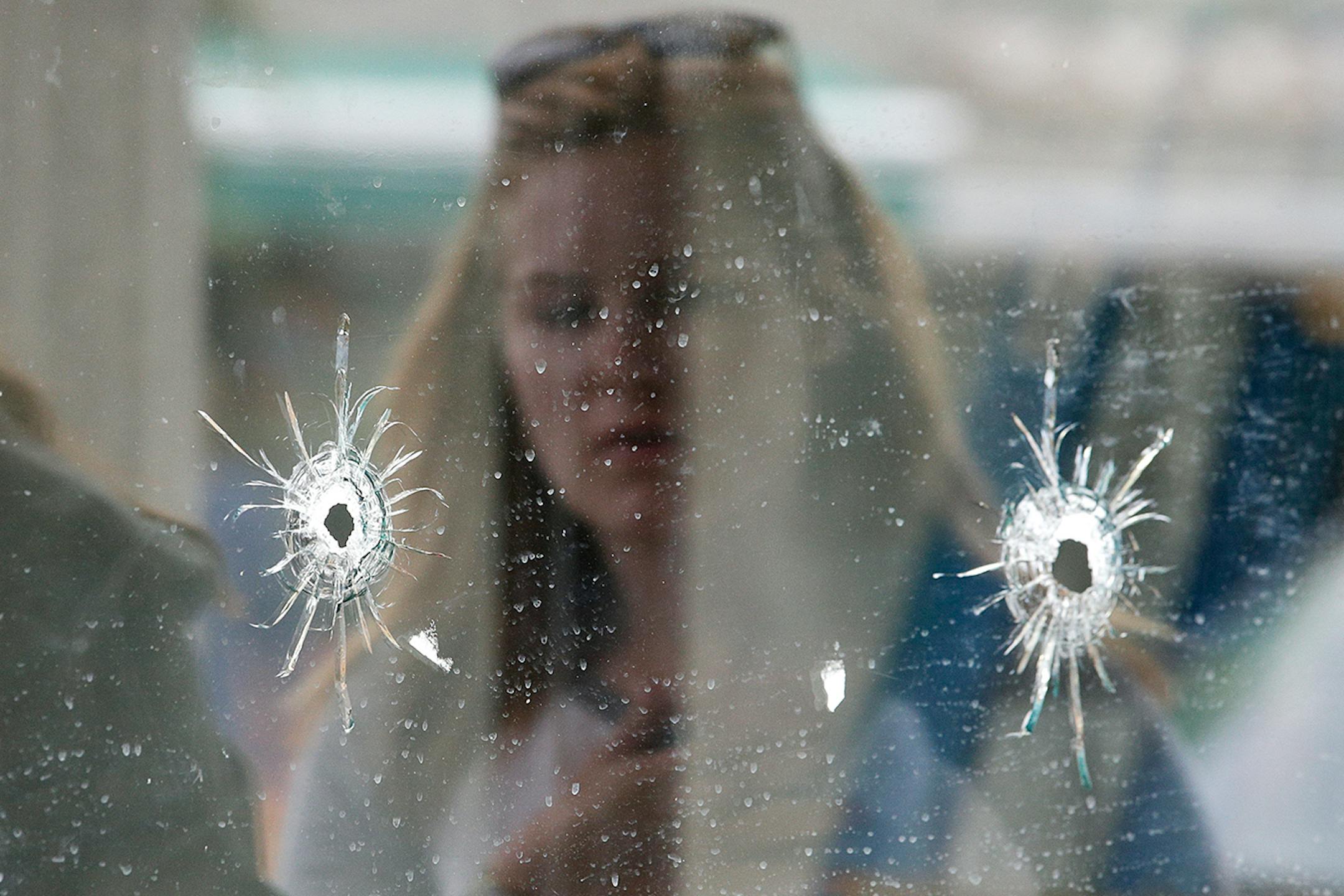
The massacre Elliot Rodger perpetrated on and around the University of California, Santa Barbara last Friday night, in which he killed six people, wounded 13 others and then killed himself, is horrible both for what makes it unique and what makes it familiar. Young men kill their fellow citizens and students with unnerving regularity in the United States. But Rodger left behind a detailed and clear-headed autobiography detailing his intense rage at women, the men with whom they chose to have sex and relationships and his own lack of sexual and romantic experience.
The intense parsing of Rodger's manifesto and discussions of the Internet subcultures he had contact with make it easy to forget that he was only the second person to put University of California at Santa Barbara in headlines this year. The school became the subject of national debate when students there asked that UCSB professors be required to provide detailed explanations on their syllabuses of which potentially traumatic material their pupils might encounter during the semester.
It may seem odd to link a mass killing and what seems like a rehashing of old debates about campus culture, freedom of expression and intense political sensitivity. But these two very different events at UCSB speak to different aspects of a deeply broken culture.
UCSB students are hardly alone in requesting trigger warnings. But the university became a particularly prominent example after Mireille Miller-Young, an associate professor in UCSB's feminist studies department, allegedly clashed with pro-life protesters on campus. Miller-Young, who was pregnant at the time, said that seeing the protest had prompted the sort of traumatic response UCSB students hoped to avoid in the classroom with the help of trigger warnings.
It is easy to mock college students who seek trigger warnings on their syllabuses, or a professor who uses the idea of "triggering" to excuse behavior that is unbefitting someone responsible for educating and uplifting young people. Over the past couple of months, as this debate has played out in any number of national publications, my thinking on trigger warnings has shifted somewhat. I have come to see requests for trigger warnings as an important sign of despair, an indicator that something is broken in the environment from which the requests come.
Online, trigger warnings act as an acknowledgment that much of the wilderness of the Internet is untamable. If the conversations that take place in many comments sections and forums cannot be restored to civility, trigger warnings are an attempt to carve hamlets out of these dark forests, providing places where weary pioneers can at least be forewarned of the terms of discussion.
On college campuses, it seems no mistake that calls for trigger warnings have sprung up at the same time that the country is trying to reckon with the failures of many colleges and universities to create safe environments for their students. In late April, the Obama administration released a major report on sexual assault at college campuses and the way institutions of higher learning respond to allegations that one student has attacked another. The Education Department has cited some schools, including Tufts University, for failing to protect their students' civil rights.
If campuses are dangerous, unpredictable places, students' attempts to make their classrooms an environment where they know what to expect may be less an expression of over-sensitivity than a white flag of surrender. Calls for trigger warnings may be less a sign that political correctness has taken over the academy than a sign that colleges and universities are failing to live up to their basic obligations to keep their students safe.


