
Cambria shifts quartz processing from Canada to Dakota County

The $80 million project, in a time of slumping sales and higher tariffs, will save the Le Sueur-based countertop company millions of dollars annually.

The Minnesota Star Tribune
August 18, 2025 at 11:00AM
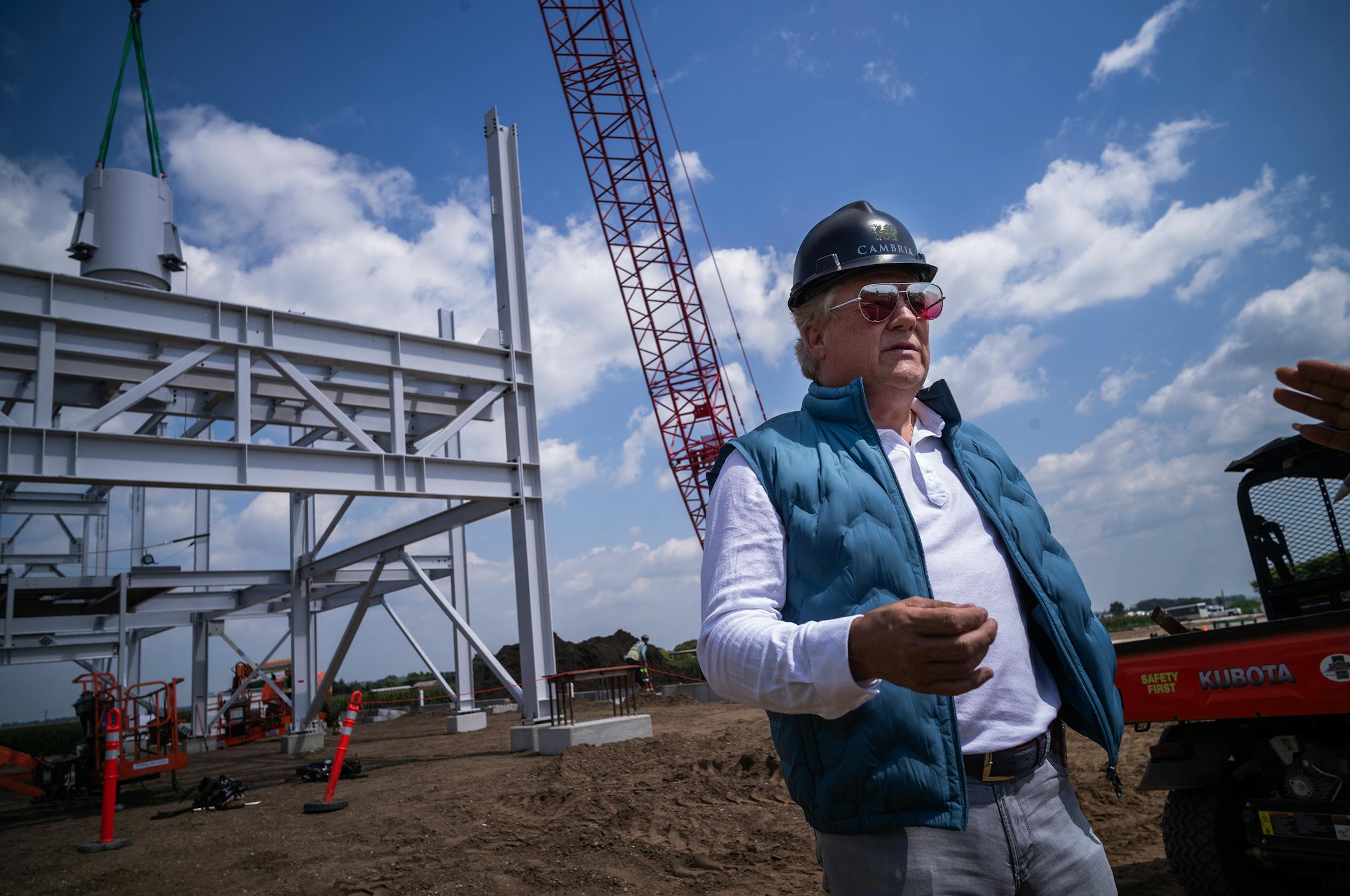
CEO Marty Davis of Cambria speaks on the job site of the company's new $80 million quartz processing and rail center in Randolph. (Richard Tsong-Taatarii/The Minnesota Star Tribune)

The Cambria countertop company is building an $80 million quartz processing plant and rail center in Dakota County and will move some operations from Canada to the U.S.

Tucked in an industrial park near cornfields and dairy farms in Randolph, the new 10-story quartz crushing plant will employ 50 to 70 permanent workers, the company said.

The move will consolidate processing operations and save the company millions at a time when, like other companies in the home improvement industry, sales are down and tariff costs are up. Companies large and small are rethinking supply chain considerations against the backdrop of President Donald Trump’s aggressive trade moves.

CEO Marty Davis, a Republican donor and Trump supporter, said Cambria will not lower tariff costs by reshoring quartz processing, but he does expect to gain more control over future decisions and ease “challenging” delays.

“This is going to optimize our cost to the tune of several million a year and improve reliability,” Davis said while conducting a tour of the site as Greystone Construction crews poured concrete for the loading docks.

The family-owned company bought the 36-acre property in March. Construction of the 61,000-square-foot plant began in May and will require about 300 workers to complete it.
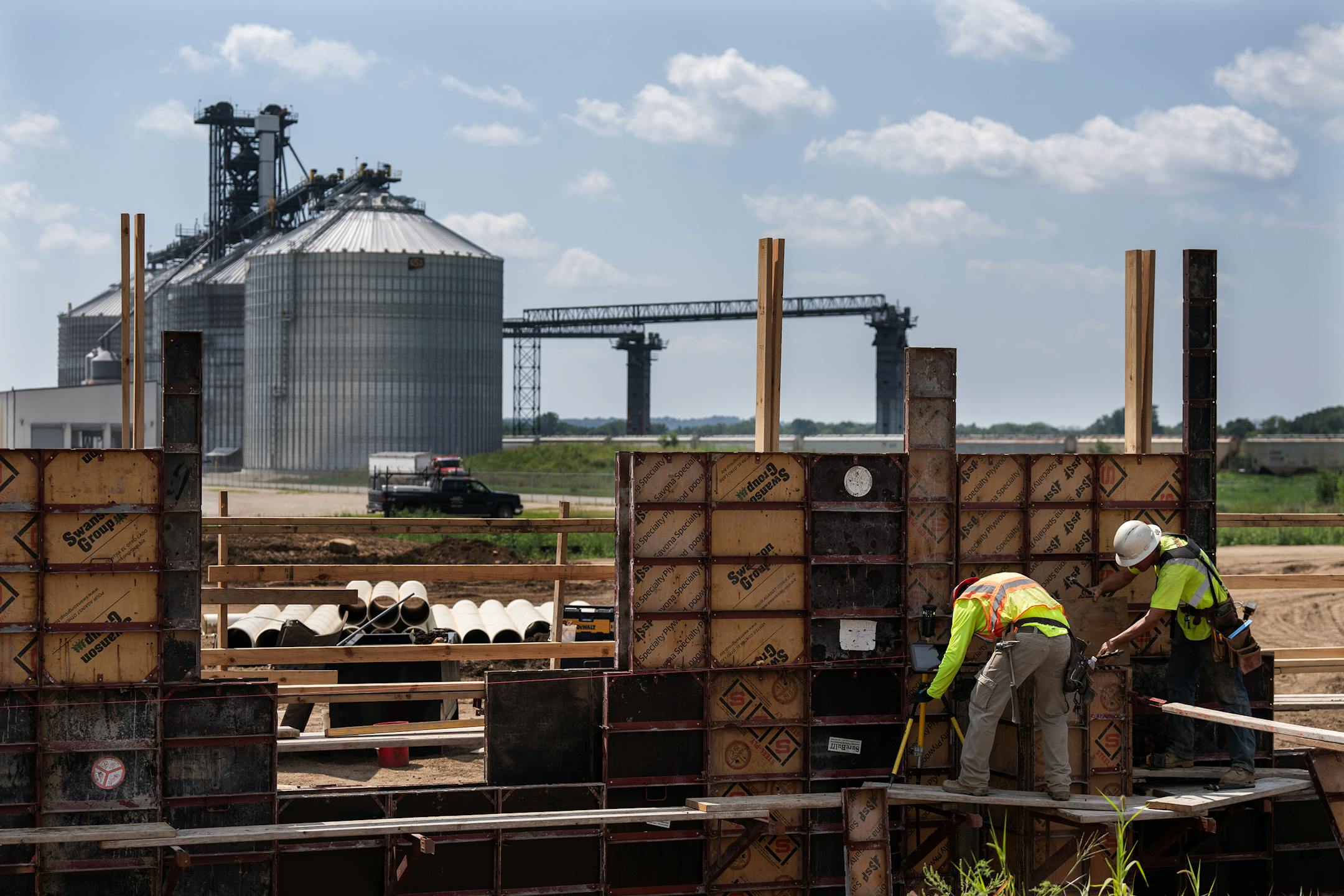
Construction crews work on the job site of Cambria's new quartz processing and rail center in Randolph. (Richard Tsong-Taatarii/The Minnesota Star Tribune)

Restructuring comes at tough time for industry

During the pandemic, people binged on home improvements, stoking the coffers of Le Sueur-based Cambria and Plymouth-based Tile Shop.

Cambria was on a roll. It has bought three quartz mines in Canada since 2018. In 2022, it spent $100 million to expand the slab production plant in Le Sueur.
Then the home improvement industry started to tank as home sales stalled and sticky inflation led people to pull back on projects that weren’t essential.

The industry overall has lost 20% in sales since then, Davis said. He declined to disclose overall revenue currently but said it is still more than $500 million even though sales are down 3%. Employee count also is down: 1,800 now, compared with 1,900 in 2022.

The Tile Shop’s sales were down 3% in the spring, with profits falling as well, it reported last week. CEO Cabell Lolmaugh said the company cut one-third of its corporate workforce and closed two distribution centers as it restructures.

Both companies are dealing with higher tariff costs at the same time the industry is dealing with historically low housing turnover.

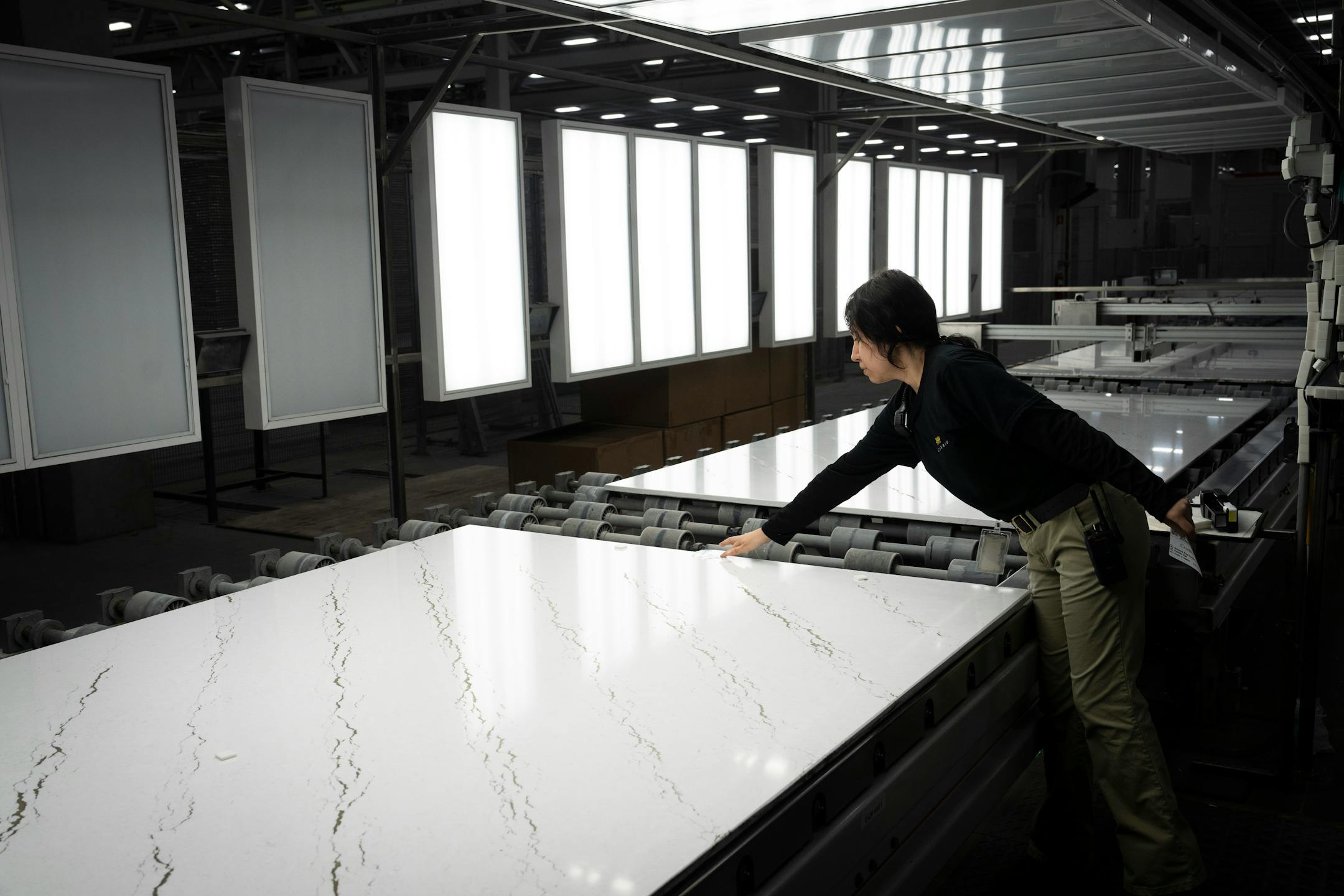
Alicia Rodriguez, a Cambria employee, makes sure each slab is level at Cambria's facility in Le Sueur on Nov. 7, 2022. (Renée Jones Schneider/The Minnesota Star Tribune)

While Cambria is moving most of its processing to the Randolph site, it still is importing the quartz from its mines in Quebec.

Trump raised tariffs on Canadian goods and materials to 25% earlier this year and again on Aug. 1 to 35%.

“We are going to pay a higher tariff, but we are not complaining about it,” Davis said. “We estimate it could cost us a few million a year.”

Cambria has worked with both Trump administrations to help alleviate the alleged dumping of underpriced quartz and other raw materials from China and India. The Department of Commerce is currently investigating some companies trying to sidestep the tariffs in place.

In addition to the tariffs and the sales challenges, fresh competition has crept in as a sweep of international firms set up quartz slab production sites across the United States.

Cambria, though, will continue to invest in the company and be ready to grow.

“This is an evolution for the company,” Davis said. “We will be vertically integrated.”

Cambria joins other companies in Randolph

At the Great Western Industrial Park in Randolph, Cambria joins a growing enterprise with tenants such as Nutrien, Puris, Envirotech, CHS, Central Farm Service and an auto auction house.

“It’s going to be a good asset to the community,” said Garlan Dubbels, a member of the Randolph Township Board that voted unanimously to approve Cambria’s building permits.

The company has a good reputation for paying well and maintaining properties, he said.

The Randolph site comes with an underused Union Pacific rail line that for years mainly serviced a malt factory and breweries in nearby Cannon Falls.

That was a key part of Cambria’s plan, though. Cambria plans to invest $40 million over 20 years on rail services.

“We will be railing our [mined quartz] product directly from Quebec to here in 2-inch lump material,” said Joel Peters, the Cambria real estate vice president who found the site that sits 36 miles south of St. Paul.

Once in Randolph, lumps of the extra-hard quartz will be crushed and sorted into sizes ranging from sand to salt pellets.

Cambria then plans to use nearly 70 rail cars to transport the quartz 60 miles west to Cambria’s factory in Le Sueur, where the granules will be blended and baked into stone slabs that stretch longer than a bus.

This is the first time the 24-year-old countertop maker has used railroads to transport raw materials. Until now, it has relied on ships on the Great Lakes and trucks, “which gets expensive,” Davis said.

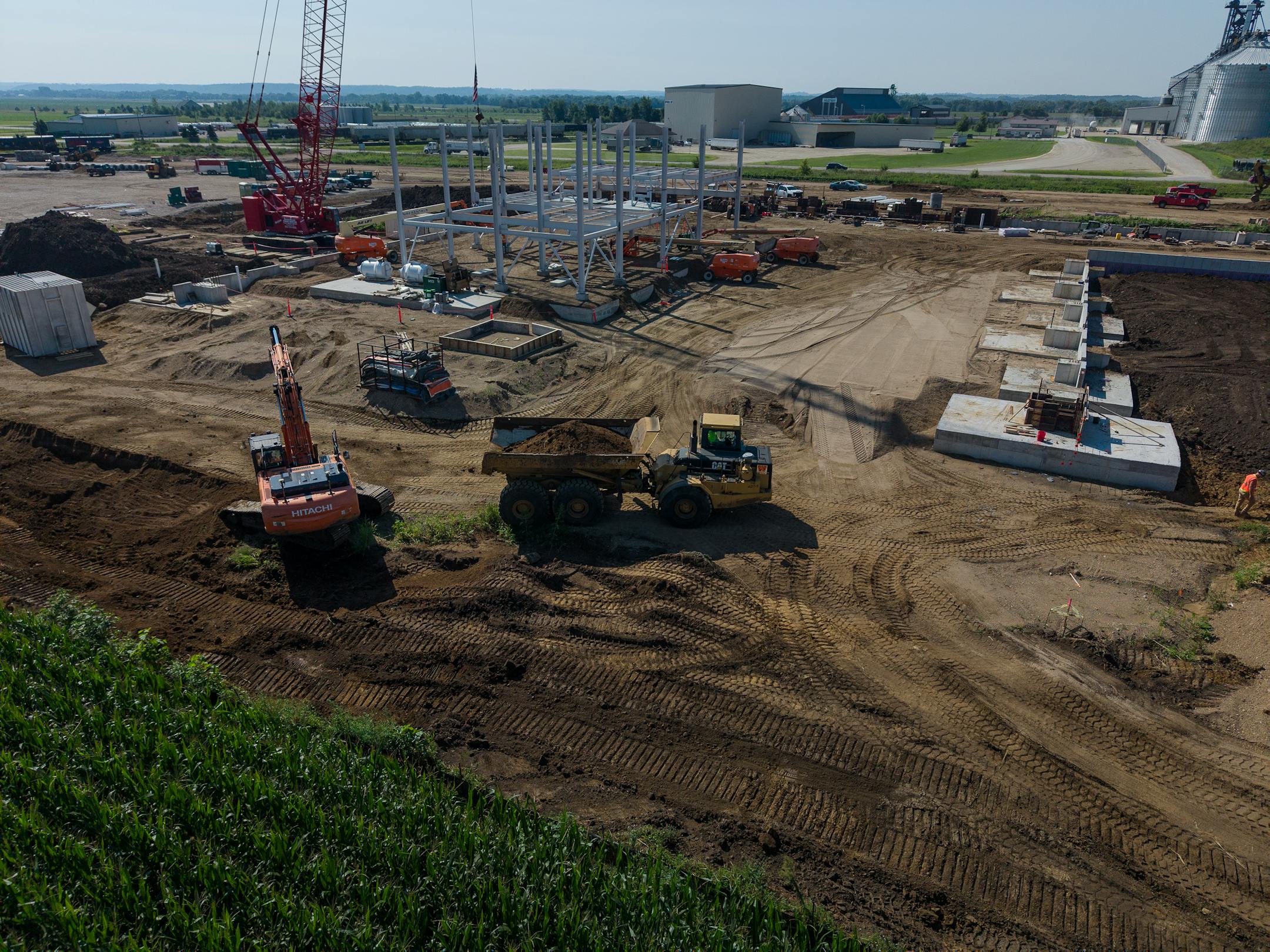
An overall view of Cambria's new $80 million quartz processing and rail center in Randolph. (Richard Tsong-Taatarii/The Minnesota Star Tribune)

Keeping its edge

The Canadian quartz, Davis said, is mostly free of iron and highly translucent. It’s not the same as the quartz sourced in the U.S., he said.

“It’s really our competitive advantage,” he said.

The company offers more than 200 design patterns. And besides higher-end showrooms, the company also has a deal with Home Depot.

Cambria sells 150 different slab designs through 2,200 Home Depot stores. Those sales are increasing, he said.

“It’s been a very good business for us,” Davis said.

At 60, Marty Davis, his three brothers, sister and father have weathered many risks among their various businesses.

For three generations, the family mostly was known for Davis Company (later Davisco), which ran dairy farms and made cheese for Kraft Foods. That changed in 2001 when Mark Davis and his five children bet $36 million buying Italian quartz-countertop making equipment from the bankrupt Technimar Industries.

They opened a Cambria production plant in Le Sueur in 2001 and never looked back.

The venture bled money for the first few years, but that changed when the company opened a host of showrooms and launched an aggressive radio and magazine marketing campaign using sports, singers and celebrities.

Never ones to sit still, the Davises soon jumped into a whole new industry.

In 2011, the family acquired Sun Country Airlines for $34 million from the bankruptcy estate of convicted businessman Tom Petters. They sold it seven, sometimes bumpy, years later.

During that time, the Davis family also split their holdings. In 2013, father Mark and sons Mitch and Marty took control of Cambria and Sun Country.

Mark Davis and his other children, Jon, Matt and Julie, took ownership of Davisco. The family sold its Davisco dairy holdings to Agropur in 2014.

The Cambria business held steady.

Today, the quartz operation boasts 1 million square feet of factory and warehouse space in Le Sueur and 30 fabrication and distribution centers around the country, in addition to the mines and processing operations.

But it made some tough decisions to do so, shutting slab-finishing shops in California and Toronto. It also adopted more technology and robots to offset once pressing labor shortages, Davis said.

“We are positioning for growth,” he said. “The building product industry has a lot of pent-up demand.”

about the writer

about the writer

Dee DePass

Reporter

Dee DePass is an award-winning business reporter covering Minnesota small businesses for the Minnesota Star Tribune. She previously covered commercial real estate, manufacturing, the economy, workplace issues and banking.

See Moreicon

More from Business

See More
card image
Aaron Lavinsky/The Minnesota Star Tribune

As the end of the year nears, look back at the volatile times and the financial choices you made during them.

card image