

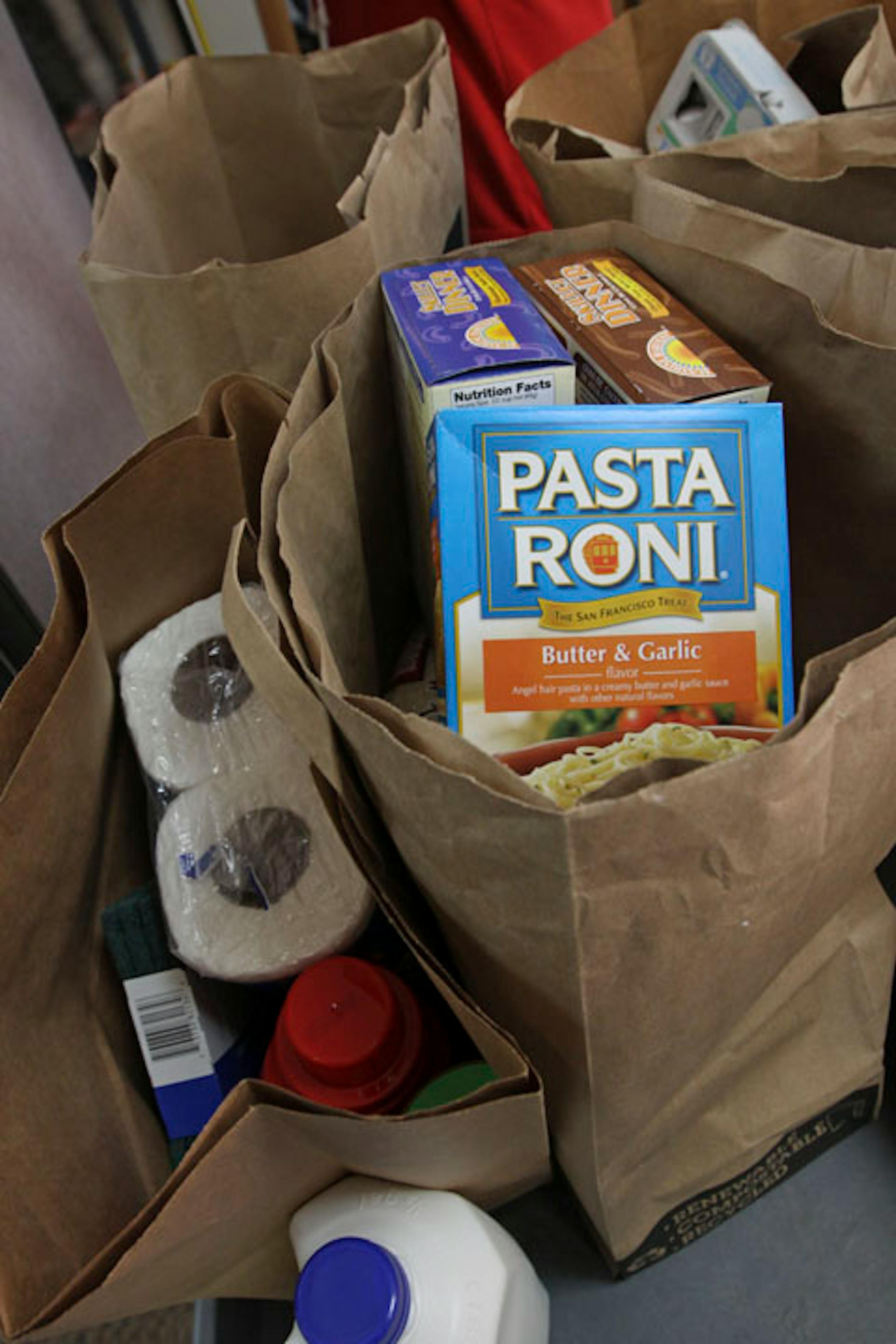
Here's some news that won't settle your stomach: We're going to have to pay an additional 3 to 5 percent or more for food this year. That's according to Michael Swanson, an agricultural economist at Wells Fargo in Minneapolis. Commodities such as corn, beef and wheat hit record highs in January, Swanson said, and prices will likely head even higher in February and March.
While food prices were up a mild 1.5 percent in 2010, according to the Consumer Price Index, shoppers saw even larger increases on select items such as butter (29 percent increase), coffee (9.5 percent increase) and pork (8 percent increase), according to the Bureau of Labor.
This year, consumers can expect larger increases covering a broader spectrum of foods, said Swanson.
Part of the reason is that manufacturers and retailers will likely quit absorbing higher prices. Last year, they trimmed ounces and inches from packages while holding prices steady. But with profit margins being thin in the supermarket industry, the jig's up.
For grocery shoppers who loosened the purse strings a bit last year, it means pulling up the reins again. For Karen Gunter of Champlin it means buying more when staples are on sale. Gunter, who started her own website, Creativecouponing.com, has noticed that her favorite items don't go on sale as often anymore, including milk, meat, fruits, vegetables, bread, cereal, soda pop, snacks and sugar.
"It used to be pretty easy to find milk for $2 a gallon, but now I might have to pay $2.49 if I run out before a sale," she said.
Generally, consumers try to make small, less painful changes to their shopping habits when food prices go up, said Jean Kinsey, professor emeritus at the Food Industry Center at the University of Minnesota. "We still have to eat."
Trading down the food chain is a common practice when budgets get tight. A Byerly's shopper decides to try Cub, for example, said Kinsey. A Target shopper decides to try more store brands. The numbers bear that out. In an August 2010 survey, 54 percent of consumers said they were buying more store brands. That's up from 46 percent in July 2009, according to SymphonyIRI, a Chicago-based market research firm.



