![Encompass Principals Kent Jones (blue shirt) and Curt Isernhagen (suit) at Calhoun Place, the high-profile, nine-story condo building at 3131 Excelsior Blvd. ] JOELKOYAMA•jkoyama@startribune Minneapolis, MN on April 30, 2014..](https://arc.stimg.co/startribunemedia/EGBKVLGPHYFIW3TGGO4QKZWMZE.jpg?&w=1080)
When the residents of the nine-story Calhoun Place Apartments joined the condominium conversion craze of the early 2000s, they had no idea of the trouble they were getting into.
Shortly after the 2004 conversion, the newly formed Calhoun Place homeowners association found itself facing a major financial challenge when it was discovered that the facade of the 107-unit, late-1980s structure a block from Lake Calhoun was falling apart. About $2.3 million would be needed to replace the faulty exterior cladding material and perform related work, translating to an assessment of $25,000 per unit at time when the housing bust had left most of the condo owners with negative equity in their units.
Failed attempts at bank financing ensued as the moisture infiltration into the building worsened. Cracked Sheetrock and water stains were appearing around nearly every balcony door and window frame.
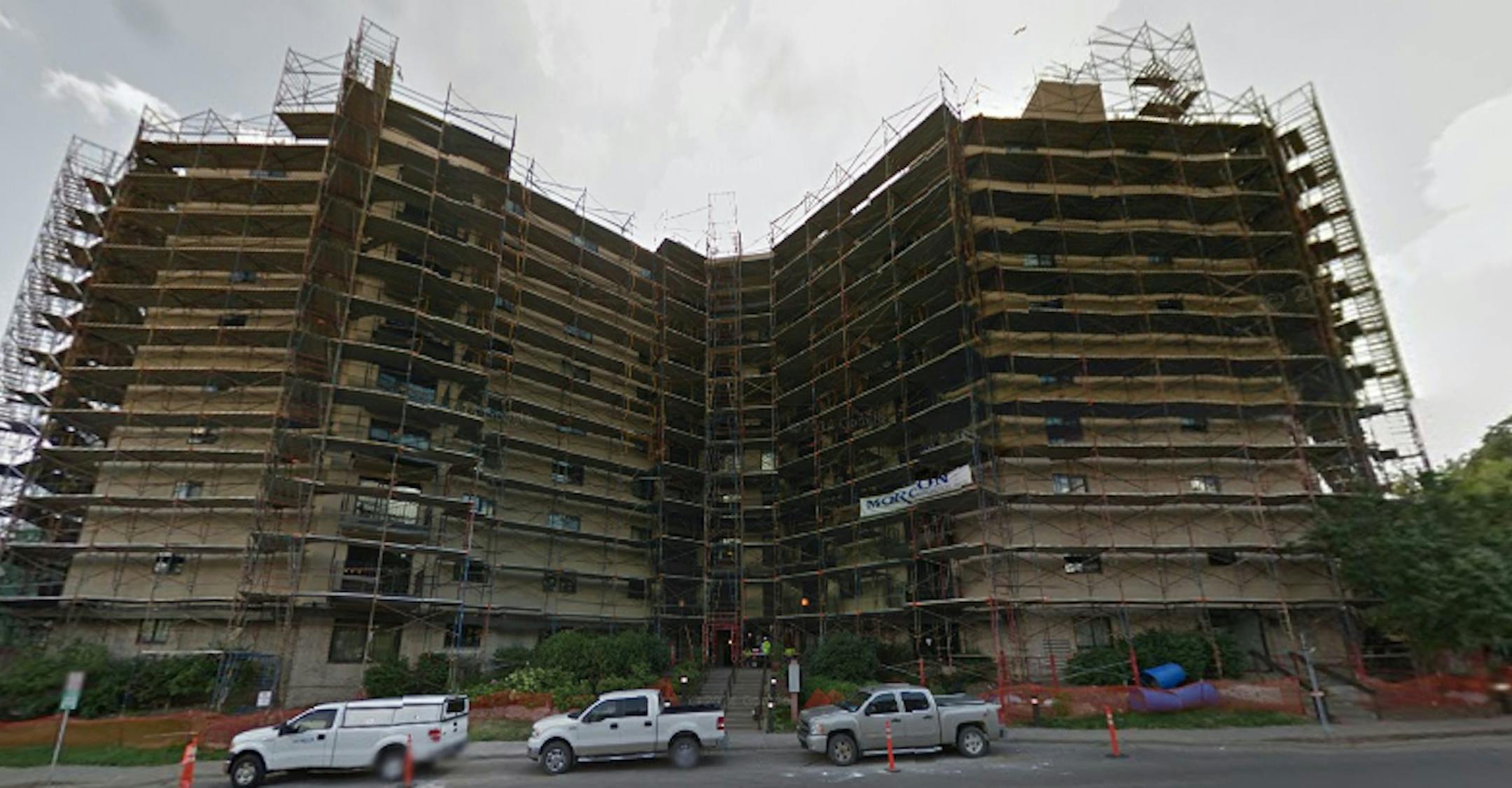
But by last summer, passers-by on busy Excelsior Boulevard noticed that the building was at times entirely surrounded by scaffolding, with trucks and workers from Morcon Construction Co. maneuvering in and out of the tight space. And by October, the expensive and daunting rehab job was done.
Those involved in the effort say it took the innovation of a condo association consultant, the willingness of the city of Minneapolis to tap an obscure financial tool to help the homeowners and the efforts of an expert team of forensic engineers who were able to analyze the building's lengthy list of structural defects.
The first step toward resolution for the desperate homeowners association was the 2010 hiring of Dunbar Strandness Inc., which specializes in the problems faced by condo owners. Principal Doug Strandness said the financial plight of the Calhoun Place homeowners was so dire, it required him to convince city officials to "think outside of the box."
"The key to this effort was overcoming the skepticism of some city staffers to commit the city to helping the homeowners through a little-used tool known as a 'housing improvement district,' through which homeowners who agree to have their properties assessed over a 30-year period can finance improvements through the issuance of city bonds," he said.
With the backing of then-Council Member Betsy Hodges (now Minneapolis mayor) and Community Development Committee Chairwoman Lisa Goodman, the City Council in January 2013 approved the creation of its first housing improvement district for Calhoun Place. Goodman said she backed the idea because such districts are not subsidies — the property tax assessments include the costs of the bond issuance fees as well as repayment of 100 percent of the principal plus interest, with the homes themselves offered as security.