

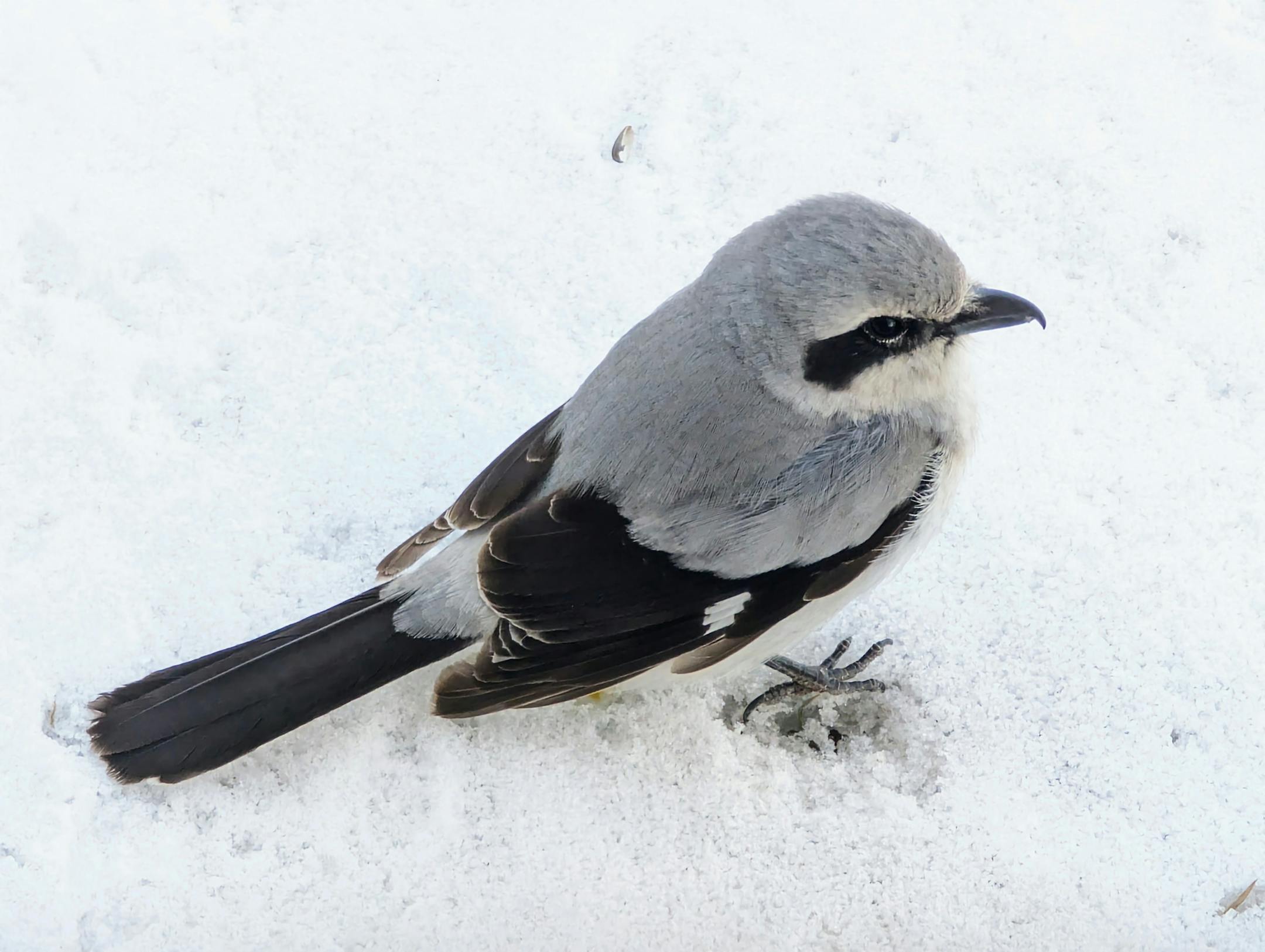
Q. I heard a bird hit our picture window, which is a rare occurrence, since our feeders are close to the house. Looking out, I saw a grayish bird about blue jay size — it had a black stripe through its eye — sitting in the planter boxes below. It picked up a small, lifeless bird and flew off. My field guide says this was a northern shrike and that they feed on small birds. Is it likely to hang around and prey on the other feeder birds? Does it remain in our area all winter?
A. It’s good that you were able to spot the cause of the bird hitting your window. The shrike scared the birds at your feeder, causing them to fly off in a panic, with one of them hitting the glass at high speed. There are many reports of northern shrikes driving birds into windows to stun or kill them. A shrike will then pick up the carcass and either eat it right away or stick it onto a twig, or a “Y,” in a tree or shrub for a later meal. If you’ve ever come across a lifeless chickadee, mouse or grasshopper hanging from a thorn or twig, that was probably the work of a shrike. Some folks call shrikes “honorary raptors” for their carnivorous habits, but they don’t really qualify, because they don’t catch their prey with their feet. Others call them the “butcher bird,” and sorry to say it may visit your feeders again, because it’s had some success. And yes, they’re around all winter, although they’re not a common bird.
Living large in the tropics?
Q. As I fill the bird feeders on cold winter days, I think about the birds that skedaddled down to tropical places to spend the winter. And then I wonder how they spend their time in another climate.
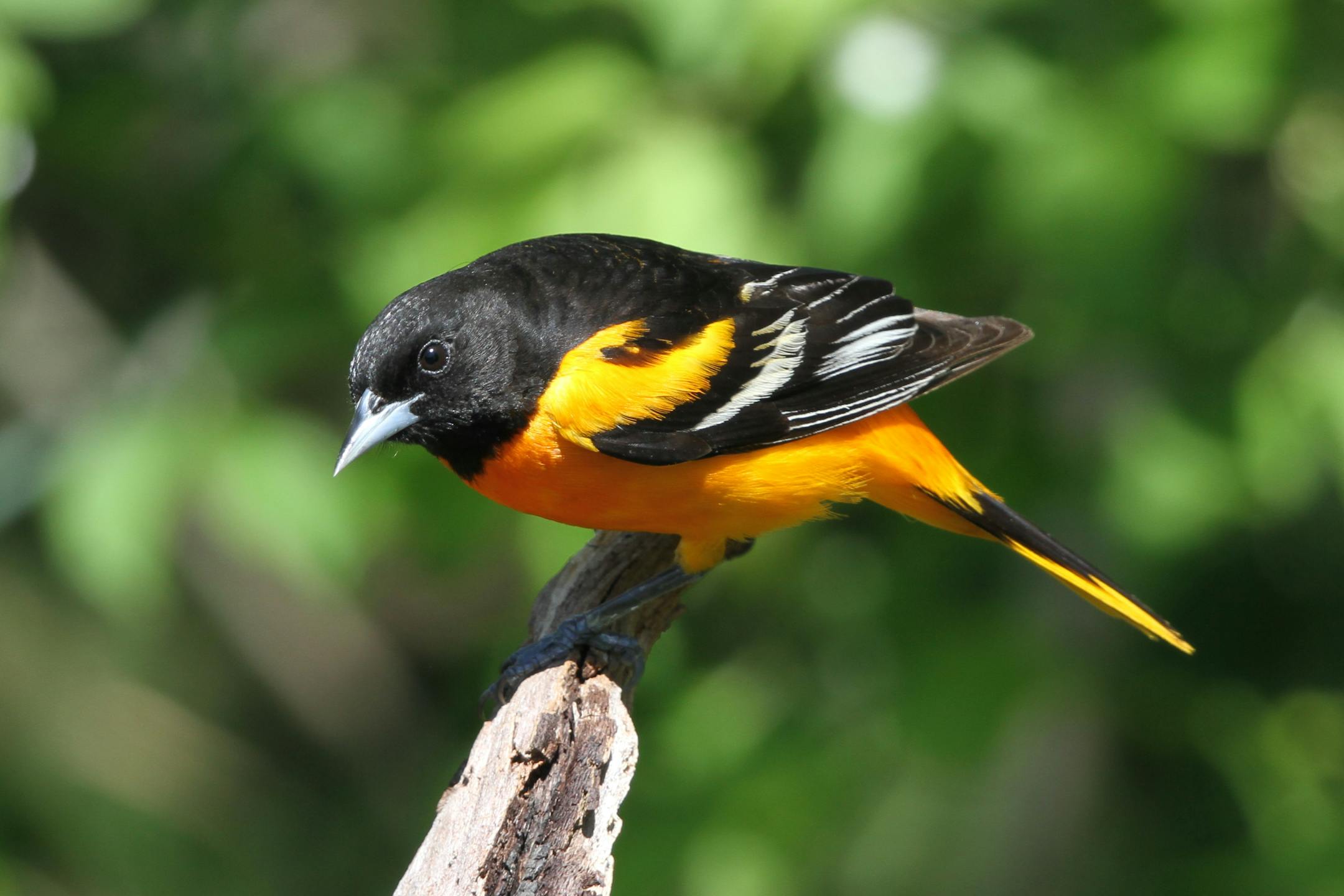
A. There’s no doubt that the birds that migrate south after summer in our region enjoy warmer days than those that stay behind. However, the picture is not entirely rosy. While tropical regions lack our cold, they tend to have an extended dry season, a time when vegetation withers. And because most of “our” migrants live on insects and fruits, these can be scarce at the driest times. Add in the fact that migrants must squeeze in among resident tropical birds and compete for resources, and it becomes apparent that migratory birds must work hard for a living. Still, I recall seeing a Baltimore oriole searching for insects in trees along the Panama Canal one January day, and he did seem pretty satisfied.
Freshness test
Q. How can I tell if my birdseed has gone “off?” The goldfinches don’t seem to be eating any of the nyjer seed in my feeder and I’m wondering if I should toss it out and buy some new seed.
A. Good question, and many of us have encountered picky goldfinches who snub our nyjer. This is a spendy seed so we don’t want to toss it without cause. I recently read a good tip from Kenn Kaufman, a well-known naturalist, author and bird artist. To test whether nyjer is fresh, crush some seed on a paper towel, and see if this leaves a spot of oil. If there’s no spot, the seed may have dried out, and it no longer appeals to finches. This means it’s time to buy a new batch.
Early eagles?
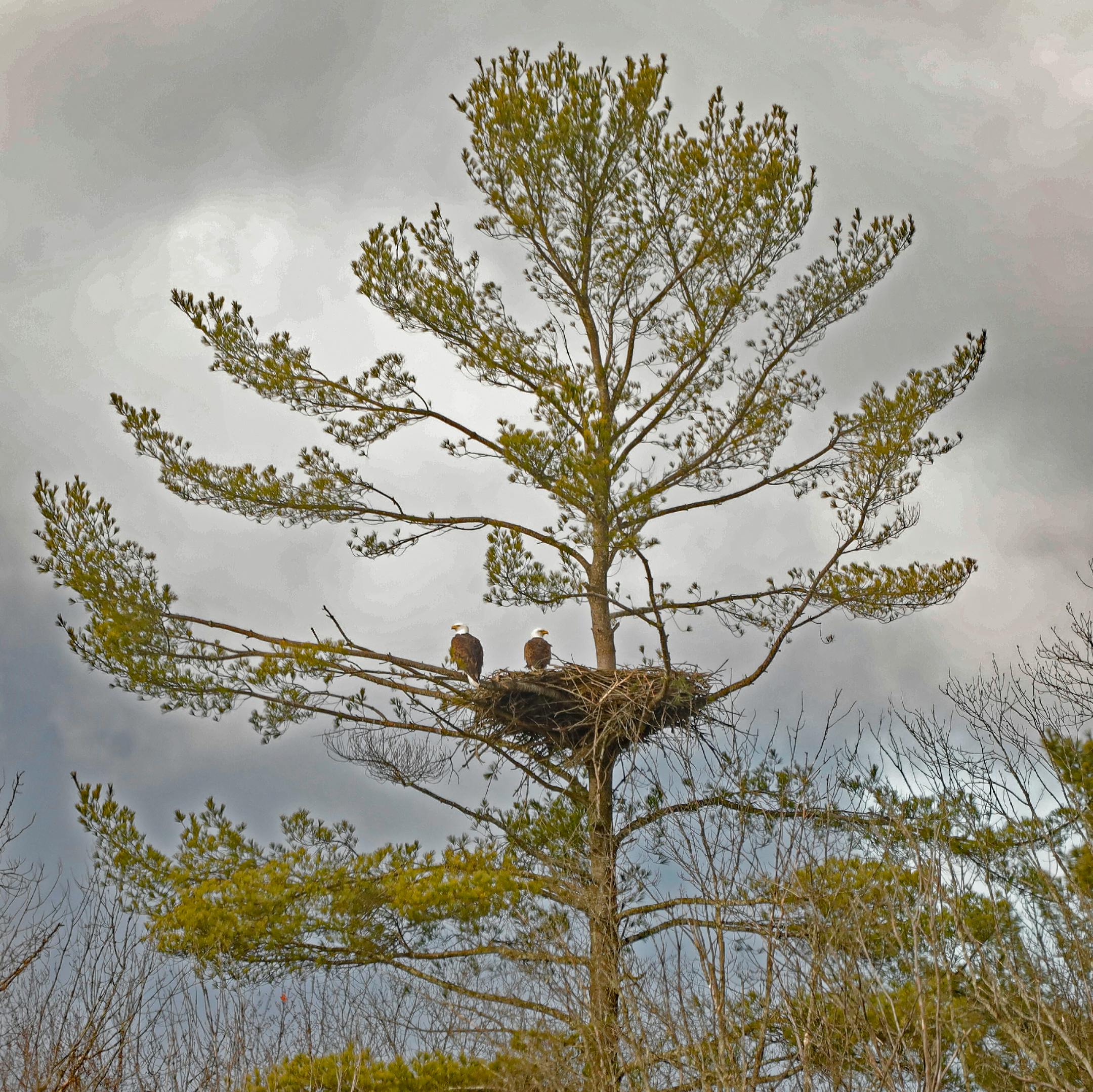
Q. There’s an eagle nest not far from my home and I was surprised to see a pair of eagles sitting on it in late November. Isn’t this early for eagle nesting?
A. Yes, it is early, but the eagles you noted were probably engaged in refurbishing the nest they used last year. They add new branches in the early winter, then usually get busy with raising offspring in early March (although some start earlier). This habit of adding new material to the nest each year is the reason bald eagle nests get larger over time.

![Attendees of Frostbike made their way through the convention Saturday at the Quality Bike Products campus in Minneapolis. ] (AARON LAVINSKY/STAR TRIBUNE) aaron.lavinsky@startribune.com Frostbike 2016 was held at the Quality Bike Products Campus on Saturday, Feb. 27, 2016 in Bloomington, Minn.](https://arc.stimg.co/startribunemedia/NH2BSHB74ND2V6GF2G2HI5X4MM.jpg?&w=436&ar=3:2&fit=crop)


