
Business forum: Fed's bet on housing cause for alarm

The Fed is no panacea, but it is the only agent capable of tackling the economy.

September 23, 2012 at 10:54PM
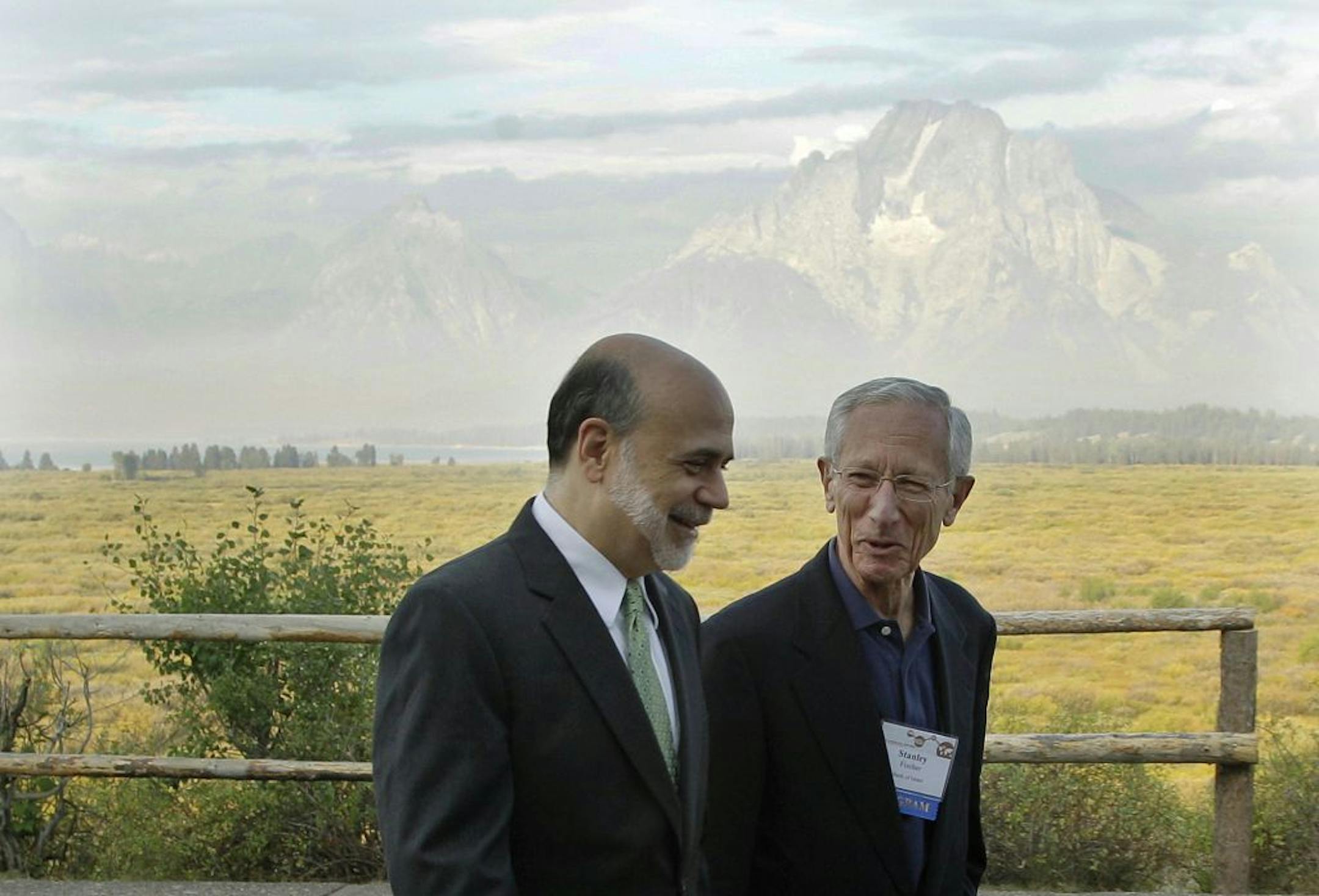
With the Teton Mountains behind them, Federal Reserve Chairman Ben Bernanke, left, and Bank of Israel Governor Stanley Fischer walk together outside of the Jackson Hole Economic Symposium, Friday, Aug. 31, 2012, at Grand Teton National Park near Jackson Hole, Wyo. Bernanke made clear Friday that the Federal Reserve will do more to boost the economy because of high U.S. unemployment and an economic recovery that remains "far from satisfactory."
With the Teton Mountains behind them, Federal Reserve Chairman Ben Bernanke, left, and Bank of Israel Governor Stanley Fischer walk together outside of the Jackson Hole Economic Symposium, Friday, Aug. 31, 2012, at Grand Teton National Park near Jackson Hole, Wyo. (Associated Press - Ap/The Minnesota Star Tribune)

Now that the Federal Reserve has committed to buying additional mortgage-backed securities at a pace of $40 billion per month, it's worth examining this extraordinary strategy more closely.

The Fed action is perhaps a noble effort to revitalize the struggling U.S. economy -- but also an unprecedented one with possible adverse side effects. According to its charter, the Federal Reserve System is supposed to conduct America's monetary policy, supervise and regulate banks and maintain the stability of America's financial system.

It could be argued that, in most cases, but not all, these responsibilities have been carried out with responsible professionalism. In this case, however, reservations have been expressed -- along with some important considerations that have not yet been part of our discussions. The Fed's move is an attempt to spur the housing sector, which was devastated by the credit crisis and has continued to hobble the economy even as other sectors have largely recovered from the recession.

Richmond Federal Reserve President Jeffrey Lacker was the lone dissenter from the Fed action saying: "Channeling the flow of credit to particular economic sectors is an inappropriate role for the Federal Reserve."

Indeed, there is reason for citizens to contemplate the appropriate role for the nation's central bank. The Federal Reserve's balance sheet has grown enormously over the past several years, from $775 billion in assets in January of 2005 to $2.8 trillion on September of 2012.

The Federal Reserve is a rather thinly capitalized bank. It is large enough with $2.825 trillion in assets. But it is also large in liabilities at $2.77 trillion, leaving a surplus of $54 billion, or less than 2 percent of assets. Even troubled Bank of America has a reported surplus of 10.9 percent of assets. Wells Fargo is higher.

Of more interest is the growth in categories of assets owned by the Fed.

Treasury bills have a little bit more than doubled from $718 billion to $1.65 trillion today. But mortgage-backed securities held by the Fed have grown from nothing to $860 billion.
The credit-worthiness of mortgage-backed securities (MBS) has been a topic of great concern in the past five years. Lehman Brothers, Bear Sterns, Merrill Lynch, Bank of America, Wachovia, among others, have either disappeared or become endangered by dabbling in them.

Of course, there may be differences in the quality of both the securities and the due diligence of the institutions. Nonetheless, the reputation of mortgage backed securities is not pristine. In July of 2007, 90 percent of the triple A rated mortgage-backed securities issued in 2006 and 2007 were downgraded by the rating agencies to junk status.

But, there are two other questions beyond risk for the critically important central bank. Will the program work? And, what will be the collateral damage?

With the prime rate holding steady at a historically low 3.25 percent for five years, will any further reduction really stimulate additional demand? Perhaps there are other considerations limiting investment. One might wonder if uncertainties of fiscal stability, the dysfunctionality of government, the lack of preparation of America's workforce, and the escalating costs for health care and other services are not more important.

And what about the collateral damage to retired people and pension funds? Under the new, more reasonable rules from the Government Accounting Standards Board, state and local governments are now required to employ more realistic assumptions for both potential liabilities and expected gains. Reportedly, Illinois, New Jersey, Indiana and Kentucky have less than 30 percent of assets needed to meet projected obligations.

Although some of the lucrative public benefits may be in need of review, it might also be said that it is very hard for pension fund managers to keep abreast of obligations when the Federal Reserve Bank is holding interest rates at near-zero levels.

Retired people are also disadvantaged. Life savings, long thought to be nest eggs for retirement, are yielding nearly nothing -- thus curtailing the expenditures on the part of an important economic sector.

Businesspeople are also puzzled. Tax rates in the 1990s were workable for businesses. Unpredictability, rampant spending and chronic deficits are not. Who would make investments to expand under these conditions?

In fairness to the Federal Reserve, they are at least trying to reduce the economic problems of our country.

No other unit of government is -- at least in any serious way. But prosperity is likely to remain beyond our reach unless we all work with less partisanship, more innovation, accept more reasonable compensation, retire later, stay healthier, embrace practical financial regulation, incorporate reasonable taxation, collect the taxes we have and make meaningful investments for the future.

If we can work together to take these necessary steps, the Federal Reserve will not be the only game in town. Meanwhile, the Fed could help by fulfilling one of its major responsibilities -- maintaining the stability of America's financial system.

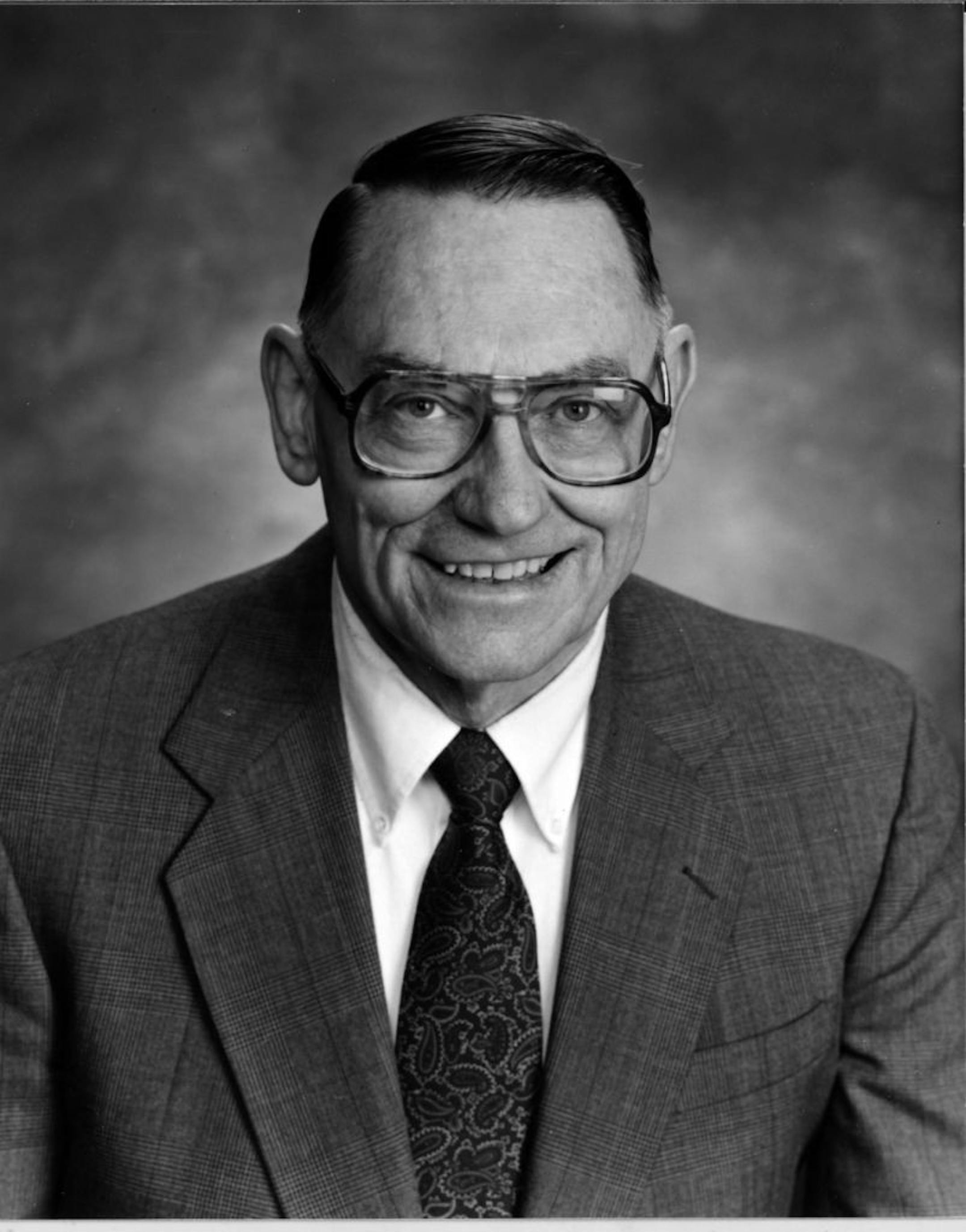
Fred Zimmerman / Frederick Zimmerman is professor of engineering and technology management at the University of St. Thomas. He has served on 16 corporate boards. Handout photo received February 1999.
Fred Zimmerman (Handout/The Minnesota Star Tribune)
about the writer

about the writer

FRED ZIMMERMAN

More from Business

See More
card image
Fairview Health Services

The school is changing an elective course while still working with the Eden Prairie-based health care giant after students raised concerns.

This transmission electron microscope image shows SARS-CoV-2, the virus that causes COVID-19, isolated from a patient in the U.S., emerging from the surface of cells cultured in the lab. (NIAID/TNS) ORG XMIT: 1659810
card image