

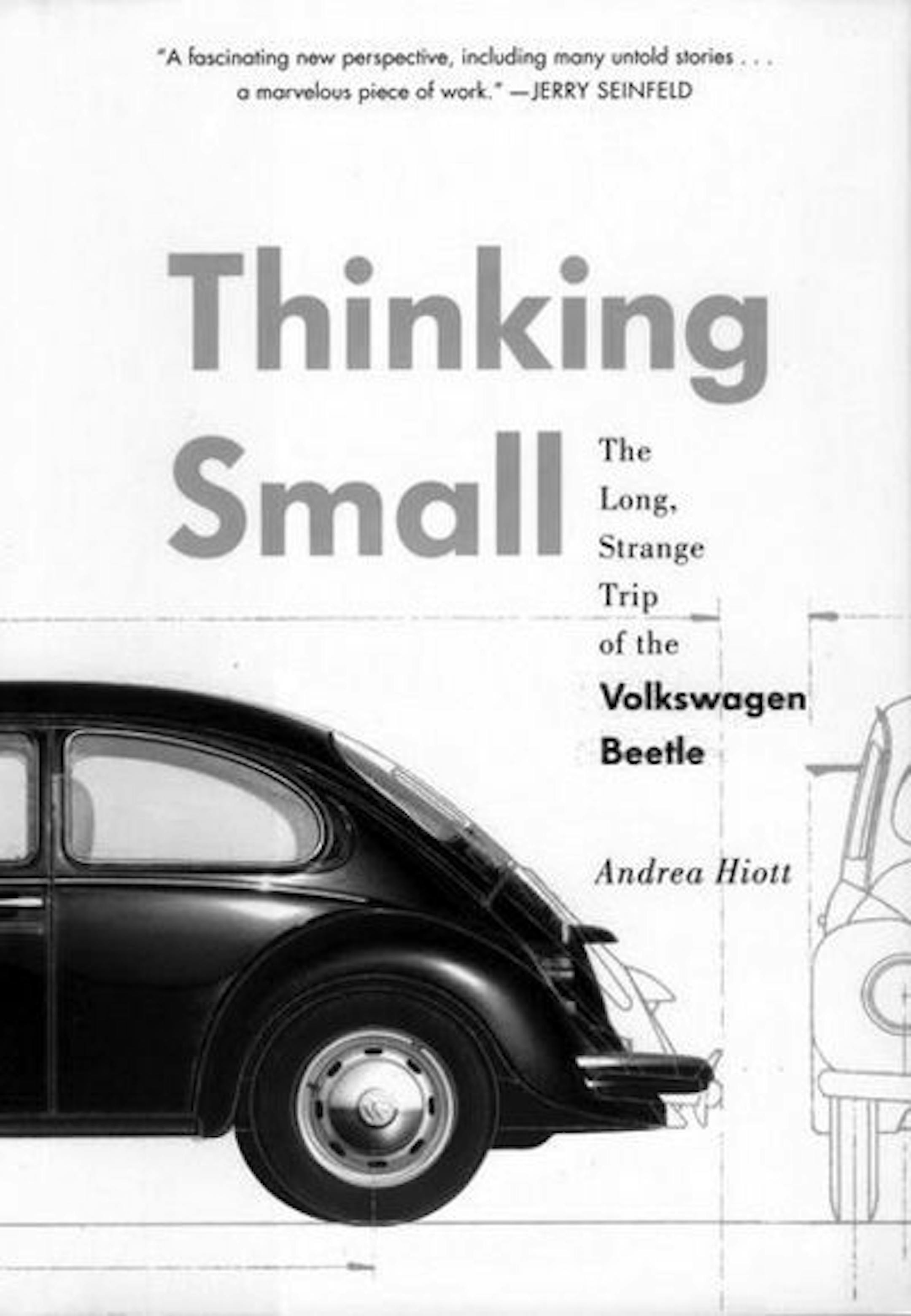
Andrea Hiott, Ballantine, 492 pages, $26
As unlikely as it seems, the Volkswagen Beetle is one of the most persistent icons of imperial ambition. A car affordable to the masses -- a Volkswagen, or "people's car" -- was Hitler's least insane, longest-lasting pet project. But, of course, the Beetle boasts another heritage, that of the signature vehicle of the 1960s.
The distance between these two inheritances animates Andrea Hiott's sprightly "Thinking Small: The Long, Strange Trip of the Volkswagen Beetle." As Hiott writes, she set out to "reconcile my ideas of Nazi Germany with my ideas of the Summer of Love." Hiott locates the answer in the interplay between German automotive doggedness and American advertising innovation.
The Beetle's rise is in many ways synonymous with the ascent of the Third Reich, and the bulk of "Thinking Small" traces the political and economic conditions of the Reich. By motorizing Germany and building easily navigable autobahns, Hitler satisfied his fetish for German technical superiority while mobilizing a wartime population. This is well-turned soil, but Hiott masterfully aggregates an impressive amount of scholarship, then overlays the Beetle's history of failed designs and blown production schedules onto the well-known contours of the 20th century.
Alongside the political turbulence, Hiott examines the "creative revolution" in postwar American advertising. The advertising agency DDB -- a primary historical inspiration for the show "Mad Men" -- detected a growing disenchantment with the rampant consumerism of the 1950s. DDB directed this discontent into enthusiasm for the compact, affordable Beetle.
The DDB campaign is still considered the most effective ad campaign in history -- Google the "Think Small" campaign -- and the sleek minimalism of the ads remains the standard of sophisticated advertising. Apple's "Think Different" ads are a direct homage.
The story of the Beetle is, as Hiott writes, an "amalgamation of the larger shifts taking place in the world, shifts that had come hard and slow."
SAN FRANCISCO CHRONICLE



