

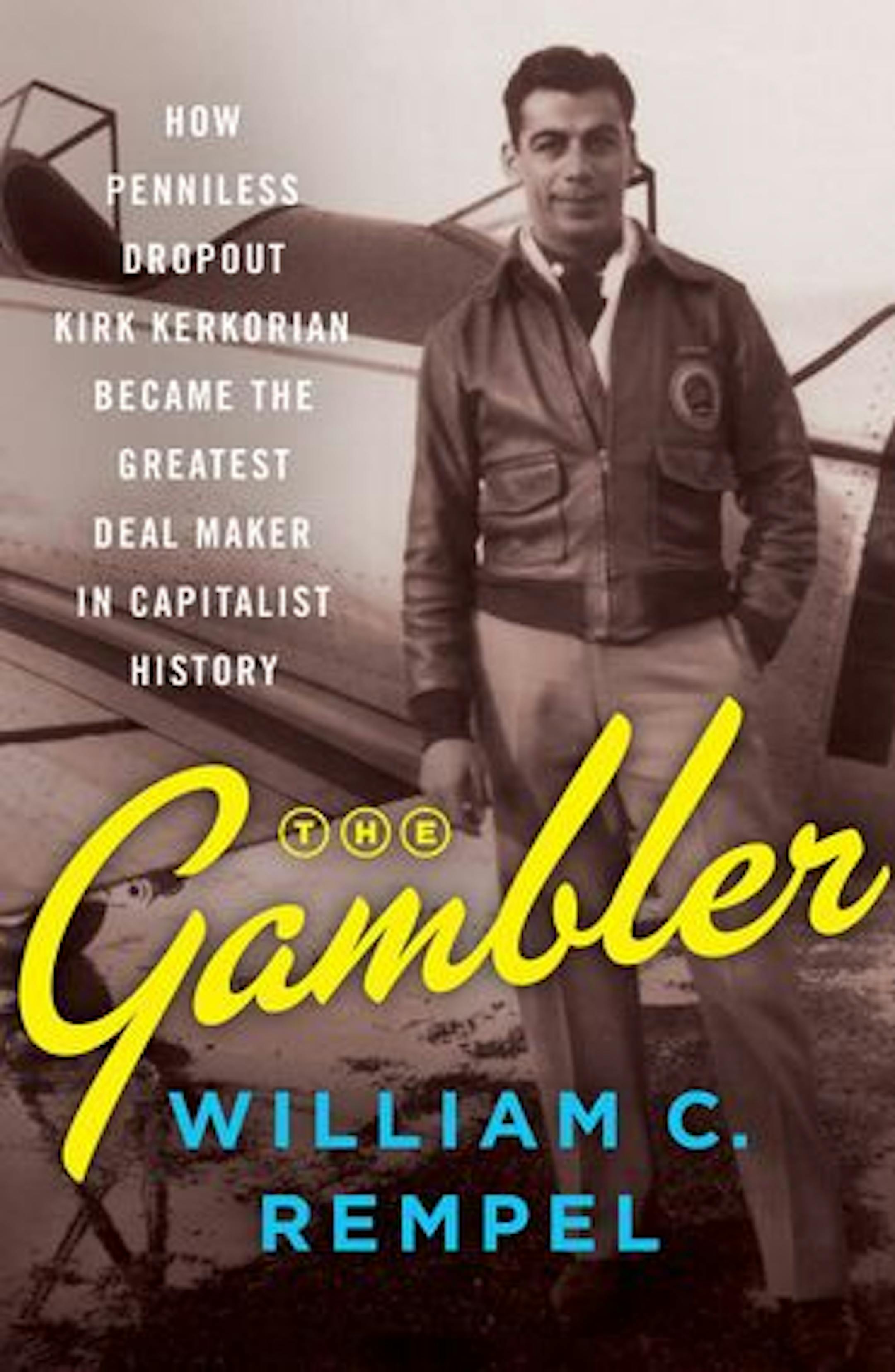
'The Gambler' by William C. Rempel, Dey Street, 414 pages, $28.99.
The annals of capitalism are filled with visionaries, risk-takers and colorful personalities. Easily one of the most compelling of these figures is Kirk Kerkorian, the Armenian-American billionaire financier who played an enormous role in shaping modern-day Las Vegas, along the way also shaking up Hollywood and the auto industry.
Now, almost three years after Kerkorian's death in 2015 at age 98, William C. Rempel's "The Gambler: How Penniless Dropout Kirk Kerkorian Became the Greatest Deal Maker in Capitalist History" chronicles the man in an expansive and exhaustive account, impressive given that he had little authorized access.
In 1962, Kerkorian — the youngest of four children born to Armenian immigrants — began buying up land in Vegas. At his peak, Kerkorian controlled nearly half of the Strip. An attempted takeover of Chrysler in the early 1990s would see him in and out of the auto industry for almost two decades.
Kerkorian's character is as striking as his business adventures. While many masters of the universe are known for short fuses and big egos, Kerkorian was gentle and gracious. Kerkorian became a major philanthropist, most notably in Armenia following the country's 1988 earthquake. All gifts came with strict orders that his name never be used.
He had a colorful personal life, married four times and, during the unmarried phases, was often accompanied by the starlets and socialites of his time. Rempel has been given the gift of a fascinating subject and a captivating life story, and he makes the most of those gifts.
Washington Post


