

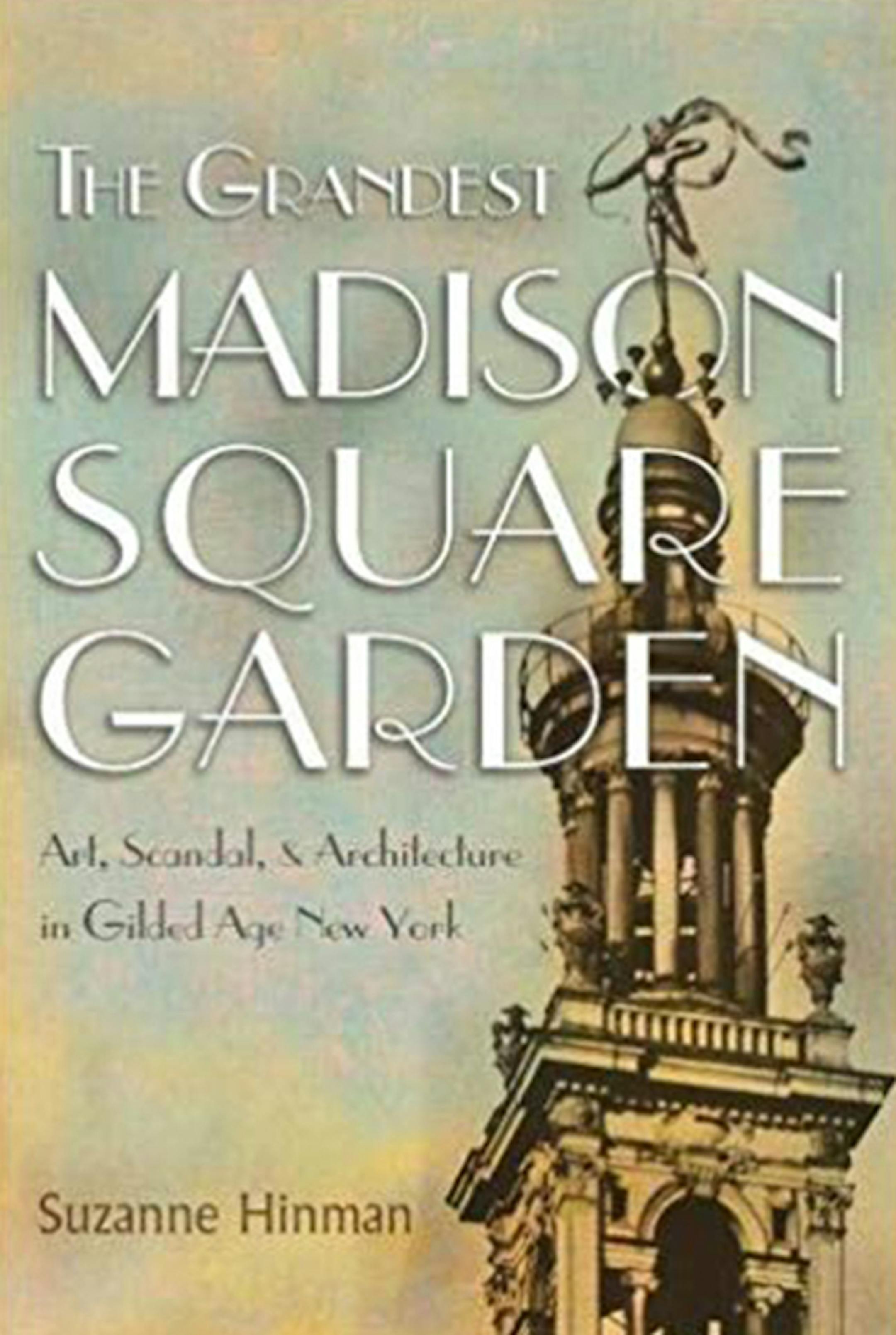
'The Grandest Madison Square Garden'
Suzanne Hinman, Syracuse University Press, 472 pages, $39.95. The building that today bears the name of Madison Square Garden dates to the 1960s, and is a mile or so from the actual Madison Square. Suzanne Hinman's book, "The Grandest Madison Square Garden," tells the story of the second of Madison Square Garden's four incarnations: the building that made the site world-famous as a venue for Barnum & Bailey's circus, Wild West shows, championship prizefights, six-day bicycle races, religious revivals and musical concerts. Hinman uses the construction of the second Madison Square Garden as an armature upon which to hang a depiction of the Gilded Age. Two artists form the core of Hinman's narration: the sculptor Augustus Saint-Gaudens — the maker of statuary that today is the pride of Central Park, Boston Common and Lincoln Park in Chicago — and the architect Stanford White, principal architect of the Garden and the designer of many of the settings of his friend Saint-Gaudens's sculptures. The story of these two friends and their associates accounts for at least half of the book, and Hinman was undoubtedly wise to make it so. A book concerned solely with the $1.5 million of capital stock needed to get the project going, the inevitable cost overruns and the engineering challenges that had to be conquered would have been interesting to a limited audience. Far more entertaining is the colorful description of the venue itself, White's scandalous murder and then the decline of that second incarnation of the Garden. Two other venues would bear its name elsewhere, but the magic was long gone.
WASHINGTON POST


