

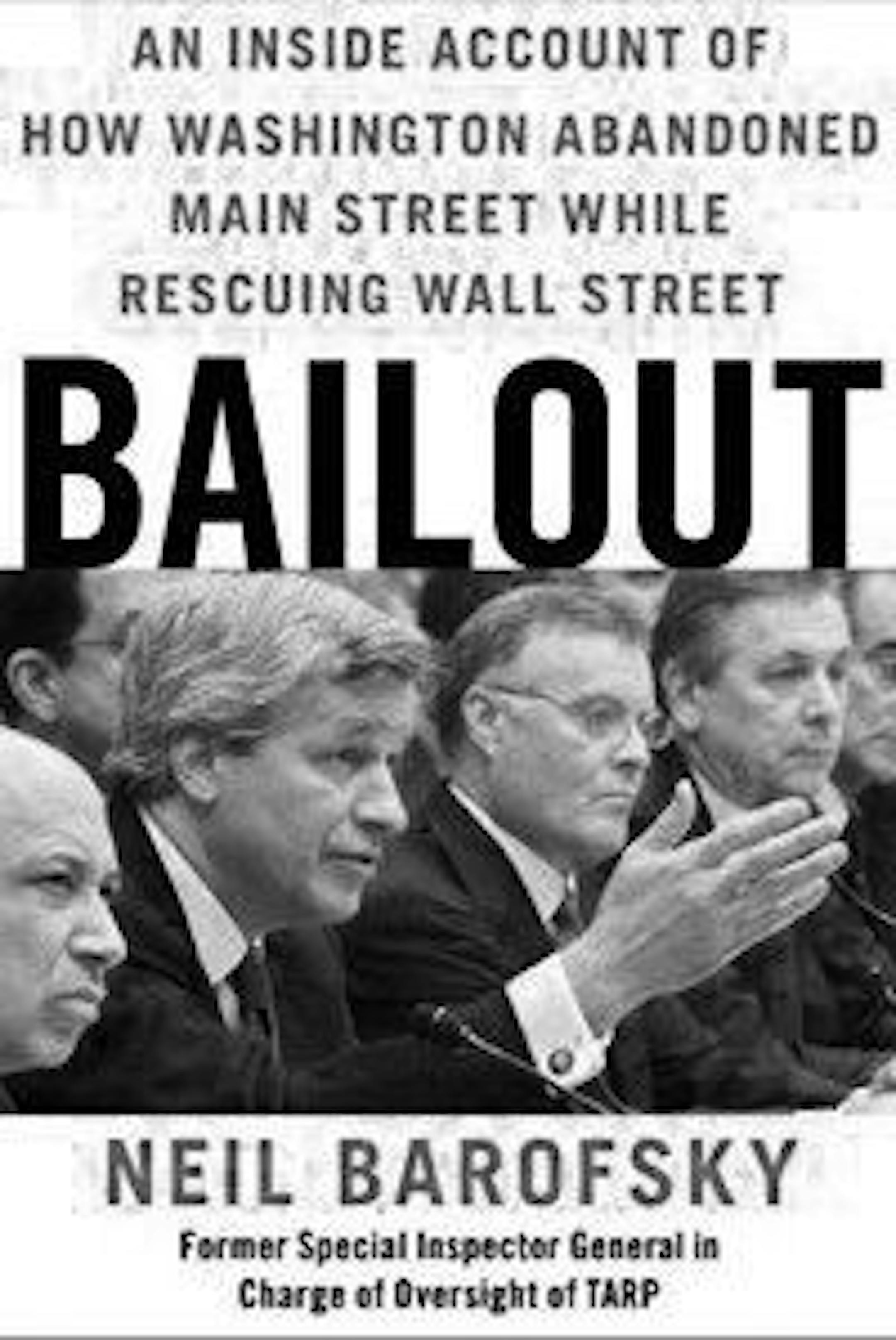
Neil Barofsky, Free Press, 270 pages, $26
From the opening of this latest book on the government's (mis)handling of the 2008-09 financial crisis, Neil Barofsky establishes his populist narrative from his two-plus years as the "TARP cop" overseeing the big-bank bailout officially known as the Troubled Asset Relief Program.
Barofsky, a former New York City prosecutor, is the idealistic alien sent to Planet Washington, where he does battle with self-important powers. But ultimately he is outmatched, and evil triumphs.
He describes his strategy to use the press to get the attention of Congress: "Our message was simple: Treasury's desperate attempt to bail out Wall Street was setting the country up for potentially catastrophic losses." Yet despite repeated condemnations of the decisionmaking process in both the Bush and Obama administrations, Barofsky never really concedes that the predicted losses did not occur.
He refers throughout to the $700 billion bailout, never clarifying that less than $300 billion of that amount went out the door and that the big banks repaid taxpayers with interest. As flawed as the rescue process was, and as galling as Wall Street's revived bravado and bonuses can be to most Americans, the fact remains that an economic collapse was averted.
Barofsky the ex-prosecutor talks of fighting fraud and "Wall Street criminals" and styles his office as a law enforcement agency, complete with guns and badges. Yet the reader should not expect Eliot Ness. Within a week of starting work in December 2008, Barofsky has fights that are mainly of the bureaucratic type as old as Washington. He grouses for page after page about being left out of the loop as arcane policies are developed, consigned to a basement office that literally stinks.
That his book is being released now, amid the presidential campaign, reflects perhaps the biggest contradiction of all: If Treasury has been making policies exclusively "by Wall Street for Wall Street," as Barofsky says, why has Wall Street turned so hostile to President Obama's re-election?
NEW YORK TIMES



