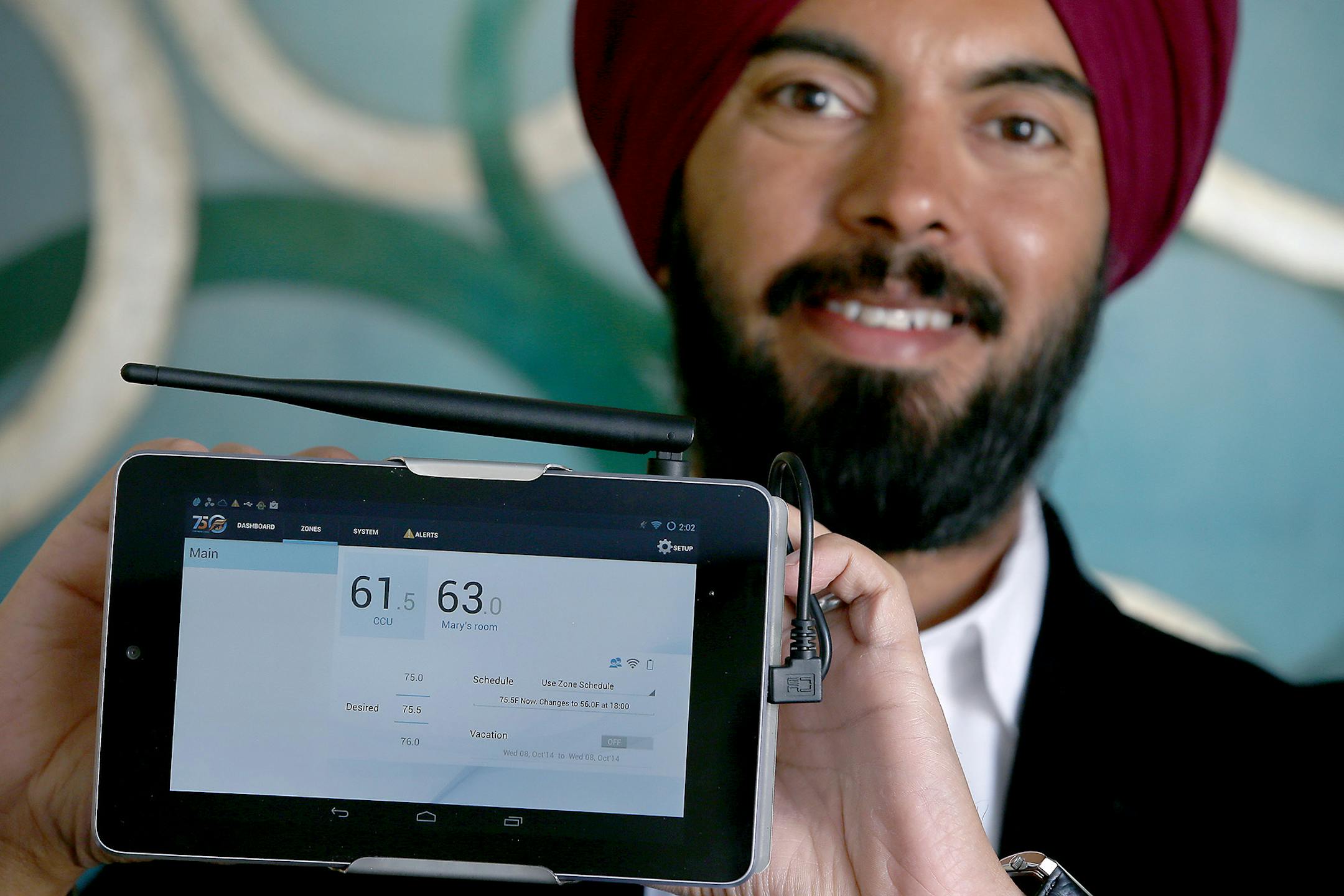
Burnsville-based 75F, which provides wireless controls for commercial buildings, has raised $18 million in equity capital.
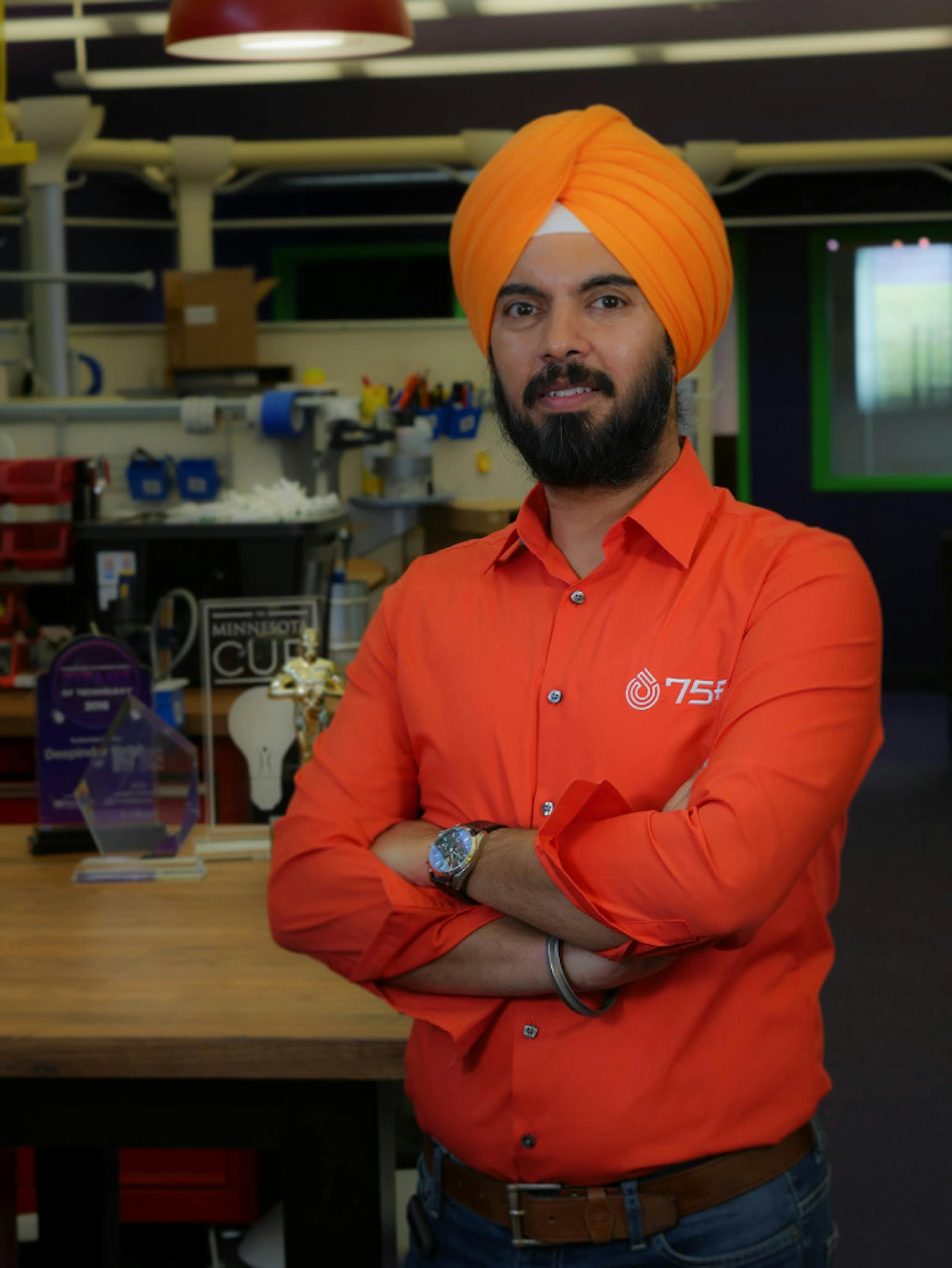
"This strategic funding will allow 75F to invest in key positions, continue to innovate our product and customer solution and strengthen our partner network across North America, Asia-Pacific, the Middle East, China and Australia," said founder and CEO Deepinder Singh.
The 84-employee, Burnsville-based company, financed so far by $7 million from individual investors, will hire people to work in marketing, supply-chain management and finance, including sales, software and product engineers.
The lead investors in 75F's inaugural round of institutional funding are Breakthrough Energy Ventures and Oil and Gas Climate Initiative.
Breakthrough Energy has more than $1 billion available to invest in companies that leverage innovative technologies in efficiency and renewable energy, to help address climate change. Its board members include billionaires Bill Gates, Jeff Bezos, Richard Branson and Michael Bloomberg.
"Six percent of global and 12% of U.S. greenhouse gas emissions released into the atmosphere come from buildings," Carmichael Roberts of Breakthrough Energy Ventures said in a prepared statement. "We can combat this by designing the next generation of buildings, but we can also make significant gains by upgrading existing real estate with smart technology."
The Climate Initiative is a $1 billion fund that invests in technologies and businesses that lower the carbon footprint of the energy and industrial sectors and their suppliers. Its leadership includes 11 CEOs of international-energy firms who say they account for nearly a third of global production and who invested more than $6.3 billion in their own operations in 2017 to reduce their carbon output as they produced more fuels.
Singh, a computer scientist, started work on what became 75F as a means to control room temperatures in his family's drafty Mankato house. 75F originally focused on small commercial buildings and retail and restaurant chains to avoid huge competitors.