

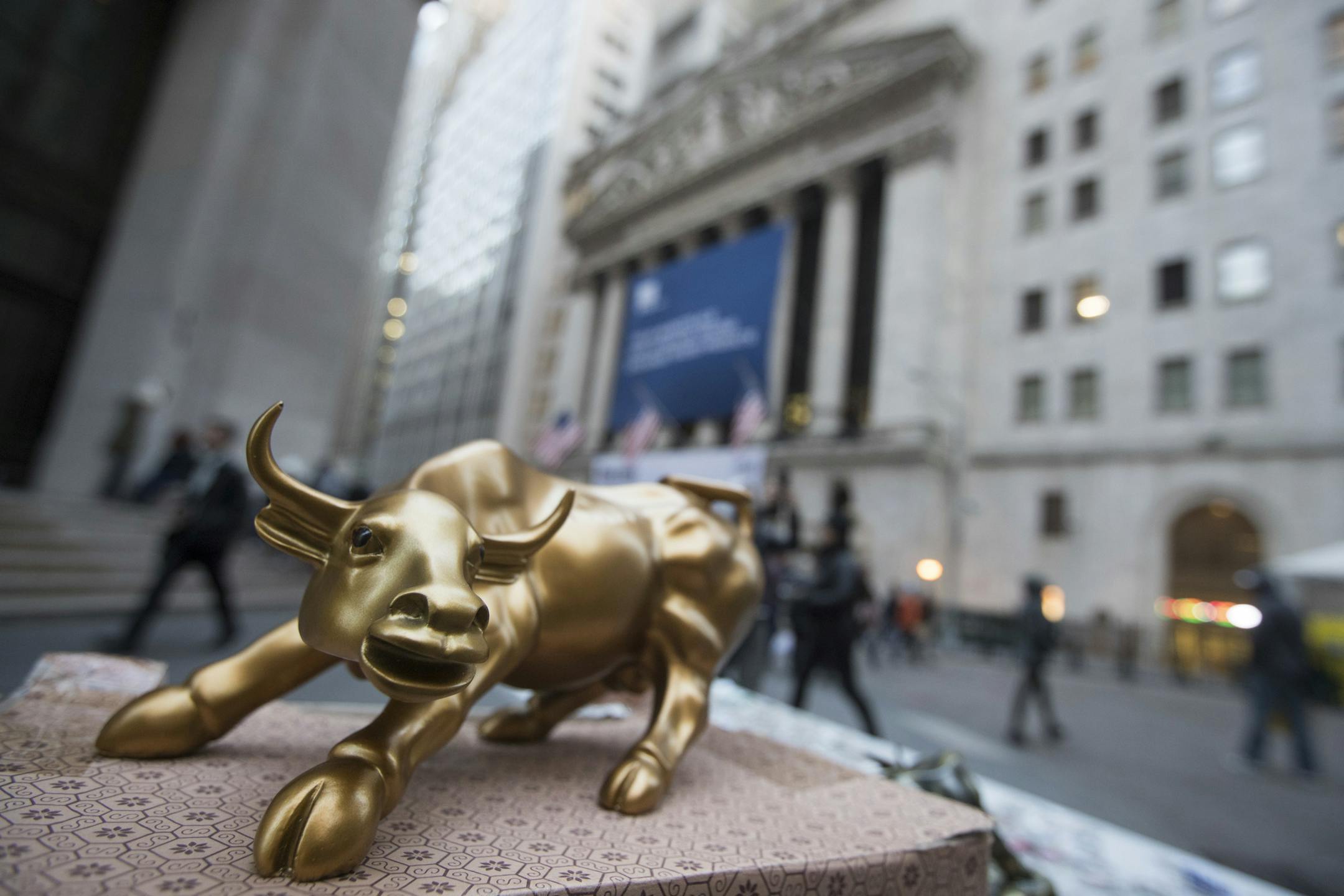
If the bull market is worried about dying, it's not letting on.
Eight years along and no existential crisis plagues this advance, whose unbroken march from the depths of the Great Recession is the second longest ever. Valuations are stretched and going by its age the rally is in rarefied air. But volatility, the ticker tape of investor anxiety, is nowhere to be found.
So profound is the market's peace that a debate is raging over whether it's healthy: are investors blinding themselves to danger in the era of Donald Trump? Whether they are, the result has been manna for anyone who's held on. Almost $3 trillion has been added to equity values since November.
"Investors should now be on the lookout for a fear-of-missing-out mind-set that could signal overconfidence and sound the final lap," said Sam Stovall, chief investment strategist at CFRA in New York. "Volatility will remain a potential challenge to the intestinal fortitude of many investors and cause their emotions to become their portfolio's worst enemy."
At 250 percent, the advance in the S&P 500 Index since 2009 has surpassed any bull market at the eight-year mark, plus all those that ended earlier, according to data compiled by CFRA that goes back to World War II. While history shows stocks tend to get more volatile as rallies drag on, it's not the case now. In the past 12 months, the S&P 500 has spent only 23 days rising or falling 1 percent, compared with 85 days during the eighth year of the 1990-2000 run.
The bull market has shown few signs of waning as it heads into its ninth year. Since Trump's election in November, the S&P 500 has jumped 11 percent, going 55 days without an intraday swing of 1 percent, the longest since at least 1982.
Is it good or bad when markets surge without volatility? On trading desks around Wall Street last week, charts surfaced purporting to show that "complacency" is at a record high by dividing the S&P 500's price-earnings ratio of about 22 by the CBOE Volatility Index, now near 11. The quotient exceeded levels during the dot-com bubble.
Even the Fed noted the lack of turbulence. In the minutes from its last meeting, a few officials "expressed concern that the low level of implied volatility in equity markets appeared inconsistent with the considerable uncertainty attending the outlook" for Trump to deliver on progrowth agenda.


