

Britain's burgeoning journalism and political scandal -- a "criminal-media nexus," according to former Prime Minister Gordon Brown -- encapsulates so much about that country that it's like looking through a U.K. kaleidoscope.
At first glance, all the focus is on international communications conglomerate News Corp.'s leaders: Rupert Murdoch, his son James, and newspaper chief Rebekah Brooks, whose Friday resignation made her one of the scandal's latest career casualties.
But rotate the kaleidoscope, and iconic images of institutions that define London come into view: Buckingham Palace, where even the queen was a tabloid target; Parliament, usually riven by divisions, but now united in regret over the leverage Murdoch has had over British politics; No. 10 Downing Street, the home of prime ministers, including Tony Blair and Gordon Brown -- and David Cameron, who reportedly courted Australian-turned-American Murdoch more than the average Brit; and Scotland Yard, where Andy Coulson, former editor of News Corp.'s News of the World tabloid and former Cameron communication chief, was booked, and also where some detectives allegedly took bribes from tabloid editors.
Peer again and there's Piers Morgan, now with CNN but formerly with the paper at the scandal's center, News of the World. The celebrity journalist became as famous as some of the stars he interviewed, including Hugh Grant and Gwyneth Paltrow, who along with other pop-culture royalty -- as well as some members of the real royal family -- were the first known targets of cell phone hacking.
Yet it took a twist in this cultural kaleidoscope to reveal a new face of the scandal, one that would no longer allow Brits to adhere to the admonition to "Keep Calm and Carry On."
Milly Dowler was a 13-year-old schoolgirl, and about as far removed from Fleet Street's media elite and the other cozy intersections of Britain's celebrity and political culture as one could get. When she was kidnapped and killed in 2002, News of the World journalists allegedly hacked into her cell phone and deleted messages, giving authorities, and her family, hope that she was alive.
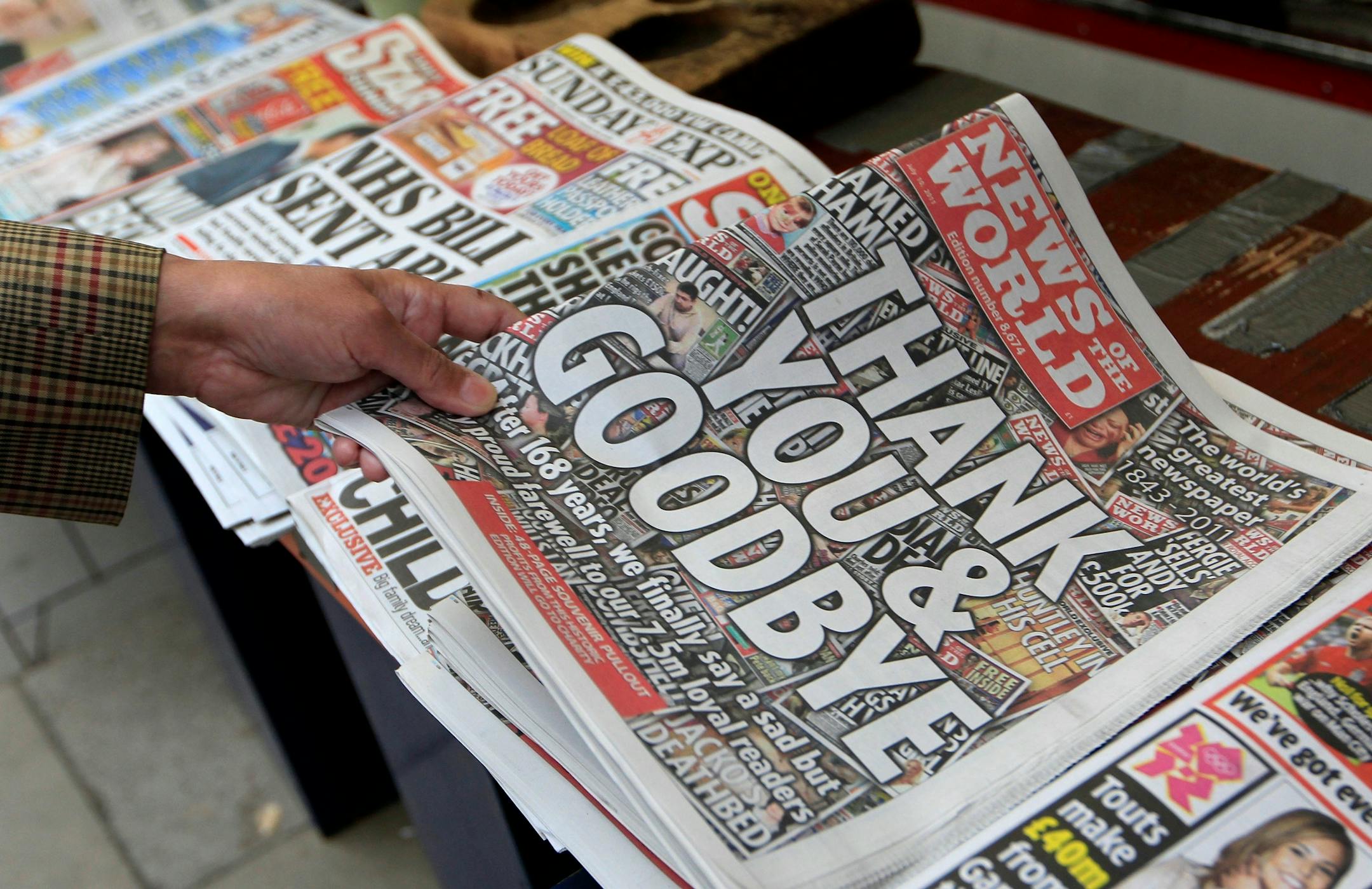
This revelation repelled Britons grown complacent toward the full contact sport of British media. The resulting firestorm singed even the savvy Cameron, who has pledged two investigations. And it engulfed News Corp., which cried "Stop the presses!" for real when it closed News of the World -- Britain's best-selling newspaper -- on just three days' notice.
A chastened James Murdoch admitted that the company had "failed to get to the bottom of repeated wrongdoings that occurred without conscience or legitimate purpose."


