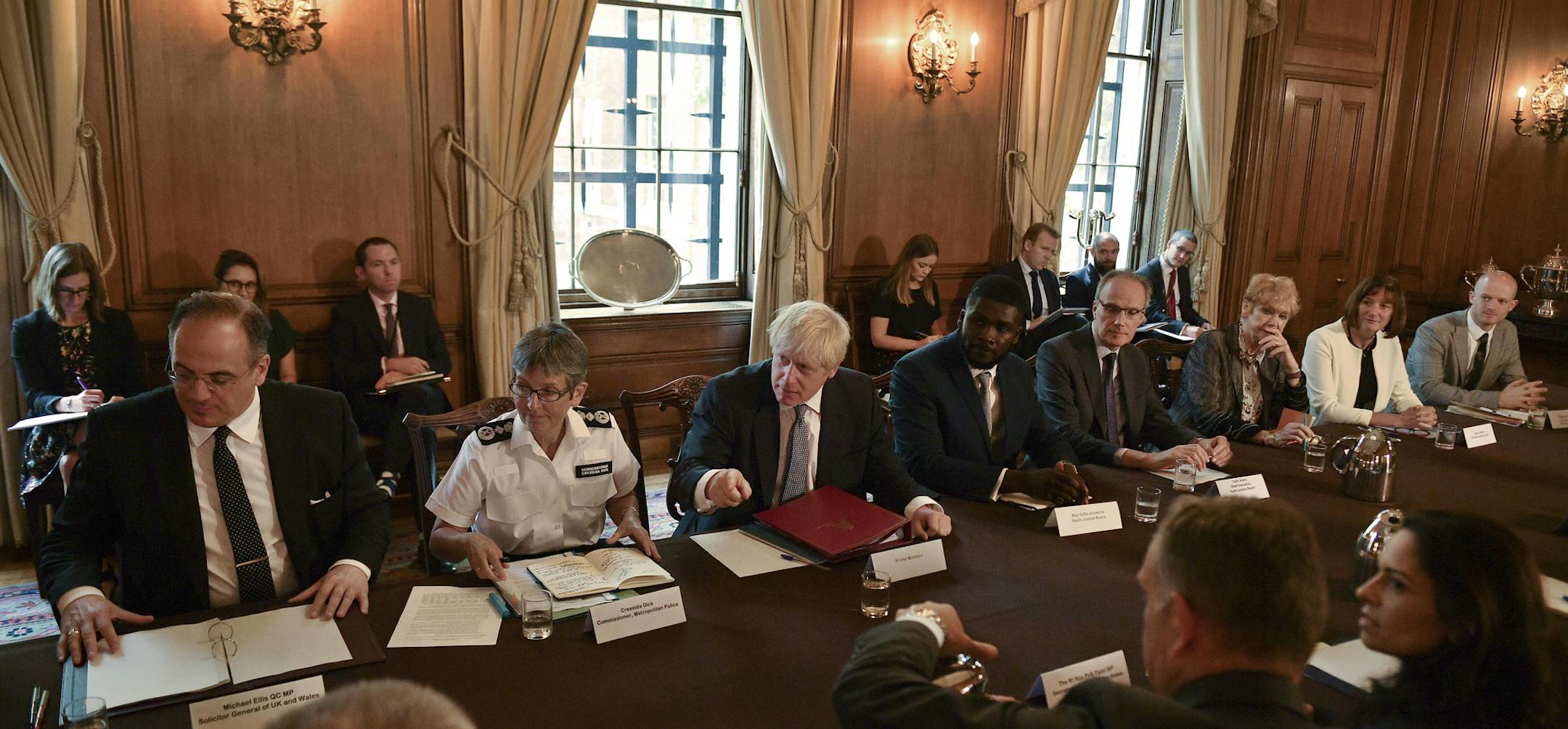
The House of Commons in March rejected the idea of a no-deal Brexit by a handsome 43-vote margin.
Yet last week, Dominic Cummings, Boris Johnson's adviser, suggested that it was now too late for MPs to stop Britain leaving without a deal on Oct. 31, the latest Brexit deadline.
This position was echoed by a Downing Street spokesman and by the health secretary, Matt Hancock, who was previously strongly opposed to no-deal.
There are two parts to the argument. The first is that Oct. 31 is now the default option, legally binding on both Britain and the European Union. In the absence of some specific action, such as agreeing to another extension, Brexit will take place then. The second is that, given the imminence of the deadline, MPs do not have enough power or time to prevent no-deal — unless the government cooperates.
And Johnson will not do that. Downing Street is threatening to force a no-deal Brexit even if the prime minister loses a no-confidence vote.
Does he mean it? It would be sensible to take the latest bluster with a pinch of salt. Johnson has two clear bargaining reasons to talk up the risk of a no-deal Brexit on Oct. 31.
One is to ensure that Brussels takes the notion seriously, which it did not when Theresa May was prime minister. That should raise the pressure on the E.U. to drop its refusal to reopen the withdrawal agreement. The second is to win back voters from Nigel Farage's Brexit Party, who positively favor no-deal. The Tories' loss of the Brecon by-election on Aug. 1 confirmed that, even under Johnson, they are still vulnerable to Farage.
Even so, a clear majority of MPs still oppose no-deal. Opinion polls suggest most voters are against it as well. Although Johnson has required all his ministers to sign up to the possibility, several are known to have been fretful about the consequences, including Michael Gove, who is in charge of preparing for it.