

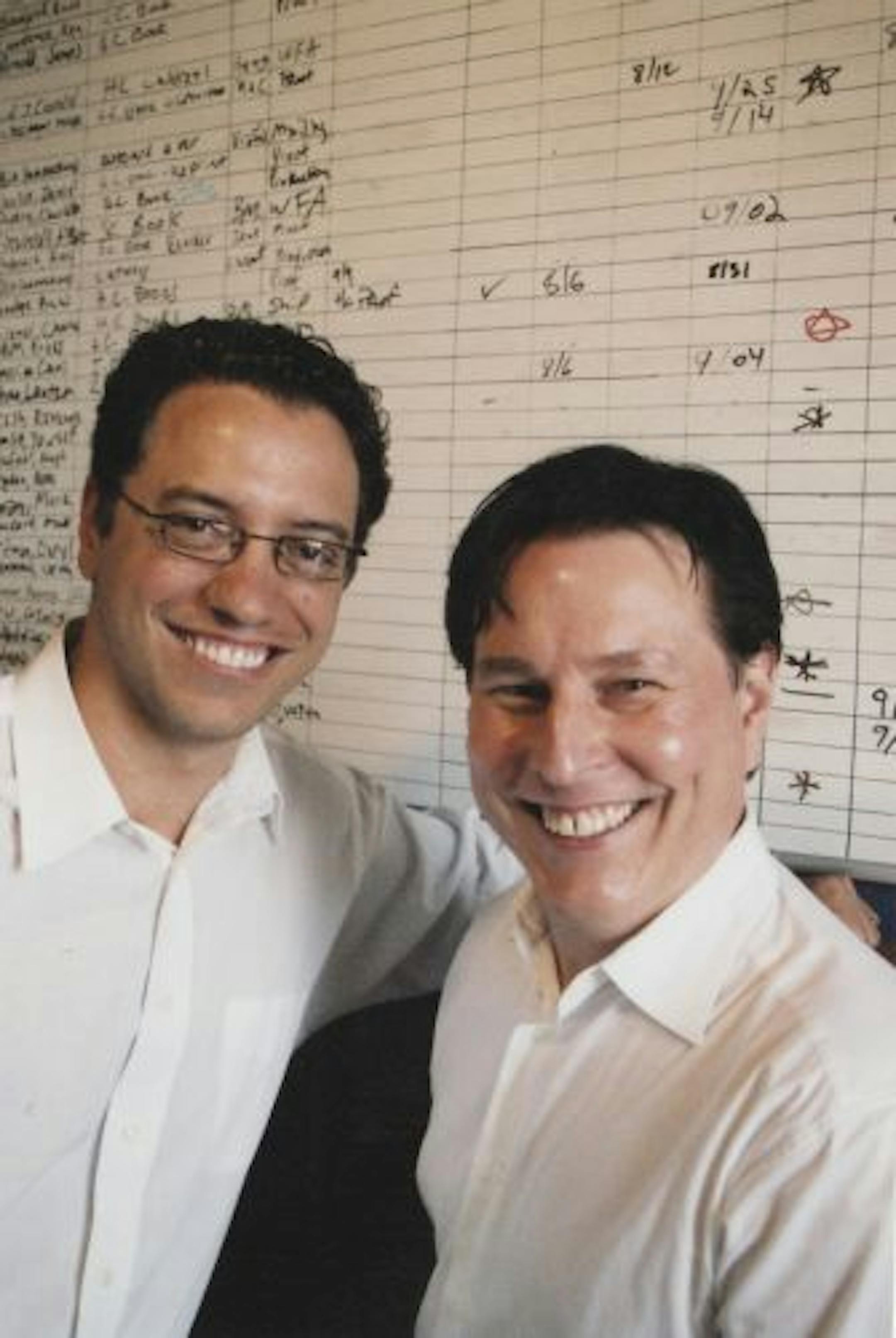
When William Reynolds and John Marino started Brio, a company they describe as a "virtual printing business," they fell into a trap common to many ambitious entrepreneurs bent on rapid growth.
"We were tracking down pretty much any sale we could find," said Marino, 33. "If it could be printed, we did it -- business cards, envelopes, catalogs, posters, magazines and a handful of books."
And, said Reynolds, 43, "We weren't very competitive in many categories. There was a lot of competition and tight margins in most of them."
Translation: The Minneapolis company, which advertised for printing clients online and then found a printer to match their needs, was breaking even, at best.
Whereupon the Brio founders narrowed their focus late in 2006 to contract book publishing, a small element of the business, but one with fewer competitors and much wider margins.
The payoff: While 2008 revenue only matched the 2007 total of $1.8 million, the gross margin doubled because 95 percent of 2008 revenue came from book-publishing, against just a third of the 2007 total.
"If we hadn't changed the business model when we did, we wouldn't be here today," Marino said. And considering the impact of the recession on the conventional printing business, "the timing wasn't bad, either," Reynolds said.
Brio is a publisher that offers a variety of services, from editing to design to distribution, in return for a fee. But unlike conventional publishers, it does not take ownership of the author's work or collect royalties on its sales. And it differs from the so-called vanity press, which typically does not offer a wide range of services.



