
Opinion | The Conviction Review Unit’s handling of this murder case merits major scrutiny

For more than a year, I have tried to bring up inconsistencies in its report recommending exoneration of a convicted murderer. I’ve been met with silence.

October 18, 2025 at 9:59AM
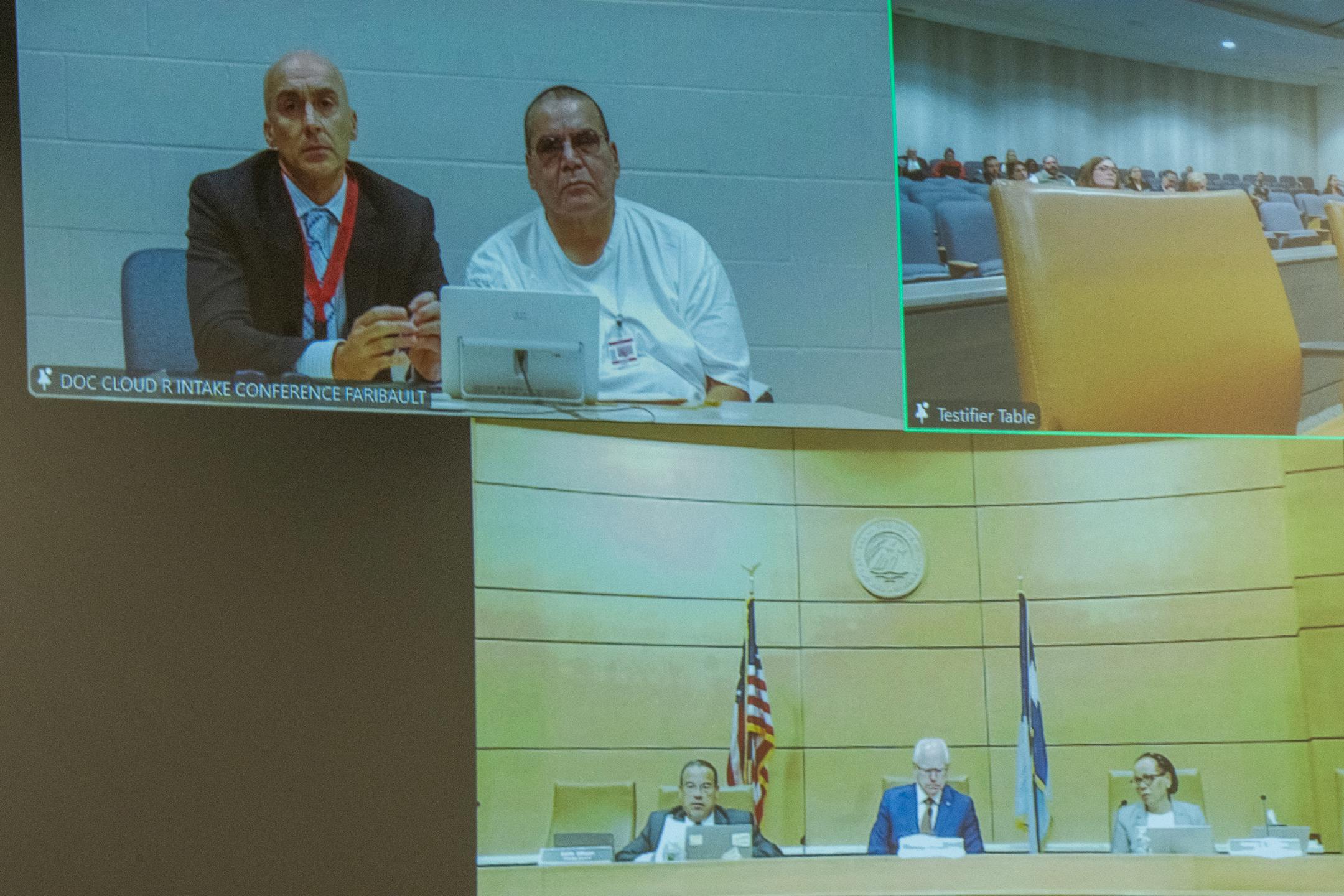
Minnesota’s Board of Pardons, composed of the governor, attorney general and chief justice, met in September in St. Paul to discuss whether Brian Pippitt’s murder conviction would be commuted. (Richard Tsong-Taatarii/The Minnesota Star Tribune)

Opinion editor’s note: Strib Voices publishes a mix of guest commentaries online and in print each day. To contribute, click here.

•••

Let me begin with a truth that unites everyone who believes in justice: An innocent person should never be convicted and a murderer should always be held accountable.

That’s what our system is designed to ensure through fair, transparent processes involving the courts, prosecutors, defense attorneys and law enforcement. Oversight of those processes is vital. But oversight must also be independent, credible and accountable.

That’s where the Conviction Review Unit (CRU) of the Minnesota Attorney General’s Office has failed.

In 1998, Evelyn Malin was brutally murdered in her home in Aitkin County. I was a deputy at the time and now serve as sheriff. The following year, Brian Pippitt and three accomplices were convicted of her murder. His conviction was appealed twice — and upheld both times by the Minnesota Supreme Court.

Then, in March 2024, the CRU issued a draft report claiming it was “impossible” for the crime to have occurred as presented at trial. The CRU concluded Pippitt was innocent and went further, alleging misconduct by law enforcement, prosecutors and defense attorneys. The report was based on a multi-year review of the case by the CRU and Centurion Ministries.

Given the complexity of the case, I asked for time to review the findings and for access to the CRU’s evidence supporting its findings. I was given two extra weeks, but denied access to any of the supporting documentation.

I submitted my response anyway, raising serious concerns about both the process and the conclusions. Those concerns were never acknowledged.

A few months later, the CRU’s final report appeared in a court filing — and eventually on the attorney general’s website — but it was never shared directly with my office or with other key stakeholders in law enforcement.

For more than a year, I have tried to engage the CRU and its partners to discuss factual errors and inconsistencies. I’ve been met with silence.

On Sept. 24, the Pardon Review Board voted 2–1 to commute Pippitt’s sentence. Attorney General Keith Ellison voted yes, saying he believed Pippitt was innocent based on the CRU’s report. Gov. Tim Walz also voted yes, citing fairness, Pippitt’s age, and time served. Minnesota Chief Justice Natalie Hudson voted no, noting the case against Pippitt remained compelling and questioning the process for undoing a conviction.

That difference of opinion illustrates what’s at stake. Justice depends on trust — and trust depends on transparency.

Yet in the months leading up to the hearing, I repeatedly asked the attorney general’s office to forward my letter of concern to the CRU advisory committee, the body responsible for oversight. My letter detailed fundamental flaws in the report. Those requests went unanswered. When I filed a data request for the advisory committee’s contact information so I could reach them myself, the information arrived after the hearing, in violation of state data-practice timelines.

My conclusion is unavoidable: My concerns were deliberately withheld from those who had authority to act.

As an elected sheriff, I lead with transparency and honesty — values the public expects from every level of government. The attorney general’s office and the CRU have not shown those same values in this case.

The CRU has refused to release key documents, facilitate witness interviews or clarify contradictions in its own report. That’s not how truth is found. That’s how trust is lost.

Decisions about a person’s freedom must be based on facts, not advocacy. If the pardon board believes commutation is fair or merciful, I respect that. But when innocence is declared, the evidence must be unassailable. In this case, it isn’t.

Minnesotans deserve a Conviction Review Unit that’s beyond reproach — one that acts with the same rigor and transparency it expects from police and prosecutors. Instead, we have a unit whose credibility is now in question.

If the CRU’s conclusions are to carry weight, its process must withstand scrutiny. Right now, it cannot.

I urge the CRU advisory committee to launch a full, independent review of how this case was handled and to recommend reforms ensuring future reviews are fair, transparent and fact-based.

Public trust in Minnesota’s justice system depends on it.

For those who wish to examine the record themselves, my full letter to the advisory committee and supporting documents are publicly available at tinyurl.com/Guidaletter.

Dan Guida is the sheriff of Aitkin County.

about the writer

about the writer

Dan Guida

More from Commentaries

See More
card image
Aaron Lavinsky/The Minnesota Star Tribune

Recovering energy from wood waste and trash is not about producing electricity; it’s about solving a waste problem responsibly.

card image
card image