

Step forward, CrackBerry Kevin.
Many months ago Kevin Michaluk vowed not to cut his hair until BlackBerry 10, the smartphone's long-delayed new operating system, was launched. In New York last week, Michaluk, who runs CrackBerry.com, a website devoted to the device, submitted himself to the scissors. He had had time to grow a handsome ponytail. Research In Motion (RIM), the Canadian company that makes the BlackBerry, also adopted a new style, renaming itself BlackBerry.
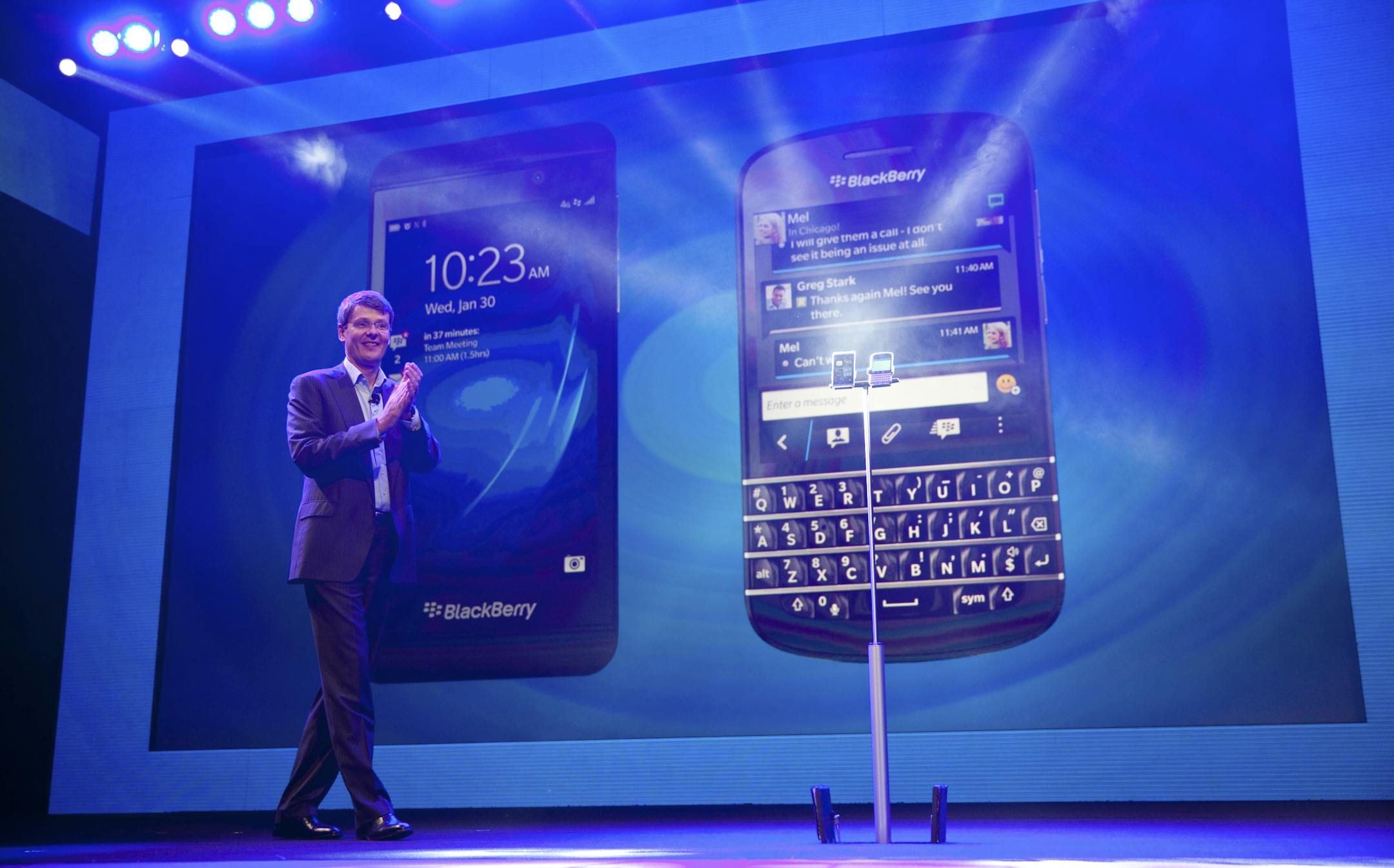
To complete its makeover RIM — sorry, BlackBerry — unveiled a new "global creative director," Alicia Keys, a singer and songwriter whose talents it hopes will tune up the brand. More substantively, it also showed off two phones, the Z10, with a full touch screen, and the Q10, with a physical keyboard. The Z10 went on sale in Britain on Thursday. Many of BlackBerry's bosses, including Thorsten Heins, the chief executive, and the chief marketing and operating officers, are new too, having been in their jobs for a year or less. They are bursting with conviction that BlackBerry 10 will revive the company's fortunes.
The BlackBerry used to be the smartphone of choice for everyone from President Obama to corporate road warriors. Granted, in some places, such as Indonesia and Venezuela, and for some British teenagers, it still is. Chief information officers wary of staff using their own phones for work still swear by it. So do those who find typing on touch screens infuriating. A BlackBerry's keys are more forgiving of clumsy thumbs.
But the BlackBerry has been pounded by Apple's iPhones and by Android smartphones. In the 12 weeks leading up to Dec. 23 only 4 percent of smartphones sold in Europe's five biggest markets were BlackBerrys, estimates Kantar Worldpanel, a market research firm. In America, the BlackBerry's share was an even feebler 1.1 percent. Lately the company has been operating at a loss. Although its share price has more than doubled since September, it still is only a quarter of what it was two years ago. It slid by more than 10 percent on the day of the launch.
In many ways the new BlackBerrys are ingenious. You can, for example, see and deal with messages, tweets and so forth in a central hub without needing to switch applications. The Z10's keyboard learns which words you are likeliest to type, so you can enter them by a flick of the thumb without having to finish. It also adjusts itself to habitual typos.
BlackBerry also is aiming at the corporate market in which it first made its name. BlackBerry 10 phones allow the strict separation of applications and content for personal life and work, which may attract companies that do not yet let staff use their own devices. For the many that already do, the latest version of BlackBerry Enterprise Server, which supports corporate smartphones, is being opened to iPhones and Android devices too.
Mobile carriers are desperate to see a third operating system take on iOS, which sits in iPhones, and Android. They have welcomed BlackBerry 10's belated arrival wholeheartedly. Alas, technical brilliance and the cheers of carriers are no guarantee of success.



