

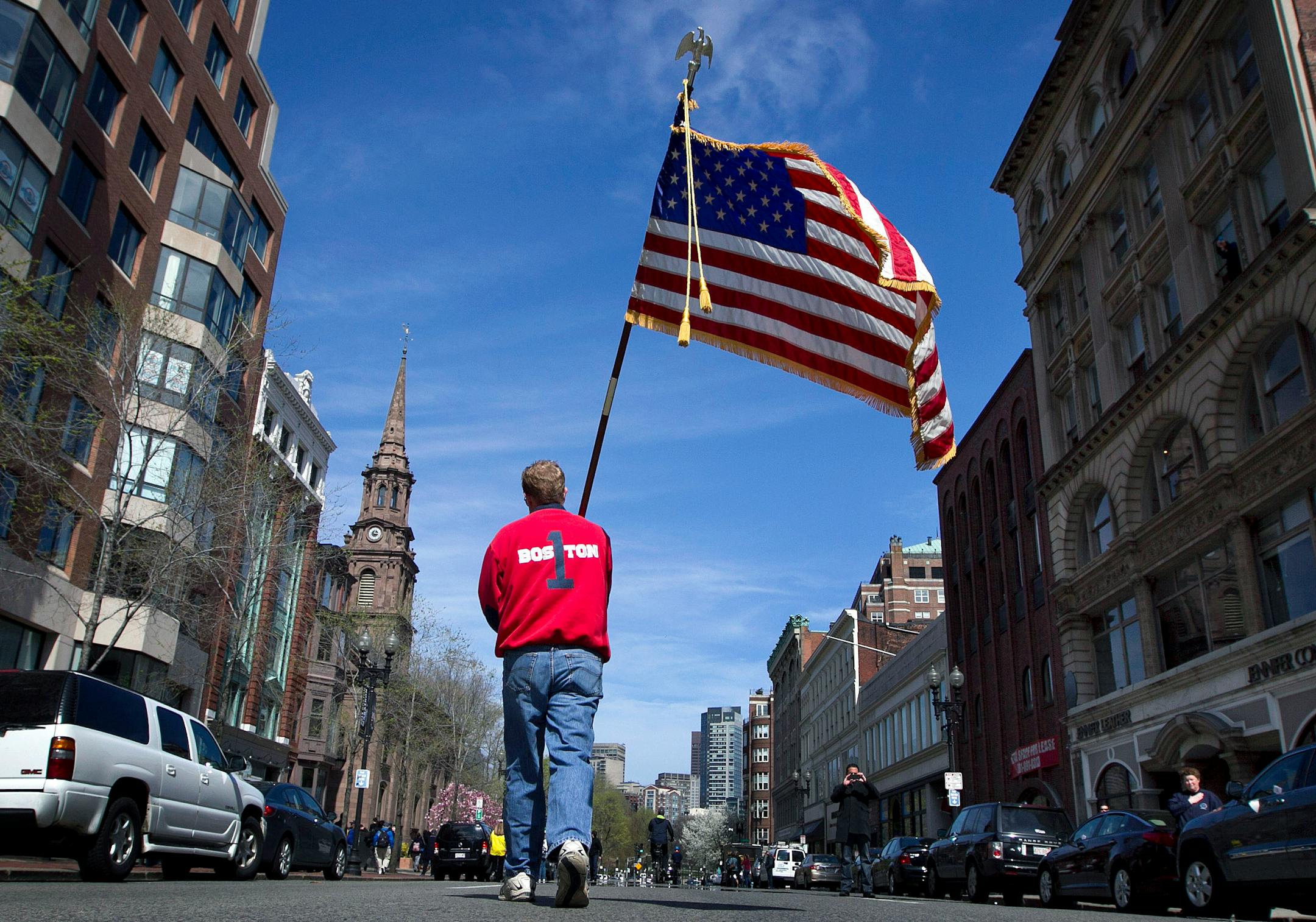
According to a 19th-century composer named Francis Scott Key, the United States is the "land of the free and the home of the brave." If he were writing those lyrics today, he might add an asterisk with the notation: "Void in the aftermath of terrorism."
In the wake of the Boston Marathon bombings, many people resolved not to let themselves be terrorized. It's obviously impossible to secure every inch of a 26.2-mile race course, but so what? Boston is not going to be scared into giving it up.
"Next year's marathon will be even bigger and better," promised Massachusetts Gov. Deval Patrick. Red Sox slugger David Ortiz told a Fenway Park crowd, "This is our [expletive] city. Nobody is going to dictate our freedom."
A spirit of bold defiance was exactly right, sending mass murderers the message: You can kill some of us, but you can't kill us all, and you can't frighten us from living our lives as free people.
But as in past episodes, that reaction was not universal, particularly in Washington. Sometimes, the preferred view is: Make us safe, no matter what the price.
Following the 9/11 attacks, the government went so far as to classify American citizens as "enemy combatants" and strip them of constitutional protections. Some 1,200 other people living here were secretly arrested and jailed. We invaded Iraq fearing it had weapons of mass destruction that might be used against us.
In retrospect, it's clear the administration of President George W. Bush overreacted again and again. It was hardly the first to do so: During World War II, President Franklin D. Roosevelt interned 120,000 Japanese-Americans. Not until 1988 did Congress apologize for mistakes caused by "race prejudice, war hysteria and a failure of political leadership."
That regrettable experience did not inoculate us against hysterical responses. Fear doesn't always strike out.


