
BNSF says it will slow speed of oil trains through Twin Cities

The new speed limit will be 35 miles per hour, down from 40 mph in the Twin Cities.

March 31, 2015 at 12:25AM
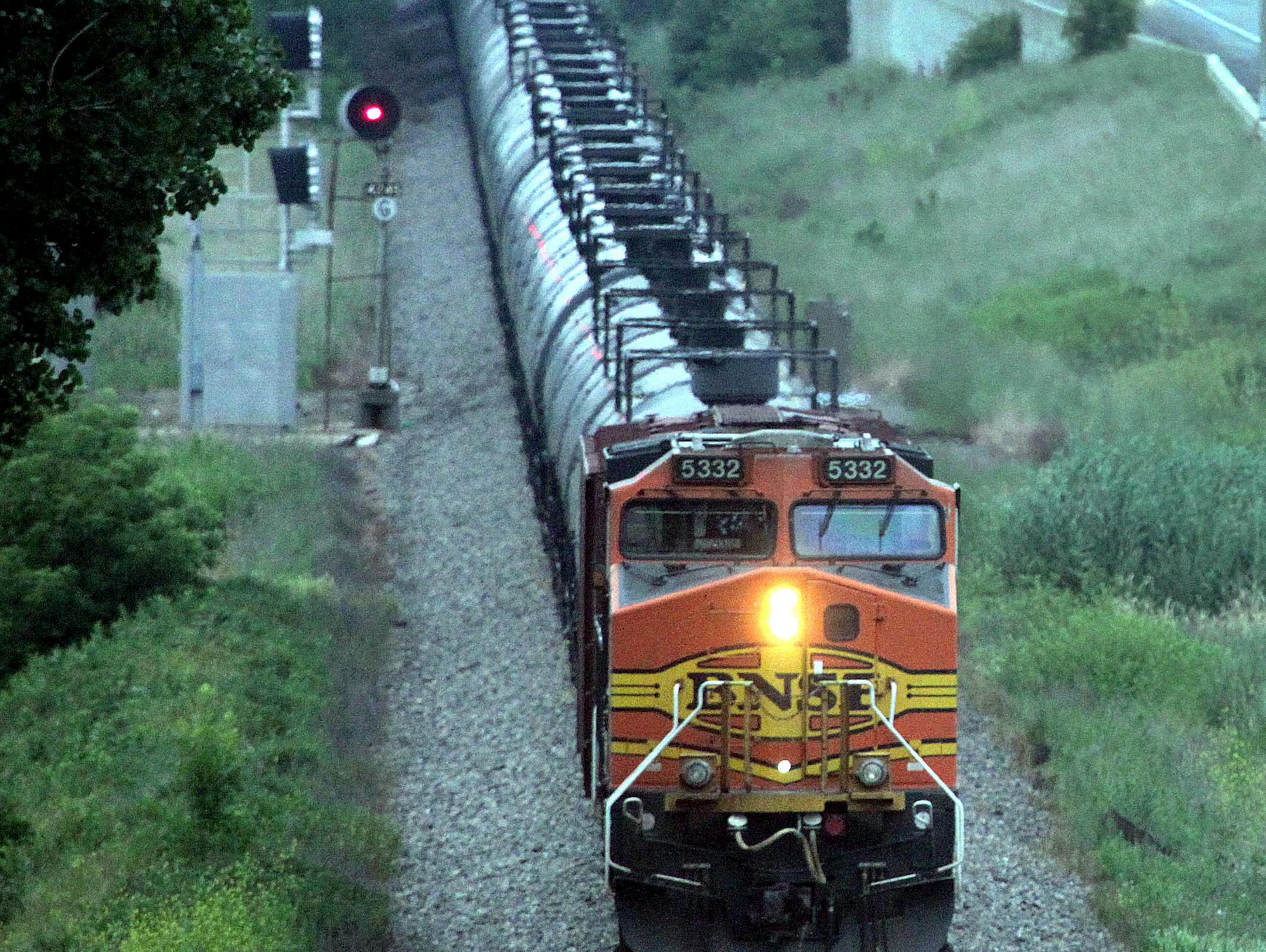
BNSF Railway, the largest hauler of crude oil from North Dakota, said Monday that it has cut the speed of Bakken oil trains through the Twin Cities to 35 miles per hour as a voluntary safety step.
BNSF Railway, the largest hauler of crude oil from North Dakota, said Monday that it has cut the speed of Bakken oil trains through the Twin Cities to 35 miles per hour as a voluntary safety step. (Star Tribune file photo/The Minnesota Star Tribune)

BNSF Railway, the largest hauler of crude oil from North Dakota, said Monday that it has cut the speed of Bakken oil trains through the Twin Cities to 35 miles per hour as a voluntary safety step.

U.S. railroads have run oil trains at no more than 40 mph through Minneapolis, St. Paul and 45 other "high threat" U.S. cities under a 2014 agreement with the U.S. Transportation Department.

BNSF said that as of last Wednesday it dropped its maximum Bakken oil train speed another 5 mph and applied the limit to all cities of 100,000 people or more. That means Fargo, N.D., which BNSF's oil trains pass through on their way into Minnesota, will be covered by the speed limit. The city is not on the "high threat" cities list.

No other cities in Minnesota or North Dakota are covered by the BNSF limit. Federal transportation officials separately are working on new oil train regulations for all carriers, including standards for more robust tank cars.

"We are not going to wait anymore," BNSF spokesman Mike Trevino said in an interview. "We are going to slow train speeds down further still because that will improve safety until we have a tank car that is appropriate for that commodity."

BNSF has supported more robust tank cars, most of which are not owned by railroads. Trevino said oil trains will continue to run at up to 50 mph in less populated areas.

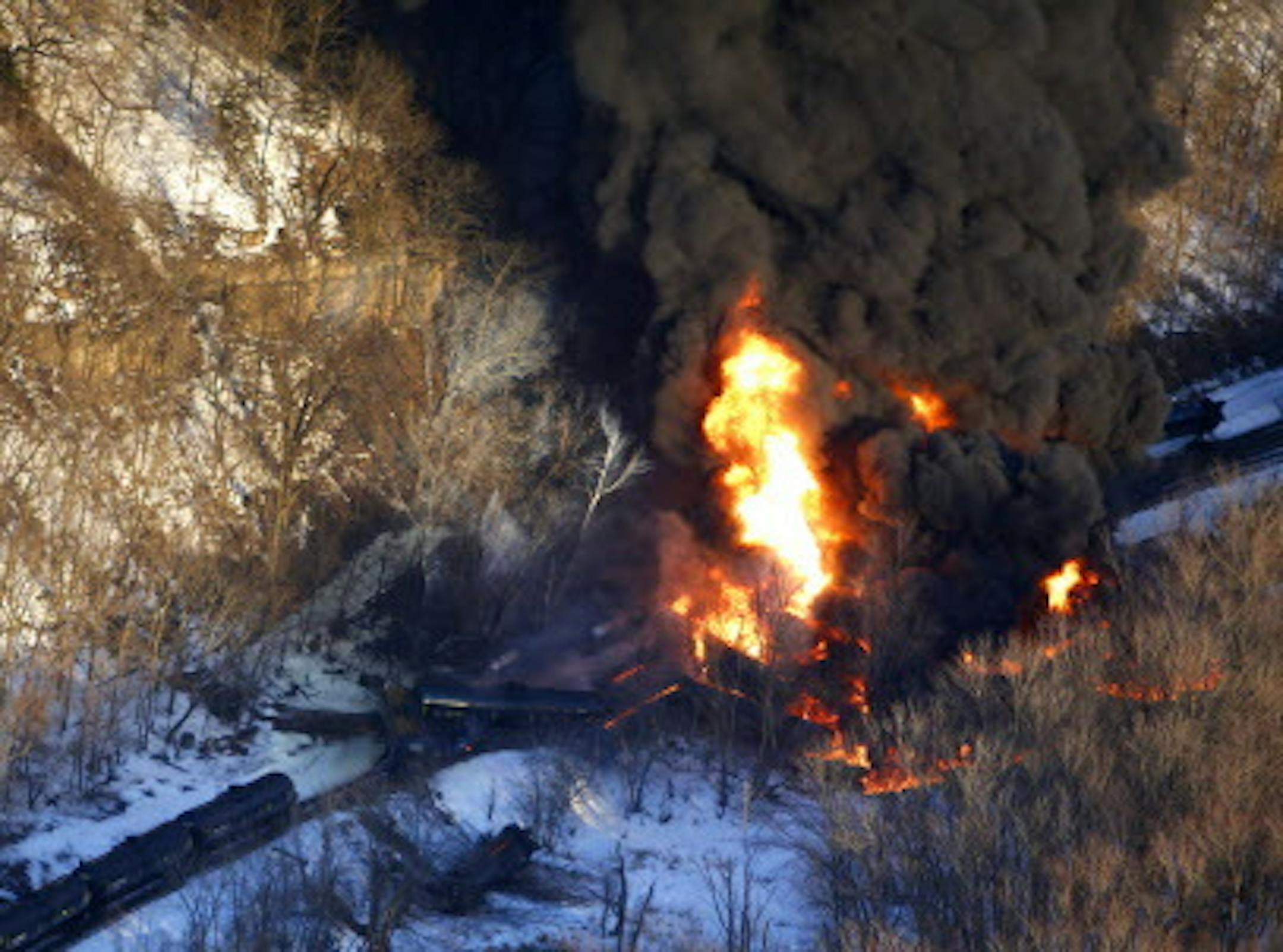
A BNSF oil train derailed and caught fire near Galena, Ill., on March 5, in the latest in a series of accidents involving Bakken crude oil.

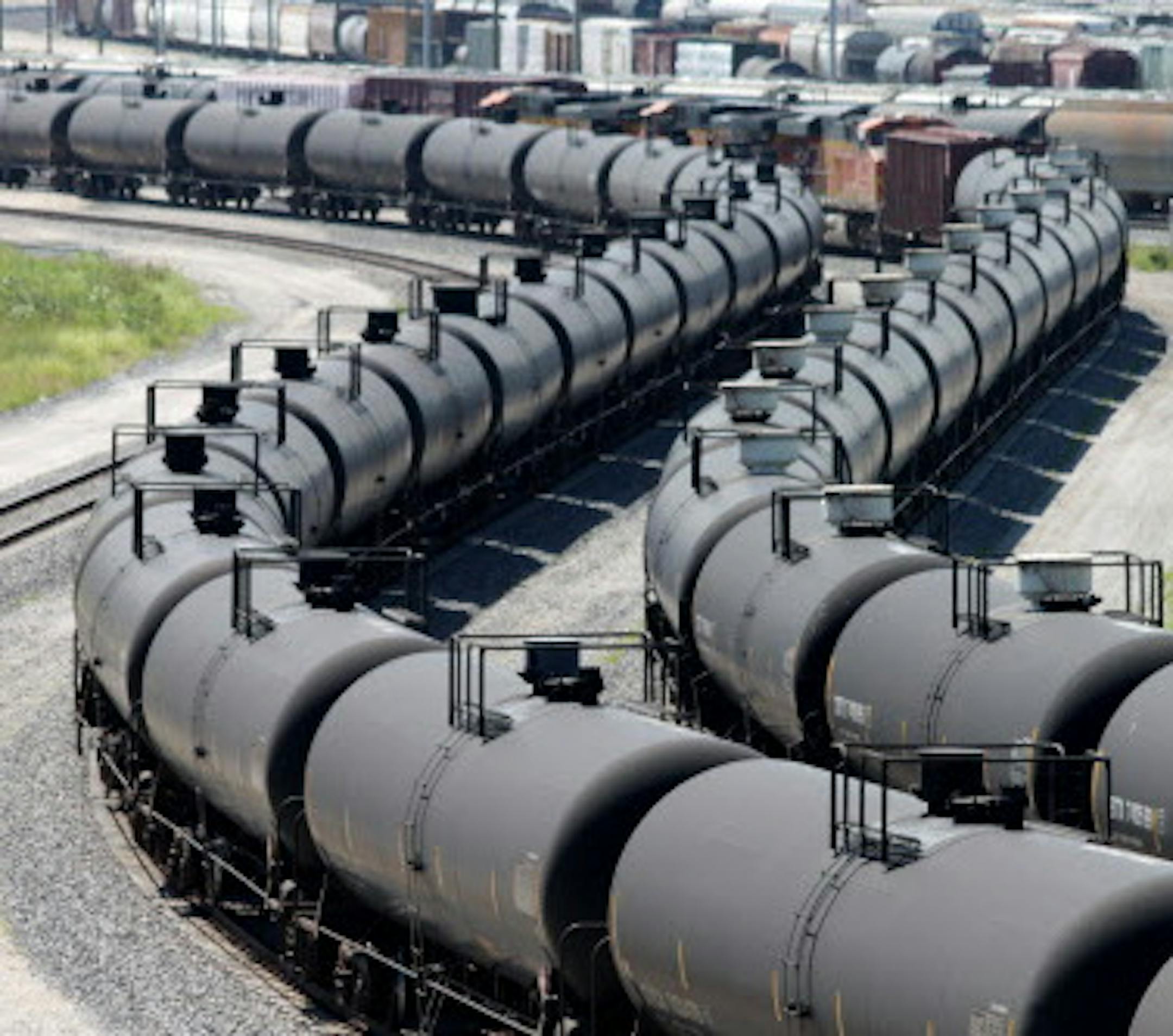
BNSF has told state officials that 37 to 52 oil trains each week enter Minnesota at Moorhead. Each train carries at least 1 million gallons of Bakken crude oil. Most go through the Twin Cities, then on to Wisconsin.
Although the BNSF's self-imposed speed limit doesn't apply to Moorhead, a city of 38,000 just across the border from Fargo, the state Transportation Department will ask the railroad to maintain the lower speed through that city, said Dave Christianson, a state rail planner. "We normally treat that as one metro area," he said.

BNSF did not immediately respond to an inquiry about the state's position.

Christianson said the BNSF derailment in Galena and a Feb. 16 CSX Transportation oil train accident in Mount Carbon, West Va., both happened at speeds under 35 mph. Even so, he said he welcomed BNSF's effort because "in terms of performance of trains and tank cars in accidents, the slower the better."

BNSF initially announced the change in a letter to shippers. North Dakota Gov. Jack Dalrymple made it public Friday in a news release, saying "I commend BNSF for taking these significant steps."

Canadian Pacific Railway, which also hauls North Dakota crude oil through Minnesota, apparently isn't matching BNSF's big-city speed limit.

When asked, the company issued this statement to the Star Tribune:

"CP can't comment on proposed changes by BNSF. Safety is one of CP's foundations and the company is open to any and all dialogue that would lead to an improved safety culture and further protect communities, employees, and customers. CP meets or exceeds all federal regulations."

David Shaffer • 612-673-7090 • @ShafferStrib

BNSF crude oil trains pass each other in Galesburg, Ill. (Curtis Tate/McClatchy DC/TNS) ORG XMIT: 1162112
BNSF oil trains typically carry at least 1 million gallons of Bakken crude when they enter Minnesota. (The Minnesota Star Tribune)
Smoke and flames erupt from the scene of a train derailment Thursday, March 5, 2015, near Galena, Ill. A BNSF Railway freight train loaded with crude oil derailed around 1:20 p.m. in a rural area where the Galena River meets the Mississippi, said Jo Daviess County Sheriff's Sgt. Mike Moser. (AP Photo/Telegraph Herald, Mike Burley)
Smoke and flames erupted at a March oil train derailment in a rural area near Galena, Ill. BNSF said Monday it will slow its trains to 35 mph when they go through larger cities. (The Minnesota Star Tribune)
about the writer

about the writer

David Shaffer

Reporter

See Moreicon

More from Business

See More
Ten skids of loose peanut butter crackers wait to go to the land fill Saturday Feb. 7, 2009 as Gleaners Food Bank destroys products containing peanut butter as part of the nation wide recall of foods containing Salmonella tainted products from Peanut Corp. of America . (AP Photo/The Indianapolis Star,Michelle Pemberton)
The Minnesota Star Tribune

Gold Star Distribution, which supplies several Halal markets in the Twin Cities, is voluntarily recalling a list of food and merchandise products stretching 44 pages and including products from candy to medicine.

card image
card image