

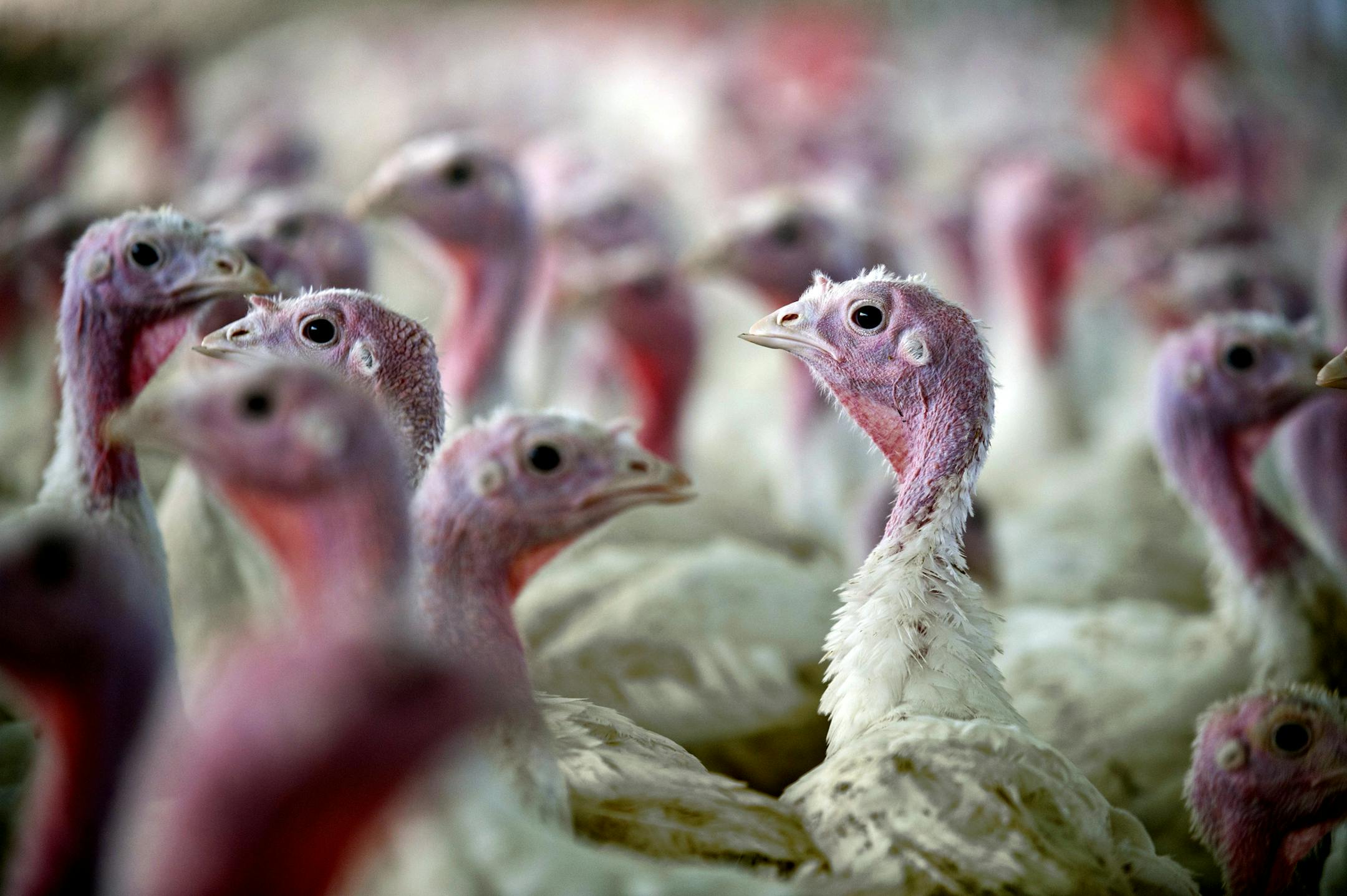
WASHINGTON — Federal officials are within a week of knowing whether a vaccine could prevent avian flu in turkeys, a welcome development for Minnesota's devastated turkey industry.
Still, a vaccination wouldn't be available until spring, too late halt any feared reoccurance of the lethal bird flu this fall. A vaccination also wouldn't be a cure-all, and it could complicate trade relations with importers of U.S. poultry.
The U.S. Department of Agriculture already has developed a vaccine that has shown efficacy in chickens. David Swayne, director of the USDA's Southeast Poultry Research Laboratory, said on Thursday a verdict was close on a turkey vaccination.
Swayne was speaking at a Congressional agricultural subcommittee hearing with some of the nation's other top avian flu experts.
Rep. Collin Peterson, the highest-ranking Democrat on the House Agriculture Committee, told the subcommittee that Minnesota growers are still reeling from the biggest flu outbreak in U.S. history. "My state was ground zero for this," he said.
The bird flu killed 9 million turkeys and egg-laying hens in Minnesota, wiping out about 10 percent of annual turkey production in the nation's largest turkey-producing state. Only Iowa, the nation's top egg state, was hit harder than Minnesota; about 31 million birds died there.
The last reported bird flu outbreak in Minnesota was June 5, and the turkey industry has been slowly rebuilding since. Forty-three turkey growers have signed "restocking" agreements with state regulators, while 31 have repopulated their barns with healthy birds, the Minnesota Board of Animal Health Board said Thursday.
The flu wiped out flocks at 108 Minnesota farms — most of them turkey operations — and has caused $650 million in economic losses, according University of Minnesota Extension. The hot summer weather has killed the virus for now, but experts say it may return with cooler weather this fall.



