

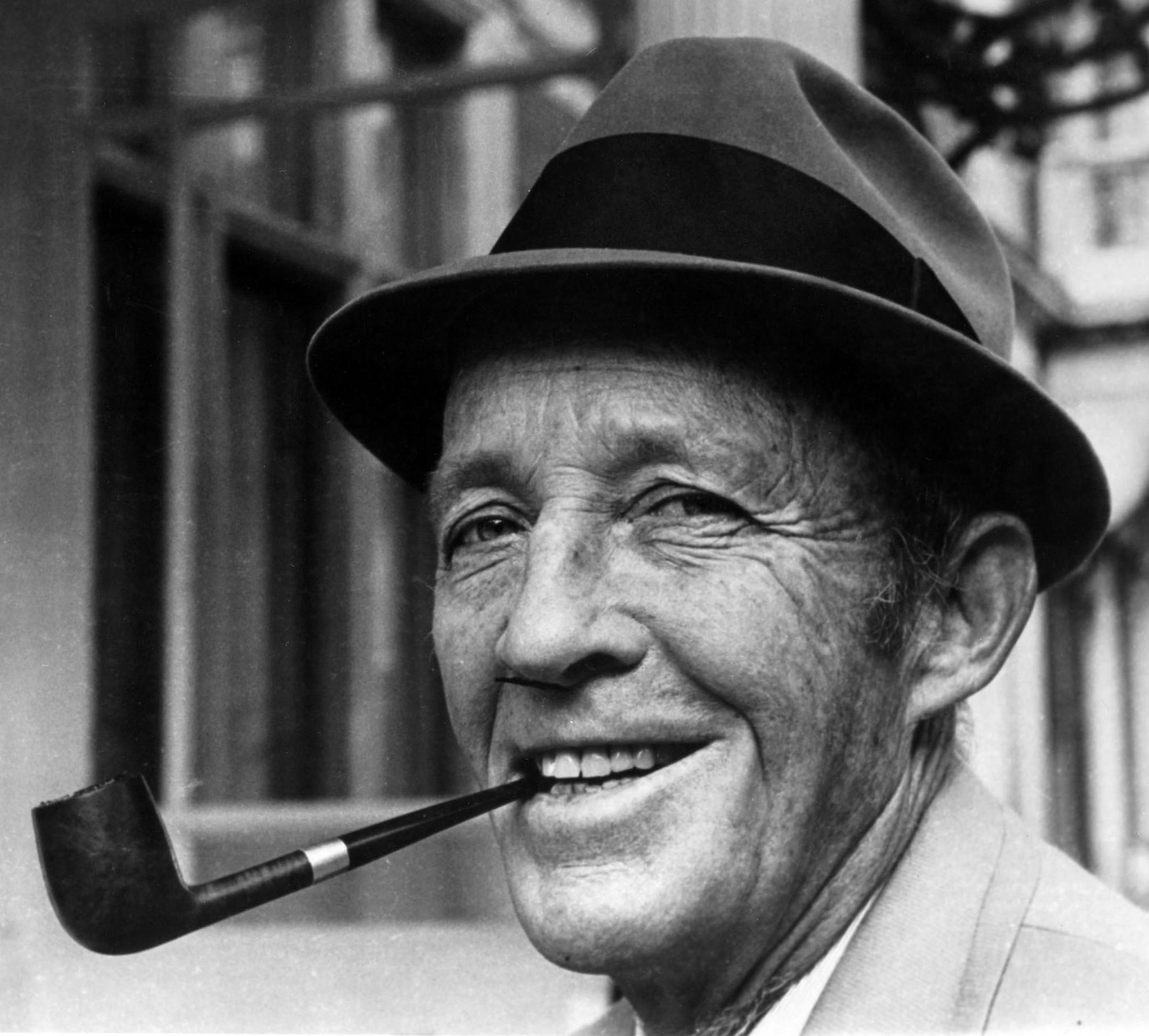
You could forgive Mary Crosby if she never wanted to hear “White Christmas” again. The most popular single in recording history was the signature hit for her father, Bing Crosby, and has become as tied to the holiday season as Santa Claus and fruitcake.
“For the first five years after his death, it was really painful to hear the song. I missed him so much, and I was in no way ready to lose my dad,” said Crosby, who was only 18 when her father died of a heart attack in 1977 on a golf course near Madrid.
“That time has passed. I’m so proud and happy to hear it now. It makes me feel good inside.”
Crosby’s change of heart is a big reason why we’re finally seeing “Bing Crosby Rediscovered,” one of the finest — and most significant — installments of PBS’ “American Masters” series.
The two-hour documentary, premiering Tuesday on TPT, should introduce a new generation to arguably the most underrated artist of the 20th century, a man who was to pop music what Elvis Presley would later be to rock ‘n’ roll. Inspired by Louis Armstrong’s phrasing, he brought jazz to the masses, becoming the most recorded singer of all time with nearly 400 hit singles. He was also a movie star, with a string of outrageous comedies with Bob Hope and three Oscar nominations, including a win as the affable priest in 1944’s “Going My Way.”
Twin Cities singer and jazz scholar Arne Fogel ranks Crosby with Armstrong and Charlie Chaplin among the most influential performers of the past 100 years.
“Jazz was very scary back then, especially in the Midwest. There was this racial aspect to it,” said Fogel, who hosts a weekly tribute to Crosby-era music on KBEM Radio (88.5 FM). “Then along comes this guy with a smiling-neighbor, movie-star guise. He was able to change mainstream pop music.”
But that side of Crosby may be unknown to anyone who wasn’t a teenager by the 1950s. By the end of that decade he was more famous for selling Minute Maid frozen orange juice than dominating the radio with that soothing, smooth bass-baritone voice. He also rarely pushed himself as an actor, relying on dry wit and his laid-back persona rather than digging deep. The biggest exception: his turn as an alcoholic has-been actor in 1954’s “The Country Girl.”


