

LAS VEGAS – Indiana enjoyed a Cinderella season in 2024, tying for second in the Big Ten standings and advancing to the College Football Playoff. The Hoosiers fell 27-17 to Notre Dame in the first round, leaving them 11-2 and with losses to only the national runner-up Fighting Irish and national champion Ohio State.
The Hoosiers were one of four Big Ten teams that advanced to the playoff, joining conference champion Oregon, runner-up Penn State and the Buckeyes, who went from fourth-place conference finishers to national champs in the new, 12-team format.
Tony Petitti, the Big Ten commissioner, wants to make sure the conference is guaranteed to have at least four teams in the playoff — especially if it expands to a 16-team format starting in the 2026 season.
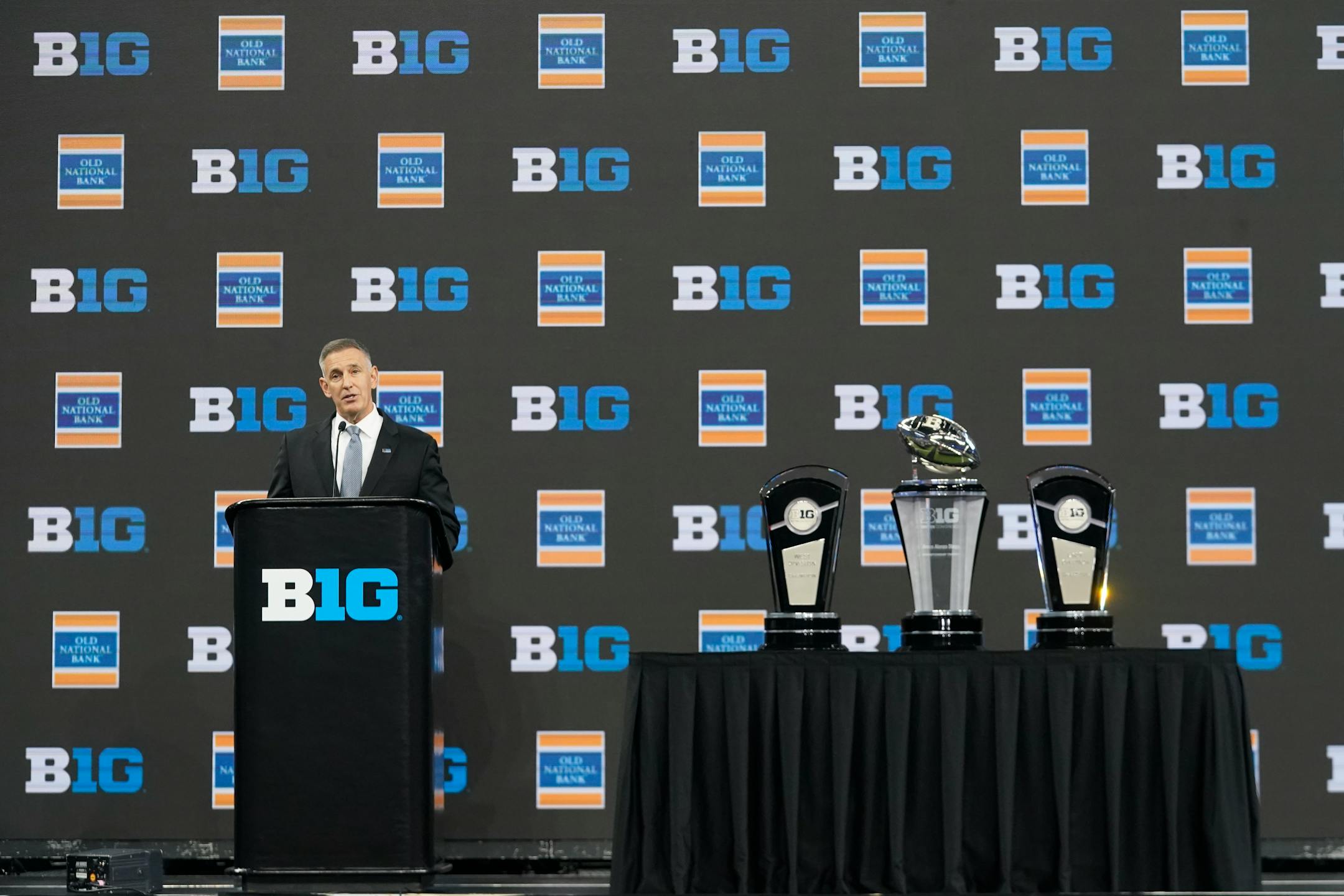
“Big Ten football has never been deeper or stronger,” Petitti said Tuesday in his opening news conference at Big Ten football media days at Mandalay Bay Resort and Casino.
Petitti’s plan for a 16-team playoff — dubbed the “4-4-2-2-1-3″ model — is this: The Big Ten and SEC would each receive four automatic qualifiers to the tournament, while the ACC and Big 12 would get two automatic bids each. The highest-ranked Group of Six conference champion would receive an autobid, leaving the final three spots for at-large selections.
In addition, Petitti wants a mini-playoff in his conference to feed into the national tournament. On conference championship weekend, he’d like to see play-in games for a CFP berth between the No. 3 and No. 6 teams and No. 4 and No. 5 teams in the Big Ten, along with the usual No. 1 vs. No. 2 conference title game matchup.
“We feel pretty strongly that fans will really gravitate to a play-in weekend,” Petitti said. “Providing games that are do-or-die on the field will drive fan interest. … The weekend that we’re talking about where you would have championship games and across all conferences, meaningful play-in games, I don’t see how that’s a bad thing for football."
The Big Ten and SEC have control over changes in the playoff format, and so far, the SEC isn’t buying what the Big Ten is selling.


