

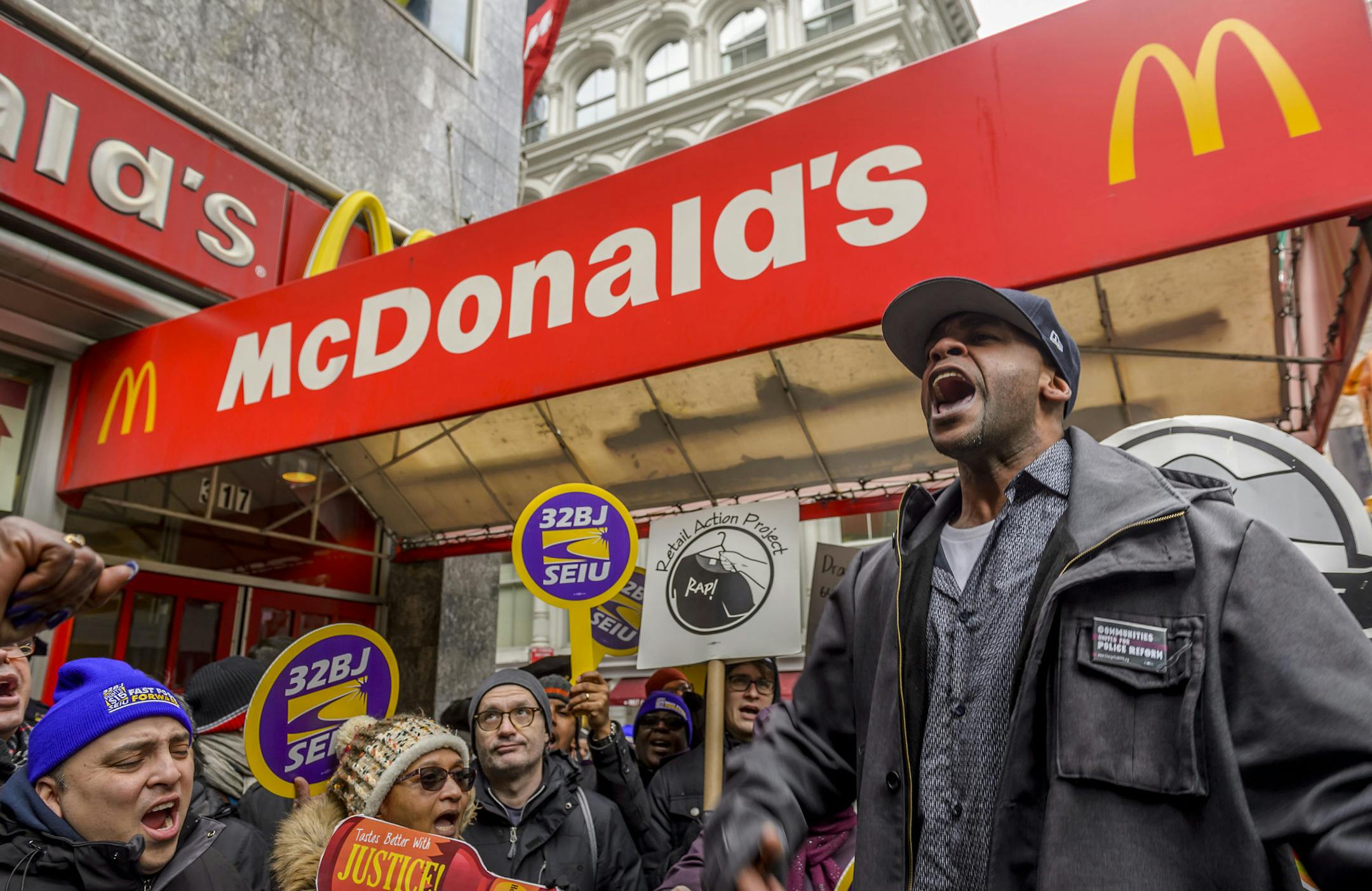
For two years now, Jeff Hanscom has been traveling to state capitols and pitching lawmakers on a simple, if technical, idea: pass a law that says the state won't consider the people who work at franchises — think McDonald's cashiers or trainers at Gold's Gym — to be employed by the franchiser.
Hanscom is a lobbyist for the International Franchise Association, a business group fighting an Obama-era definition of "employers" that could have big consequences for companies that rely on franchising, contract workers or temporary staff.
His efforts are paying off. Since 2015, 10 states have passed laws that guarantee, with some exceptions, that parent companies won't be held responsible for franchise owners or workers under state wage and hour and anti-discrimination laws. Similar bills are currently pending in 11 other states.
A growing number of workers are in an employment relationship that involves three parties. Franchises from Hilton to Burger King to Planet Fitness employ about 7.6 million people across the country. An additional 4.7 percent of U.S. workers are employed by temporary help agencies or firms that contract out their labor.
Under President Barack Obama, the National Labor Relations Board (NLRB) — which defends employees' right to form a union — argued that employers who have indirect, potential control over workers should be considered "joint employers" of those workers under federal law.
This line of thinking may not hold up in court and will likely be reversed under President Donald Trump. But it still sent a tremor through the franchising industry. If it were easier to call franchisers joint employers, it would be easier for franchisee workers to unionize across establishments and to sue their parent company over wage and hour issues. The added liability could undermine the whole franchising business model.
Business groups are trying to get additional legal security by making sure the broader standard won't apply under state law. "To all of a sudden say that franchisers are on the hook, or legally responsible, for the employment relationship between a franchisee and his or her employees would be inserting a level [of control] that doesn't exist," Hanscom said.
Critics of the industry-driven state laws say they're not likely to achieve much, because workers can still sue under federal law.




