

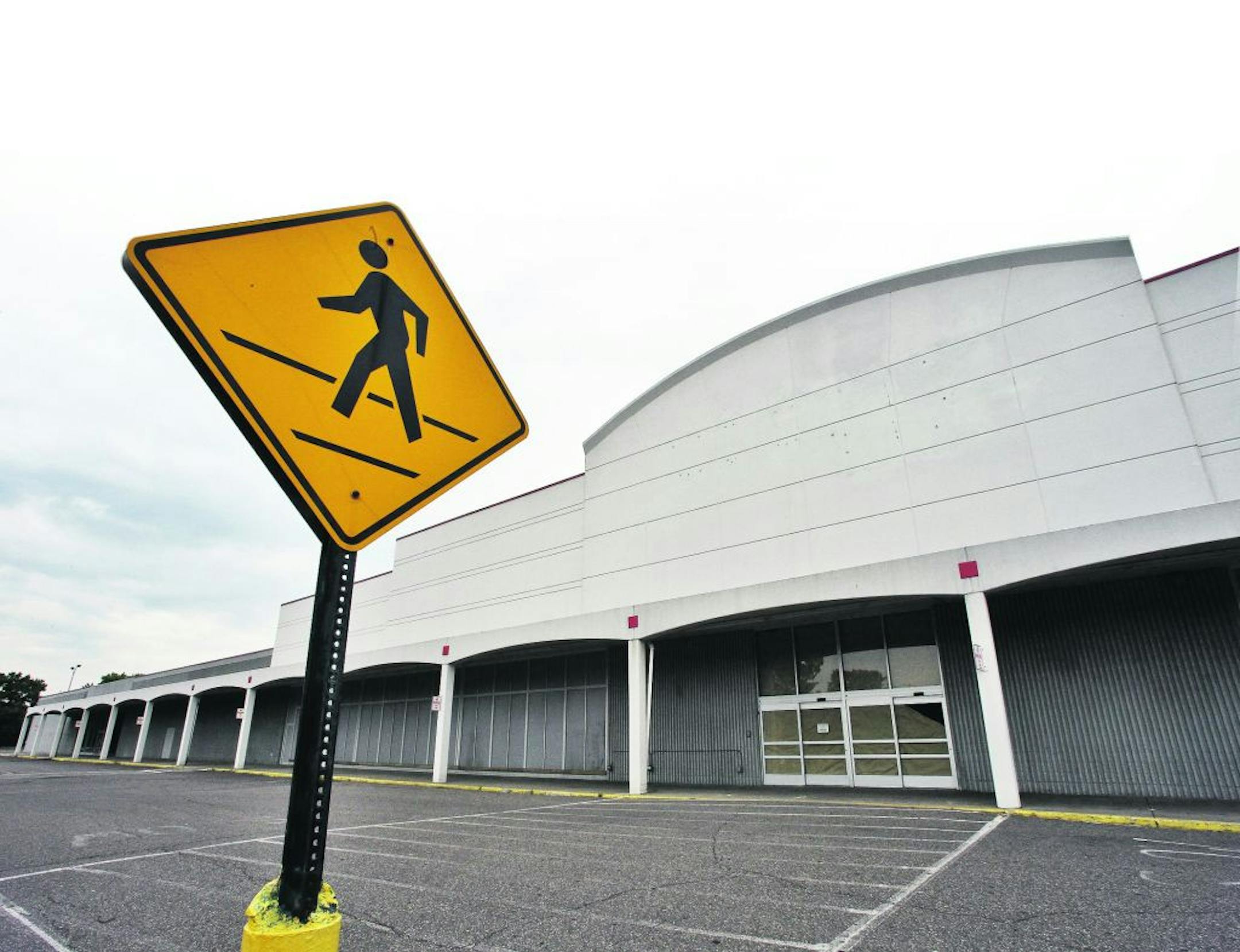
When two Kmart stores were slated to close in New Hope and White Bear Lake late last year, each city took to the news with decidedly different strategies.
New Hope charged headlong into the commercial development game for the barren retail site. White Bear Lake prefers to let the market do its bidding with its now-shuttered Kmart property.
Both stores were built in the early 1970s, and they fiercely competed against homegrown competitor, Target. They both sprouted in growing suburban territories that stretched beyond the metro area's traditional urban boundaries. And, in the end, the real estate was owned by separate out-of-town entities faced with the challenging prospect of repurposing an aging retail store as their Blue Light Specials forever dimmed.
The Great Recession hurt commercial real estate generally, but it dealt a much more severe blow to big-box retailers such as Kmart and Best Buy, which experts say were already vulnerable to a general shift toward online shopping and more competition from major retailers. A recent study by Colliers International, one of the world's leading commercial real estate companies, determined that roughly 120 million square feet of big-box retail space has been vacated since January 2008 -- a space equivalent to 29 Mall of Americas.
Best Buy has already said it will shutter 50 underperforming stores nationwide, including five in Minnesota. And Kmart's parent company, Sears Holding Corp., announced in December that poor sales would force the closing of four Kmarts in Minnesota this year and more than 100 Kmart and Sears stores nationwide.
"Many [chains] just expanded too fast," said Maureen McAvey, a retail expert at the Urban Land Institute. "The outer suburbs are not growing as fast. And there is a desire to be close to an urban area."
As big-box retailers close stores in a down economy, municipalities and property owners alike are often stuck with a big box that needs to be filled. In some cases, the stores remain empty for years.
But not in New Hope. Shortly after the Kmart store closed, city officials pounced and purchased the 16-acre site for $4.5 million. The store, centrally located at 4300 Xylon Av. N., is being eyed as a possible mixed-use development, perhaps with high-density residential units and a retail component. A developer is being sought for the project, which is envisioned as New Hope's new city center, a feat, since New Hope doesn't really have a downtown now.



