
Biden's motives are political — so were Reagan's

But a decision made in self-interest isn't always a bad one.

Los Angeles Times
February 2, 2022 at 11:45PM
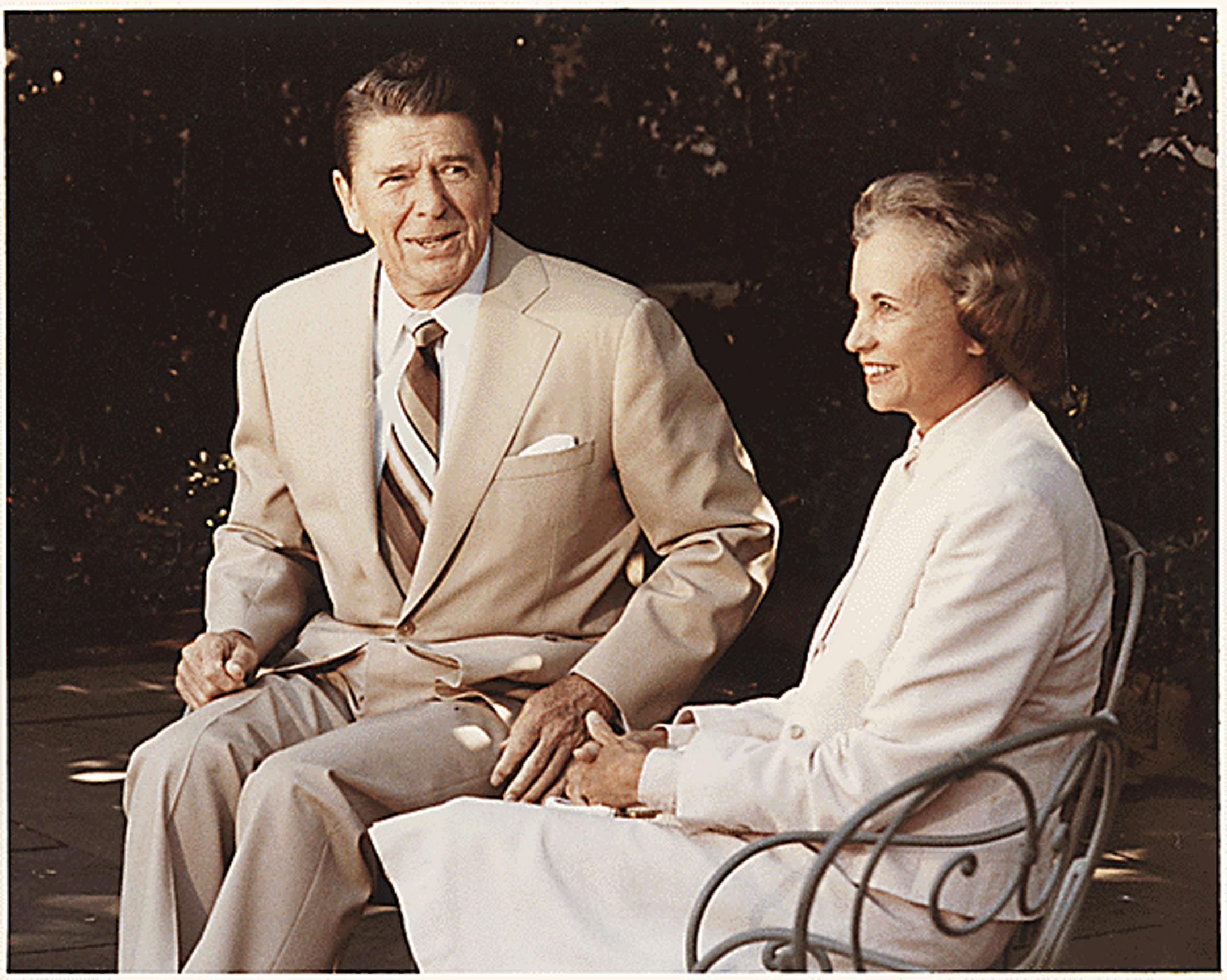
President Ronald Reagan sits with Supreme Court Justice nominee Sandra Day O’Connor at the White House in Washington, D.C., on July 15, 1981. (National Archives, TNS - TNS/The Minnesota Star Tribune)

The presidential candidate was in difficult straits and so he made a promise that would change history. If elected, he said, he would shatter more than 200 years of precedent with his nomination to the U.S. Supreme Court.

That was Joe Biden, his face pressed to the mat days ahead of the 2020 South Carolina primary. His announcement that he would name a Black woman to the high court clinched a key endorsement that reversed Biden's fortunes and swiftly helped make him the Democratic nominee.

The circumstances were similar in 1980, when Ronald Reagan pledged to name the court's first female justice.

"It is time for a woman to sit among the highest jurists," Reagan said, as he worked to close a gender gap in his run against President Jimmy Carter.

The vow to appoint "the most qualified woman I can possibly find" to the Supreme Court was motivated by one thing alone: political self-interest.

"It was not an ideological decision at all," said Stu Spencer, Reagan's chief strategist and architect of his campaign pledge. Nor, Spencer said, did the announcement stem from some heartfelt desire by Reagan to remedy a long-standing flaw in the country's administration of justice.

It was, Spencer said, all about "seeking a solution to his deficit problem with women."

Biden's intention to fulfill his promise to name a Black female justice, which secured the blessing of South Carolina's most powerful Democrat, Rep. James E. Clyburn, has caused howls on the right. But for those keeping tabs, four Black women have flown in space, which is four more than have sat on the Supreme Court.

There is professed outrage that such raw political calculation — Biden's desire to save his skin in South Carolina — would dictate his choice for a court that has approached its work in such transcendently nonpartisan fashion. This is sarcasm, right?

Susan Collins and others seize on the fact that Reagan said one of his first picks would be a woman, suggesting that negates any comparison with the supposedly shameless Biden. The argument, of course, credits a remarkable prescience to Reagan, who evidently knew he would have the opportunity to make more than one selection. (As it turned out, he named four justices.)

It also ignores the raw political nature of Reagan's pledge.

Spencer, who was with Reagan from the start of his electoral career in the mid-1960s, noted he had fared well among female voters as a candidate for California governor. But that support dwindled by the time Reagan was waging his third bid for president, in part because of his opposition to abortion rights and the proposed Equal Rights Amendment.

Losing the women's vote in a landslide, and with it Reagan's shot at the White House, was a genuine concern among Republicans. One proposed remedy was pledging to put a female justice on the nation's highest court.

After turning the matter over in his head for months, Spencer brought the matter up at an October breakfast with the candidate. As he recalled the conversation, Spencer asked, "Do you have any problem appointing a woman to the Supreme Court?"

Reagan said, "Hell, no. Not if she's qualified," Spencer recalled.

And that was that. (While some in Reagan's political brain trust resisted, Spencer had an important ally in Reagan's wife, Nancy.)

The question then was how and when to announce Reagan's groundbreaking intention.

Speaking to a group of coal and steel workers in Ohio in early October, the candidate had made an off-the-cuff remark downplaying the problem of air pollution and suggesting that trees were a major contributor. The statement played into Reagan's gaffe-prone image and reverberated for days after.

The campaign was eager to change the subject and so Reagan announced his plans to name a female justice. The ploy worked. The pledge became a central part of Reagan's closing argument in the campaign.

After his election, Reagan redeemed the promise by nominating Sandra Day O'Connor, a judge on the Arizona Court of Appeals, when Justice Potter Stewart retired.

It was a bold and transformational move. And it just goes to show that good things can sometimes result from cold political calculation.

about the writer

about the writer

Mark Z. Barabak

More from Commentaries

See More
card image
Brian Peterson/The Minnesota Star Tribune

Two concerns come up repeatedly: fraud and the strain the law will place on small employers.

card image
card image