

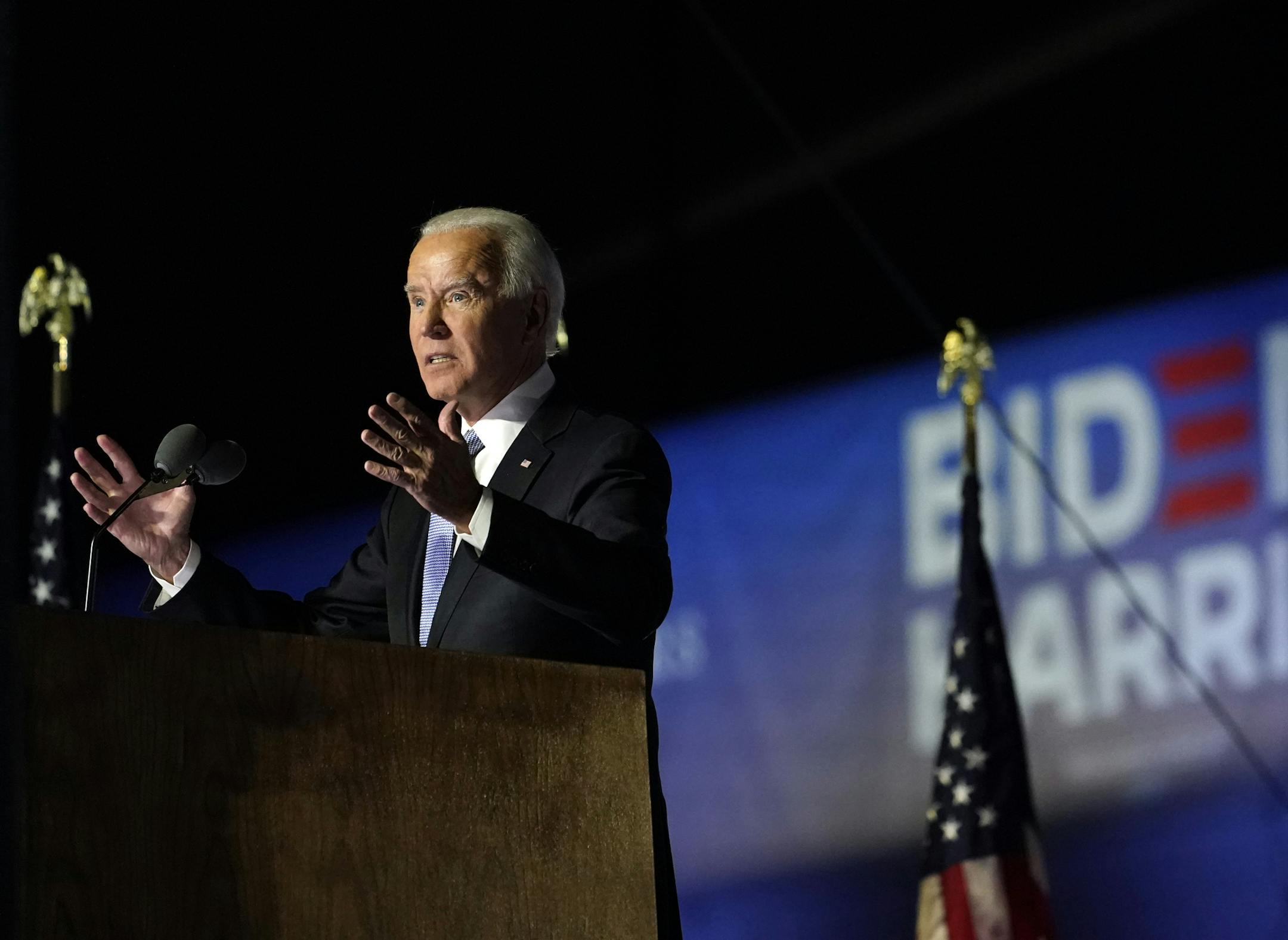
As 2020 dawned, daunting foreign-policy challenges from China, Russia, Iran, North Korea and other nation-states loomed. Stateless, transnational challenges like climate change, cybersecurity and the global migration crisis did, too.
So to some it may have seemed like political science fiction, not political science, when the political risk and consulting firm Eurasia Group named the U.S. election as its top 2020 geopolitical risk early this year.
"We've never listed U.S. domestic politics as the top risk, mainly because U.S. institutions are among the world's strongest and most resilient," Eurasia Group noted on Jan. 6. But, it added, "this year, those institutions will be tested in unprecedented ways. We face risks of a U.S. election that many will view as illegitimate, uncertainty in its aftermath, and a foreign policy environment made less stable by the resulting vacuum."
The threat assessment came pre-pandemic. Amid lockdowns, the Eurasia Group nailed it down in a March 19 update: "As the administration's handling of the coronavirus outbreak continues to attract criticism, and the economy tumbles into recession, [President Donald] Trump will be tempted to sow doubts about the integrity of the election, not to mention aggressively going after presumptive Democratic nominee Joe Biden and his son Hunter."
It was a prescient outlook.
"Things involving the United States have a much greater impact, but the likelihood of political risk coming out of the U.S., which is a strong and stable country, has been quite low," Eurasia Group President and Founder Ian Bremmer said in an interview. "But it's been going up; some of the political institutions in the U.S. have eroded. Not at a Turkey level, but they're not Canada or Germany anymore."
Bremmer mentioned this week's events in Hong Kong, where four prominent pro-democracy legislators were purged by Beijing, prompting the remaining 15 to resign. "I don't think that is a coincidence, that it's happening in the middle of the United States having such incredible uncertainty," Bremmer said. "I think there could be other things like that where rogue actors who oppose the United States decide to take advantage, to change the facts on the ground."
Or in the air. North Korea, for instance, could "test an ICBM in the next month or two to improve their negotiating position with Biden coming in," Bremmer said. "I wouldn't be surprised; things like that are plausible" — a plausibility intensified by Trump's transition intransigence, which sows doubt about the country's capacity.


