

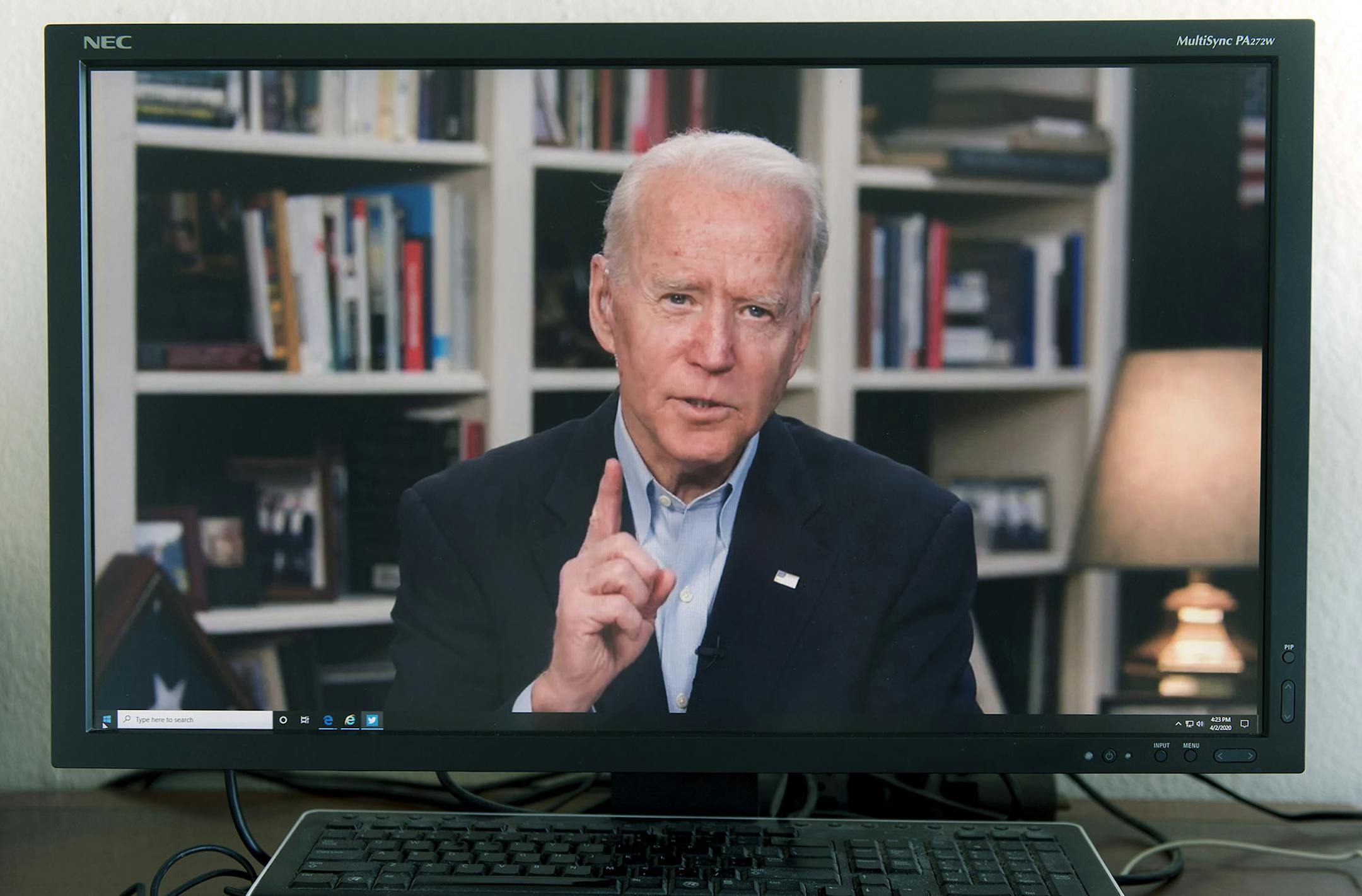
Now that Joe Biden is the Democratic Party's presumptive presidential nominee, he must prepare for what previous nominees have called their "first presidential act" — choosing a running mate. The choice matters, but not for the reasons you might think. It will help voters envision what a Biden presidency would look like.
Biden, of course, is no stranger to this process. He was Barack Obama's choice in 2008 and served two terms as vice president. Now it's his turn to choose a running mate, a potential partner on the campaign trail and in the White House.
It's a big decision, especially for a 77-year-old would-be president who voters may fear won't be able to finish his term if elected. Clearly, the choice is on Biden's mind — he made headlines at the most recent Democratic debate by announcing that he would pick a woman to be his vice president.
Presidential candidates typically say that their choice of a running mate comes down to one fundamental criterion: Is the person qualified to take over as president, if necessary?
In private, presidential candidates often say that they also expect the running mate to help them win. Most often, they speculate about a potential home-state advantage. Or that the running mate may deliver a key demographic group, such as women or people of color. More broadly, a popular running mate could help the ticket win by attracting positive press coverage and votes in November.
But the research laid out in our latest book on presidential running mates shows vice presidential selection generally has little direct effect on voters. While most voters say that the choice of a running mate will be important in deciding their vote, few can recall a time when it actually has changed their vote.
And that makes sense. After all, presidents are far more powerful than vice presidents once in office. Why choose a suboptimal president just to elect your preferred vice president? Sure enough, our analysis of survey data from the 1968-2016 American National Election Studies shows that presidential voting mostly comes down to how people feel about the person at the top of the ticket.
What may be surprising is that running mates usually fail to deliver votes among targeted geographic or demographic groups. Our analysis indicates having a woman as a vice presidential candidate does not make women more likely to vote for the ticket. This was true when Democrat Geraldine Ferraro ran for vice president in 1984 and when Republican Sarah Palin did the same in 2008.


