

Bagels were never hard to come by. But wade deeper into what is considered Jewish cuisine, and the Twin Cities often came up short.
"Jewish food, unless it's bagels or matzo ball soup, is pretty unfamiliar," said Adam Eaton, chef and co-owner of Meyvn, a new Jewish-style deli in Minneapolis. "At least in Minnesota."
That is, until now. Foods that had long been relegated to delis on the East Coast are popping up in Minnesota in some unlikely places, while Meyvn, which focuses on both the Eastern European and Middle Eastern strains of Jewish culture, is one of the most acclaimed restaurants of the year.
In short, Jewish food is trending. And the demand is only growing as diners increasingly seek out more specific cultural experiences through food.
"I think there's interest in traditional food, things that people can grab and go and they remind them of where they're from," said John Kraus, the pastry chef behind Patisserie 46 and Rose Street Patisserie. "The Jewish community is huge here, and it's only a matter of time before 50 New Yorkers walk in and say, 'I'd really love to have a bialy and a knish and some matzo ball soup.' So I guess we have some homework to do."
We spoke to local purveyors behind bialys, halvah and — just in time for Hanukkah, which starts at sundown Sunday — latkes, about the Twin Cities' taste for Jewish foods beyond the bagel.
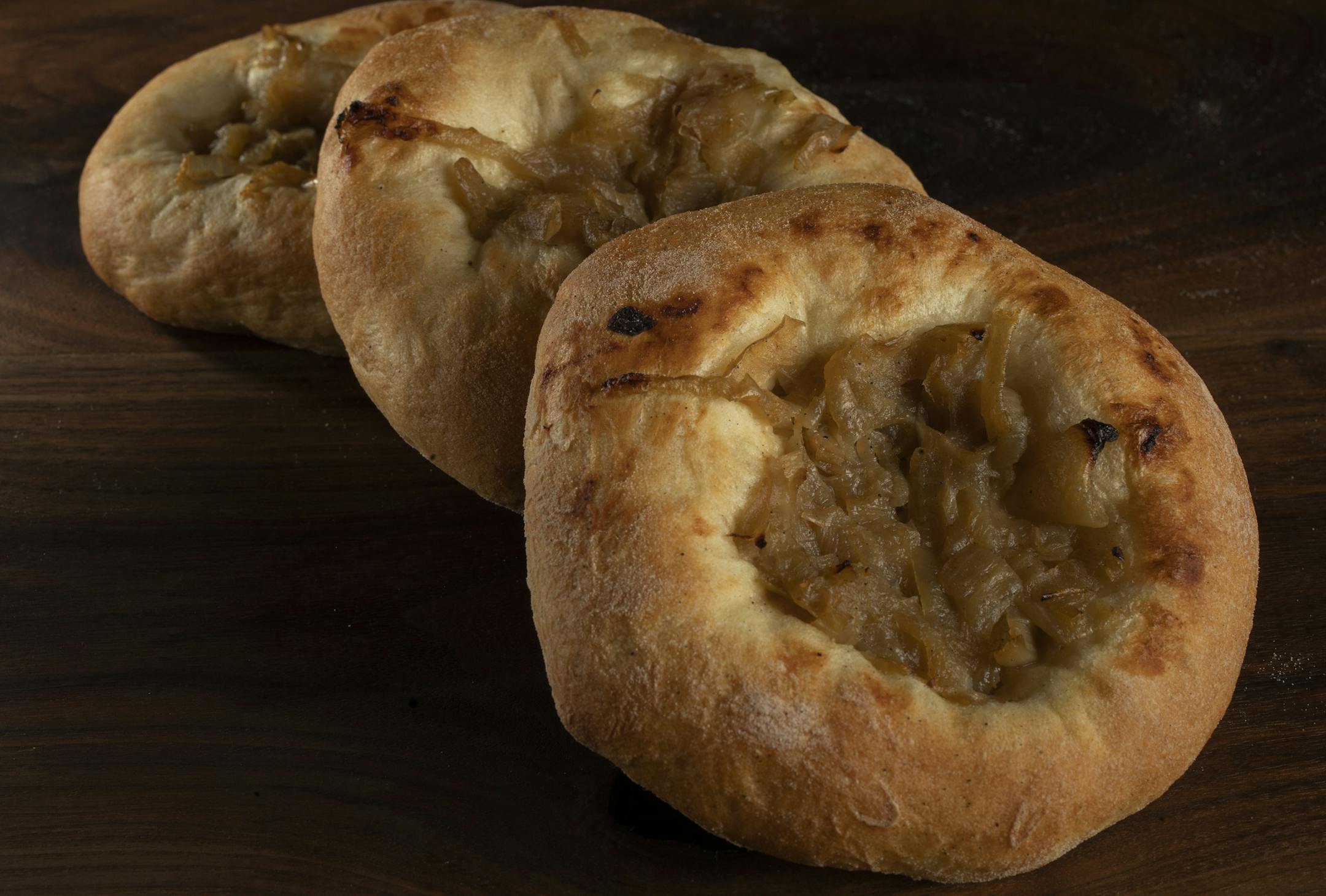
Bialy (bee-AH-lee) A roll that is nothing like a bagel except that it is round, and yet, is often described as a bagel without a hole. In place of the hole is a filling often made of caramelized onions and poppy seeds.
Kraus added bialys to his repertoire at French-bread wonderland Rose Street Patisserie to meet the demands of his customers. (2811 W. 43rd St., Mpls., 612-259-7921, rosestreet.co)
"Most of the people that were talking to us were from New York, and it was always bialy this and bialy that," he said.


