

Best Buy Co. Inc. generates billions of dollars a year in free cash, but investors are not likely to see much of it anytime soon.
That's because the Richfield-based consumer electronics retail giant needs every penny it can muster, whether from free cash or cost cuts, to fortify the company against aggressive rivals like Wal-Mart and Amazon, analysts say.
The money "needs to be reinvested into the business as Best Buy already faces brand slippage," Christopher Horvers, a retail analyst with JPMorgan, wrote in a research report.
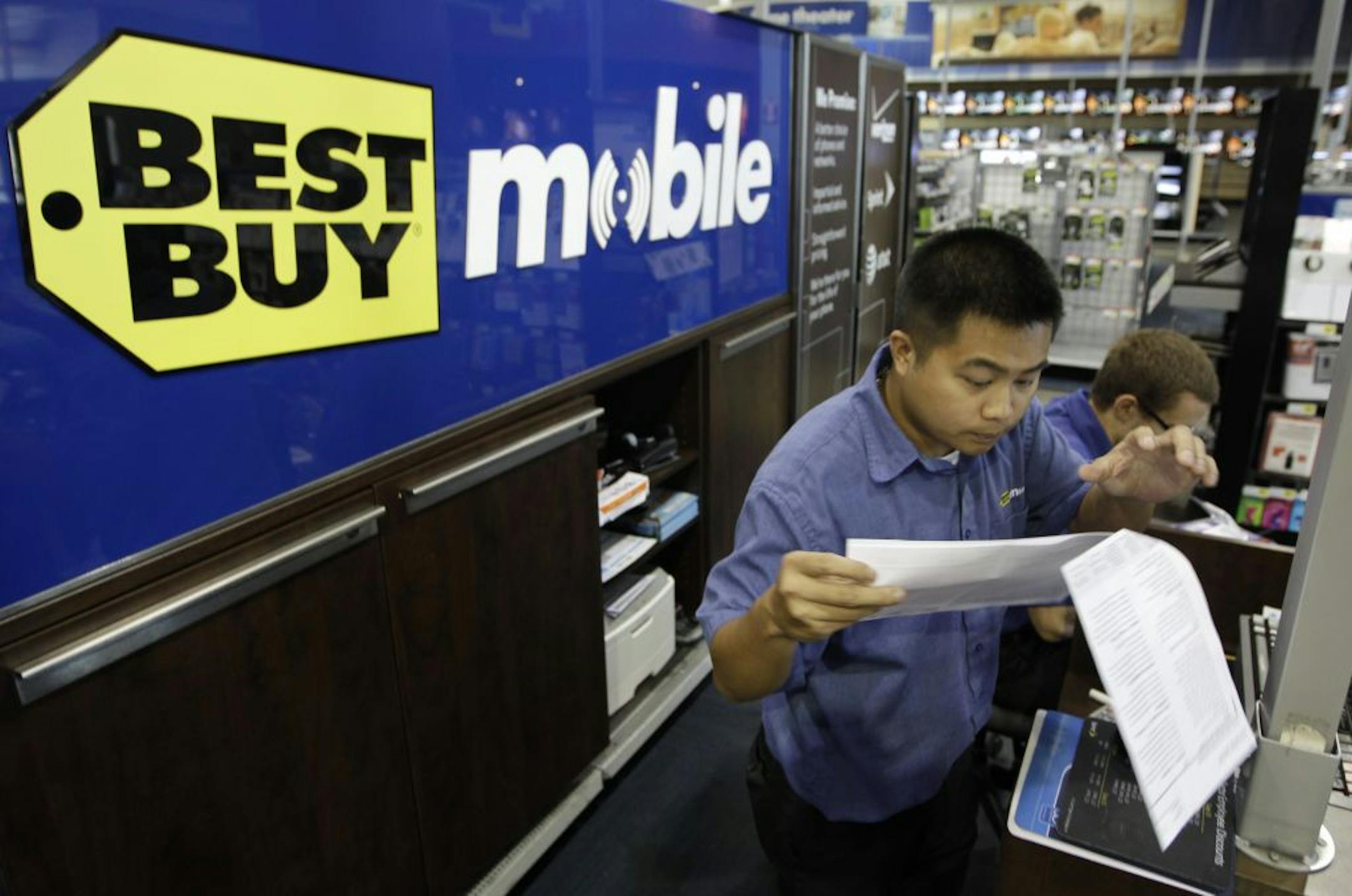
That's not what investors want to hear. Since late March, when Best Buy announced a plan to cut $800 million over three years, the stock has fallen more than 30 percent to Friday's close of $18.30, partly because none of that money will go to shareholders. Instead, the company will spend the savings on closing 50 big-box stores, rolling out smaller-format Best Buy Mobile stores, and experimenting with "Connected" stores, which focus more on customer service.
In a recent conference call with analysts, interim CEO G. "Mike" Mikan promised to "return cash back to shareholders."
"We have a lot of work to do," Mikan said. "One part of that is rebuilding relationships with investors. That is an important priority and one I will personally address. ... We are moving from a big-box store-growth model to a return-on-investment orientation, as is appropriate for a retailer at our stage. I know there are skeptics out there. I see the share price."
But it's not clear what Mikan can immediately do to satisfy Best Buy investors. Publicly traded companies directly return cash to shareholders in two ways: pay out a dividend and buy back stock.
Best Buy already does both: This year, it will spend $750 million to $1 billion to repurchase stock. The company is paying a quarterly dividend of 16 cents a share, a penny more than last year. Even though its stock has dropped in recent years, Best Buy has gradually increased its quarterly dividend since 2007 by a penny a share. But that has not been enough to satisfy investors, who worry whether the company can maintain its free cash flow in the years ahead.


