
Best Buy CEO Barry says labor and supply shortages will be around for a while

Barry spoke Friday at a regional economics conditions conference held by the Minneapolis Fed.

January 14, 2022 at 11:20PM
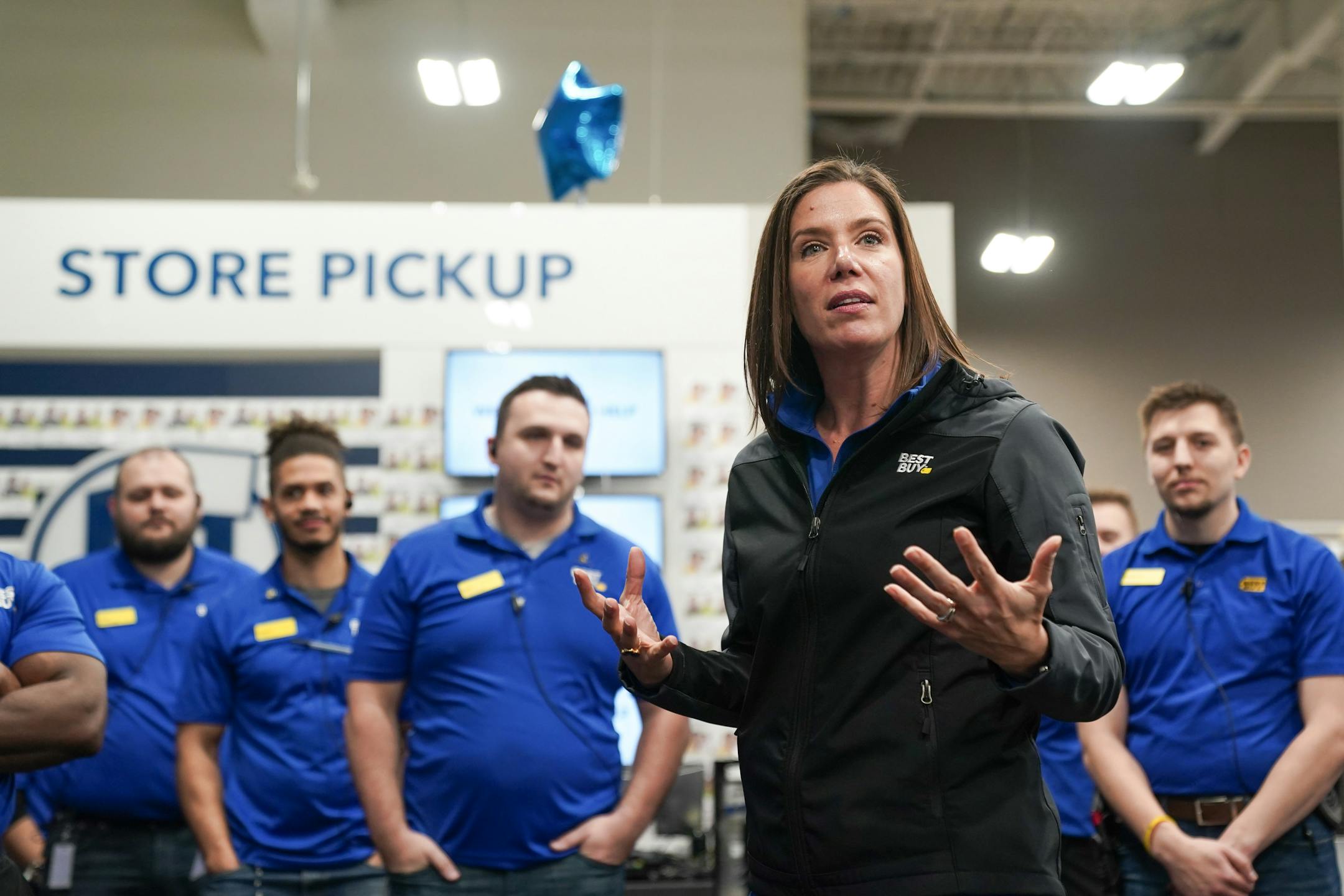
Best Buy CEO Corie Barry, in a 2019 file photo with store employees (Glen Stubbe | Star Tribune/The Minnesota Star Tribune)

The big constraints on American business over the past year — shortages of workers and goods — won't get better any time soon, Corie Barry, the chief executive of Best Buy Co., said Friday.

"Because the underlying factors are so diverse, my guess is that there is a good 12 to 24 months of churn through our labor markets," Barry said at a regional economics conditions conference held by the Federal Reserve Bank of Minneapolis.

In a conversation with Minneapolis Fed President Neel Kashkari, Barry listed five factors that are weighing on the labor market.

The first two, which have been widely cited, are child care and health concerns, especially if someone has unvaccinated children at home. From child care centers to public schools, schedules remain inconsistent. That's been a burden on children but also working parents and their employers.

"We found out on Thursday at 3 that my son would be distance learning on Friday," she said. "That is very hard for families to adapt to with that level of speed."

The third is burnout after two years of stressful work during the pandemic. In retail, for example, workers are often in conflict with customers on matters such as wearing face masks.

And the final two elements are that remote work opened up options for employees — allowing them, for instance, to look for a job anywhere around the country — and created new lifestyle expectations. People may not be as willing to travel as much for work in the future as they've enjoyed being able to spend more time at home, she said.

"I think people are making different career choices because they woke up one day and said, 'Well, wait a second, I actually like my family and I'd like to spend more time with them,'" she said.

Kashkari jumped in to offer an example of an occupation on which he's been hearing a lot about that issue — in long-haul trucking, which is also an area seeing one of the biggest labor shortages.

"It seems as though, anecdotally, it's easier to find local truckers and the reason is kind of a lifestyle choice," he said. "People are saying I don't want to be away from home for a week. I'd rather sleep in my own bed. I want to see my family at night."

It's the toughest jobs, he added, that are losing workers.

Barry added that while Best Buy stores get fewer applications than they used to, it has been fortunate in being able to attract and retain employees. The Richfield-based retailer raised its minimum wage to $15 an hour a few months into the pandemic, and the average hourly wage of employees is $18 an hour.

On goods and logistical issues, Kashkari noted that the large companies in the region he's spoken with say they don't foresee improvement for a while. Barry said neither does she.

"Supply chain, like so many things in the pandemic, is a layered crisis," she said.

Sudden sharp spikes in demand hit different industries at different times, and manufacturers can't adjust output quickly enough. Meanwhile, COVID-19 flareups happen in different places at different times, leading to sporadic shutdowns in factories or ports that interrupt the movement of goods.

"The reason I think we can't get out of this is the inconsistency of the virus," Barry said.

about the writer

about the writer

Kavita Kumar

Community Engagement Director

Kavita Kumar is the community engagement director for the Opinion section of the Star Tribune. She was previously a reporter on the business desk.

See Moreicon

More from Business

See More
card image

Clinics are offering telemedicine and house calls to patients who won’t leave home during the federal immigration crackdown and are running out of medicine and food.

card image