

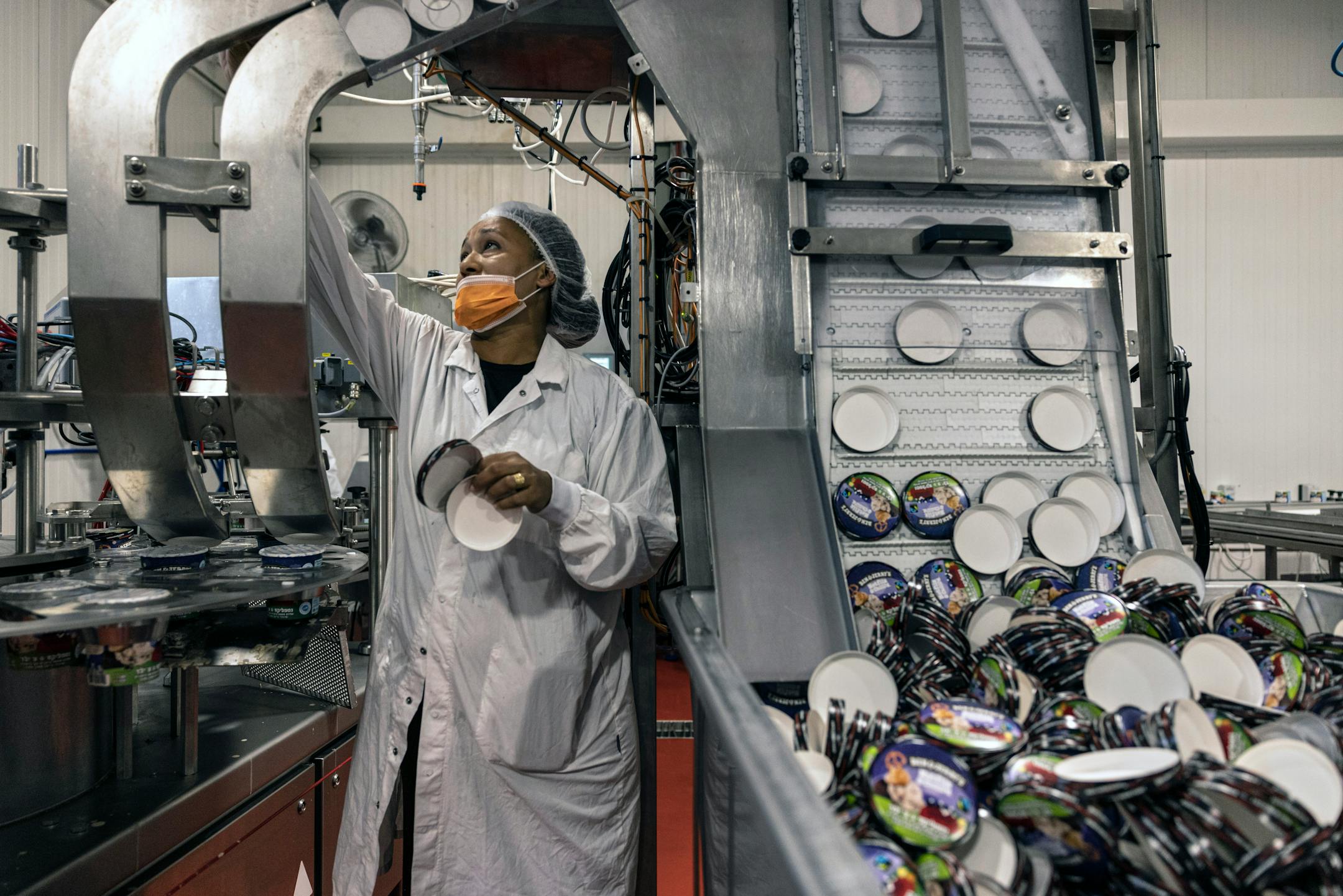
The most stunning thing about the Great Ice Cream War between Ben & Jerry's and Israel is the explosive Israeli reaction.
The ice cream maker, famous for social consciousness and iconic flavors like Chubby Hubby, announced last week it was ending sales in "Occupied Palestinian Territory," meaning Jewish settlements in the West Bank and East Jerusalem. But the announcement stipulated it would still sell ice cream inside Israel (meaning within the pre-1967 borders before Israel captured the West Bank and Gaza in the Six-Day War).
Yet the level of outrage from Israel's leaders, across the political spectrum — and from many U.S. politicians and Jewish organizations — seemed more appropriate for Iran's ayatollahs than the maker of frozen treats. "A new form of terrorism," charged Israel's president, Isaac Herzog, a former chairman of the left-leaning Labor Party. A "shameful surrender to antisemitism," tweeted centrist Foreign Minister Yair Lapid. An "anti-Israel ice cream," stated Prime Minister Naftali Bennett.
But Ben & Jerry's wasn't calling for a boycott of Israel proper. It was focused on Jewish settlements in the mostly Palestinian West Bank, which the U.S. State Department regards as "occupied" territory. U.S. policy for decades, before the Trump administration, sought to curb growth of settlements lest they rule out any future political accord between Israel and the Palestinians.
So why is the Ben & Jerry boycott inspiring such rage?
Critics have linked it to the Palestinian-led Boycott, Divestment and Sanctions (BDS) movement, which calls for countries, businesses and universities to sever all ties with Israel, unless it withdraws from all land captured in 1967. The movement is based on the boycott of South Africa under apartheid. But its demands, if fulfilled, would rule out a Jewish homeland.
However, the controversial ice cream freeze is not currently tied to BDS or to sales within Israel (although there is some discord between Ben & Jerry's independent board and its parent company, Unilever, over future developments).
The furious reaction to the current boycott only gives free publicity to the BDS movement, and allows it to claim an unearned victory.


