

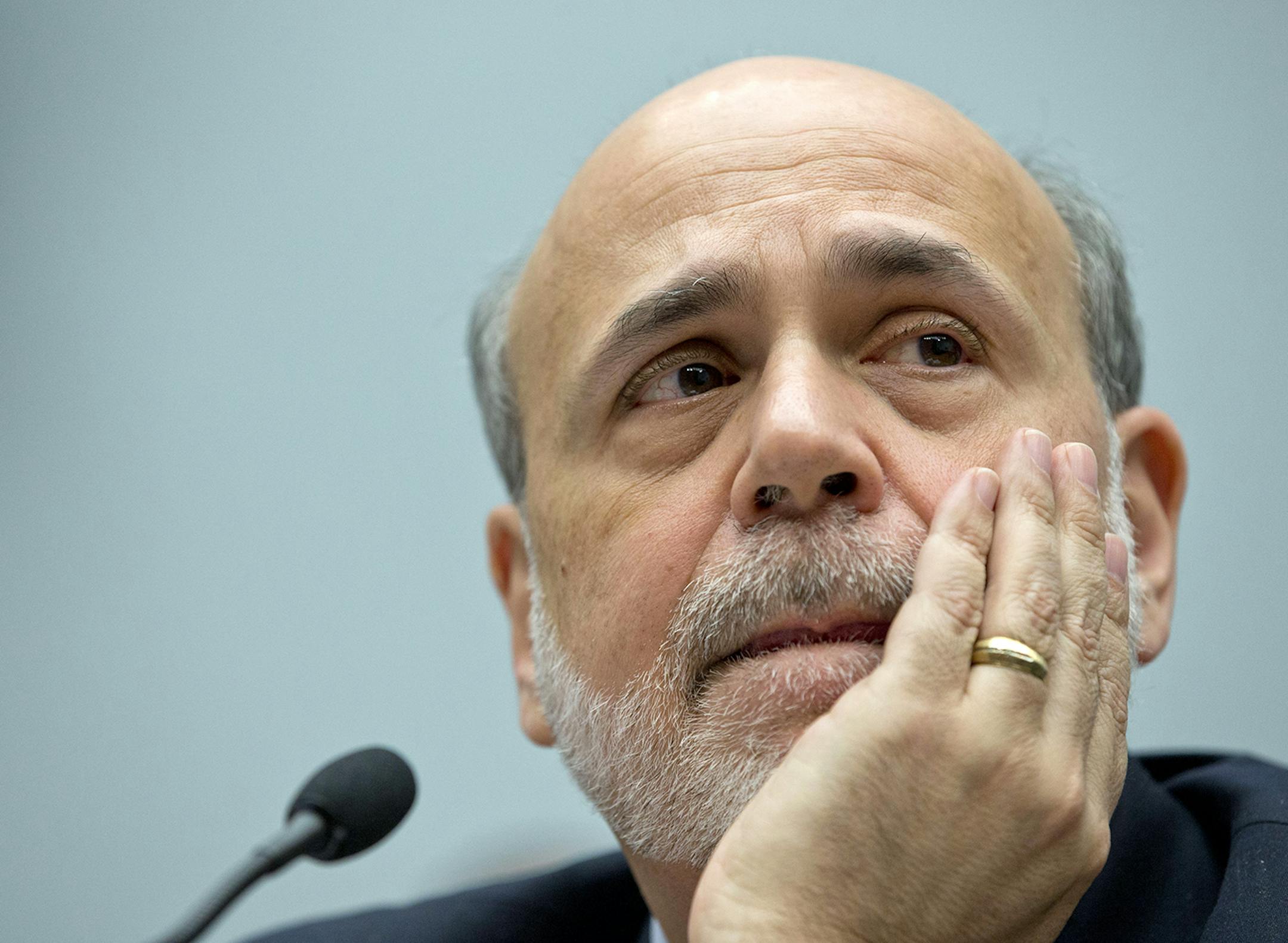
Former Federal Reserve Chairman Ben Bernanke said Friday that breaking up the big banks "doesn't seem to be a smart way" to promote financial stability.
Bernanke, in a blog post previewing his appearance Monday at a Minneapolis Fed symposium, said that a lot of progress has been made toward reducing the risks that large, complex financial institutions pose to the financial system, but that thoughtful debate is still necessary because "it's really important to get this right."
Bernanke, the world's most powerful banker during the financial crisis, will lend an air of authority to the second forum in Minneapolis Fed President Neel Kashkari's effort to come up with a proposal by year's end to end too big to fail, the notion that some banks are so large and important that their failure would create an economic crisis.
Kashkari has floated such ideas as breaking up the big banks, raising capital requirements, or taxing their leverage to encourage them to take on less risk.
Bernanke signaled Friday that he doesn't think breaking up the biggest banks is the right call.
Reforms since the financial crisis — including the Dodd-Frank Act and the Basel agreements — have set in motion stronger incentives for banks to shrink or otherwise restructure themselves to reduce the risk they pose, he said. Only dramatically reducing the size of banks could be on the table, he said, given that the firms at the center of the financial crisis weren't the largest ones.
"Modest size reductions are not going to accomplish much," he wrote. "After all, Lehman Brothers was only about a third the size of the largest banks when its failure in September 2008 nearly brought down the global financial system."
The ex-chairman, who is now a fellow at the Brookings Institution, said he sees two important drawbacks to breaking up the large banks.


