

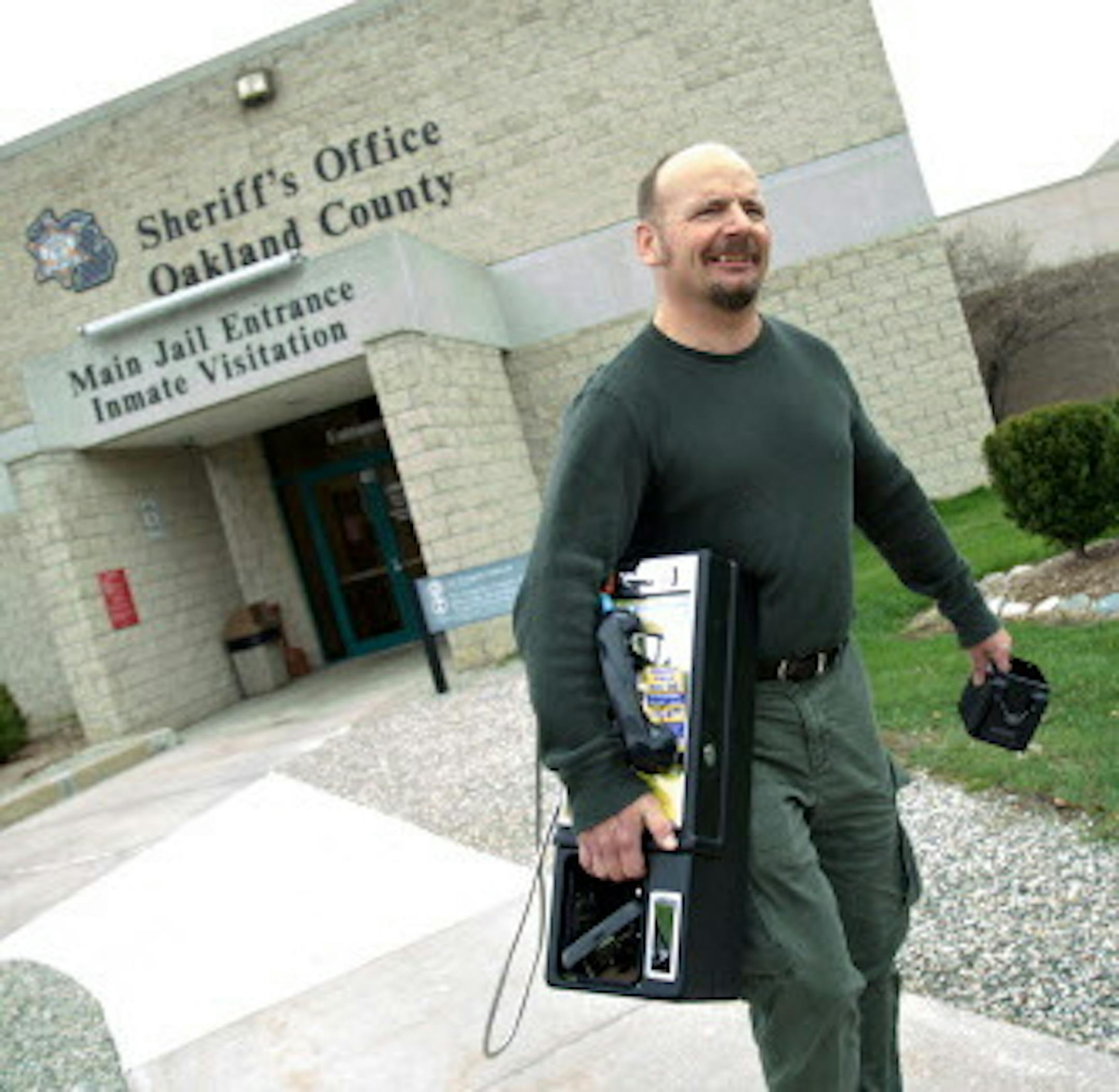
DETROIT – A pay telephone on a busy Detroit street corner could once net $200 a week in just coins. But that was 30 years ago.
These days, Greg Andrick is lucky to find $5 or $6 in a pay phone's change box every couple of months when making his service rounds. His company, Great Lakes Telephone, once operated more than 6,000 rectangular metal pay phones across southeast Michigan. Now it has fewer than 20, all in government buildings and parks.
"It's really sad. This used to be quite a booming business," said Andrick, who is also president of the Michigan Pay Telephone Association. "It shriveled up and went slowly away."
Like the typewriter and transistor radio, the pay phone was a facet of life whose convenience and business model was outmoded by technology.
The Motor City once teemed with working pay phones. The common locations were inside bars and outside gas stations, party stores, bus stops and street corners with foot traffic. The Detroit Free Press recently scouted the city for these coin-operated artifacts. The search turned up dozens of battered pay phones in various states of decay. Only a handful of them still produced a dial tone.
Some phones were rusty and missing mouthpieces, earpieces or both. A few had lost their entire handset and had naked wires sticking out. One phone was thoroughly mutilated after someone snatched its change box and ripped out the dial pad and cradle hook.
Working phones were found inside buildings like a Greyhound bus station, a district court building and at a casino-hotel. The Detroit Metro Airport reports having about 200 working pay phones, which generated $15,476 in commissions last year for the airport.
Scott Hunter, 21, was spotted in the act of making a pay phone call in the Greyhound station. His cellphone had lost its charge and he needed to call his grandmother in Florida with news that his bus would arrive late.


