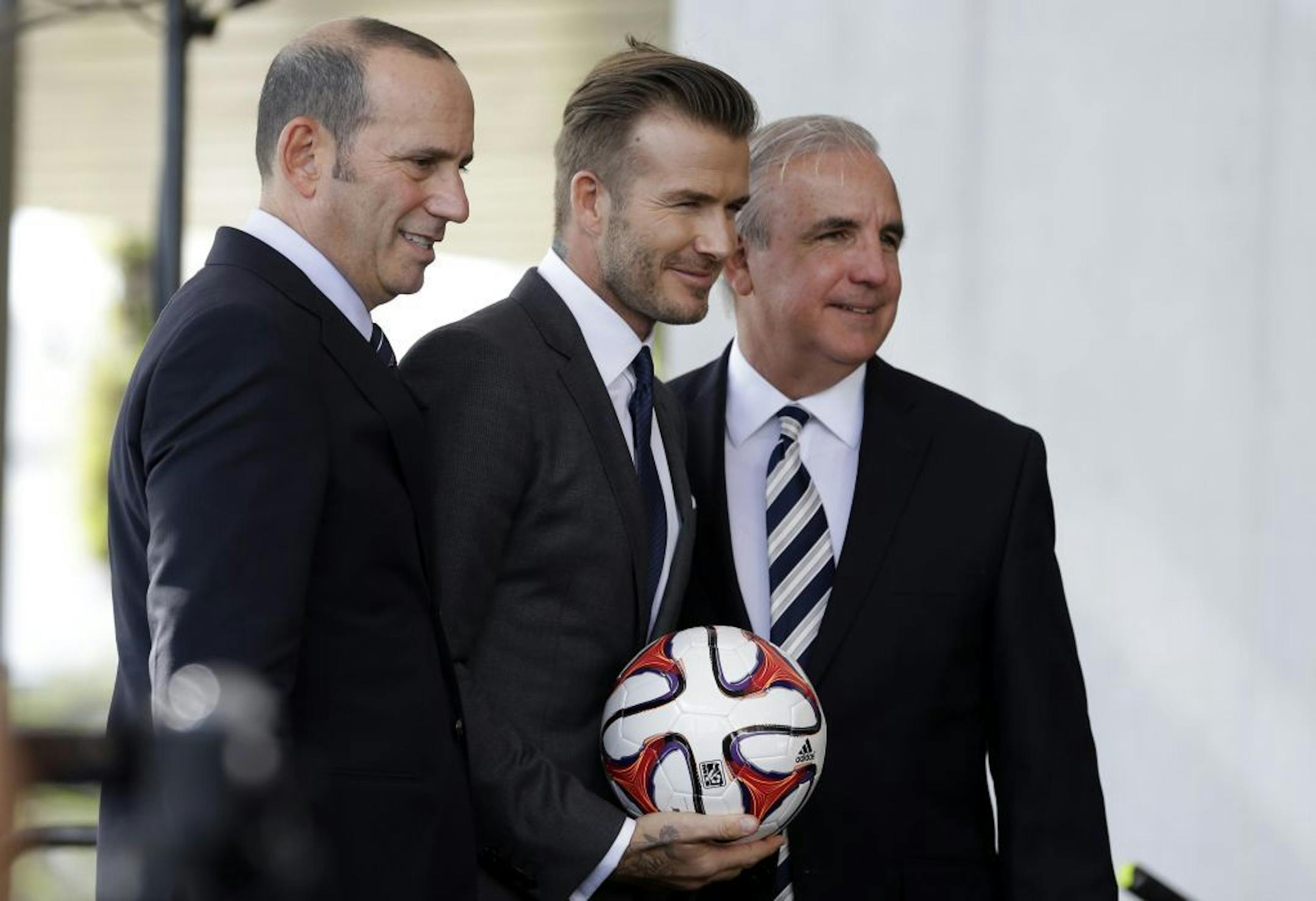
David Beckham's business team swooped into Miami a year ago, full of irresistible excitement and lofty ideas, and got politicians to agree to negotiate a location for a new Major League Soccer stadium.
An enthusiastic Miami-Dade County Commission voted unanimously on Dec. 17, 2013, to authorize Mayor Carlos Gimenez to sit down with Beckham's representatives and try to find a home for a professional soccer franchise to be owned by the retired English footballer, one of the world's most famous celebrities.
Twelve months after that vote, there is still no stadium site. Beckham's group has stayed largely silent since June, regrouping — and, some supporters fear, reconsidering — after feeling burned by politicians who eagerly proposed potential sites on public land only to quickly back away.
The county and city commissions nixed stadium proposals at PortMiami and on a boat slip north of AmericanAirlines Arena, stinging Beckham's team and forcing them to question whether they really wanted to come to Miami.
The Miami Beckham United organization, which at first said it would take three months to weigh its remaining options, has said it's still hunting for a stadium location, though quietly this time, with private property owners. After being denied twice, the group appears reluctant to openly discuss a new one until a deal — assuming one can be reached — is firmly in place.
"We have made very meaningful strides in the last couple of months," said John Alschuler, Beckham's real estate adviser. "While nothing in this complex equation can be taken for granted, I am optimistic that there will be several positive announcements in the first quarter of the next year."
Meantime, County Commissioner Juan C. Zapata, a Beckham supporter, said he plans to propose legislation in the new year asking Beckham to consider temporarily locating his team at Florida International University's main campus in West Miami-Dade, which is in Zapata's district. Once there's a team for fans to cheer, negotiating a stadium might not be as difficult, Zapata said.
"It makes it easier to sell a known product. And it doesn't look good for us to not be proactive," he said. "Until we figure out a stadium plan, I think we've got to get a team on the field."