
BCA stands behind disputed DWI tests as ‘accurate and reliable’

Data entry errors had raised questions about the validity of breath test results in hundreds of cases across Minnesota.

The Minnesota Star Tribune
November 3, 2025 at 7:36PM
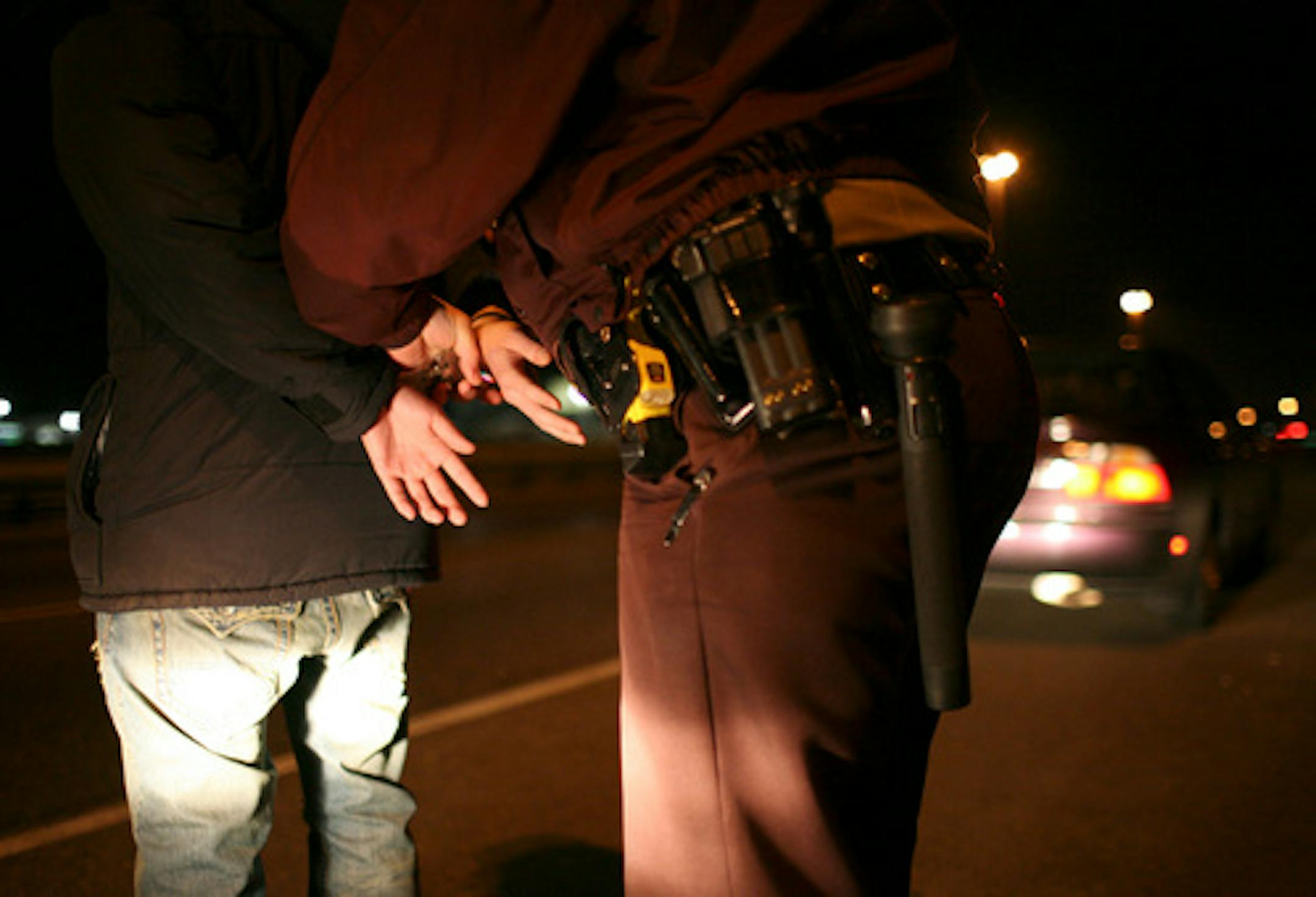
Shortly before 2 a.m. last Saturday morning, Trooper Adam Flynn handcuffs the driver of a vehicle who was allegedly driving while under the influence of alcohol. Flynn had initially pulled him over for going 76 m.p.h. in a 55 m.p.h. zone on I-35W, but the driver, who happened to be under 21, failed a field sobriety test. GENERAL INFORMATION: JEFF WHEELER ¥ jwheeler@startribune.com RICHFIELD - 12/15/06 - Minnesota State Patrol Trooper Adam Flynn is a DWI-arrest all-star. As New Year's Eve approaches, we ride along with Flynn on a Friday night to see how he does it. // driving while intoxicated, Land of 40,000 DWIs // drunk driving, drivers // ORG XMIT: MIN2015021115211141
Drew Evans, superintendent of the state Bureau of Criminal Apprehension, said lab scientists conducted a “mathematical recalculation” of each DWI breath sample in question.” (Jeff Wheeler/The Minnesota Star Tribune)

Hundreds of alcohol breath tests thought to have been inaccurate due to data entry errors are valid after all, officials from the Bureau of Criminal Apprehension (BCA) said.

BCA lab scientists conducted a “mathematical recalculation” of each DWI breath sample in question and found them to be “accurate and reliable,” said agency Superintendent Drew Evans in a press conference Friday. “And they are prepared to testify to that.”

Issues with samples collected using DataMaster devices came to light in September after it was discovered that some law enforcement officers entered incorrect alcohol concentration values into portable breathalyzer machines after dry gas cylinders had been replaced.

The gas cylinder with a known alcohol concentration is used as a control to make sure the alcohol reading off the breath test is correct. The machine is used repeatedly with the same gas cylinder and is typically sent back for maintenance and recertified annually, the BCA said.

The errors that arose in September after some cylinders had been replaced raised questions about the validity of breath tests taken with the devices. Officials had previously said about 275 cases in Aitkin, Winona, Chippewa, Hennepin and Olmsted counties may have been affected by data entry errors.

The BCA subsequently said it found “multiple” data entry errors by trained operators during the installation of gas cylinders in the instrument.

Defense attorney Chuck Ramsay, who has been defending Minnesotans charged with driving while intoxicated for more than 30 years, discovered the problem with DataMaster while handling two cases in Aitkin County. The DataMaster cylinders used to check blood alcohol content had incorrect serial numbers.

The Aitkin County Attorney’s Office dismissed charges for at least one of the drivers due to the questionable accuracy of the devices, court records showed. Elsewhere, several DWI cases have been tossed out and other civil cases have been canceled, Ramsay said.

As cases mounted, the BCA in October ordered suspending the use of all DataMaster devices until agencies verified the gas cylinder data was correctly entered into each instrument.

“The BCA is committed to the highest level of quality in our forensics lab, and this is why we are conducting this review,” Evans said last month.

Since then, scientists set out to review each of the identified tests and determine whether their accuracy could be verified through other means. They ran a “mathematical recalculation” of the tests using the values of a correctly installed cylinder and determined the control tests were within acceptable margins despite data entry error.

“Meaning the tests are accurate and reliable,” Evans said. “We stand behind the instruments.”

Ramsay said he is not convinced.

“We are dealing with science and with science there is no trust,” Ramsay told the Minnesota Star Tribune on Monday. “They have to show their work and data, and the BCA has produced nothing to review. We don’t know what they did.”

With results supporting scientists’ findings and new calculations, the BCA on Friday began notifying law enforcement and attorneys with cases affected by this issue.

In addition, each case will be reviewed with amended results sent to police, prosecutors and defense attorneys, Evans said.

Cases that have been dismissed will not be resurrected, Ramsay said. For the ones still working their way through the court system, Ramsay said he’s training defense lawyers to fight back.

“If the BCA insists on shoddy science, that will tie up the courts,” Ramsay said. “We will not give up. We’ll show it was bad science. The issue is they are not being transparent and not showing their work.”

Going forward, only BCA officials will be able to swap out the cylinders, a task law enforcement was previously allowed to do. That will limit the number of people who handle the devices and better ensure cylinders are properly replaced, Evans said.

The BCA has already verified that cylinders on 50% of the machines have been installed correctly, and it will finish the remainder in the coming weeks, the agency said.

With this, “we can give affirmations to Minnesotans that tests are reliable and that impaired drivers will be held accountable for their conduct,” Evans said.

about the writer

about the writer

Tim Harlow

Reporter

Tim Harlow covers traffic and transportation issues in the Minneapolis-St. Paul area, and likes to get out of the office, even during rush hour. He also covers the suburbs in northern Hennepin and all of Anoka counties, plus breaking news and weather.

See Moreicon

More from News & Politics

See More
card image
Jerry Holt/The Minnesota Star Tribune

Emily Koski and her successor-elect, Jamison Whiting, have sought protection in court. Other officials have similar stories.

card image