

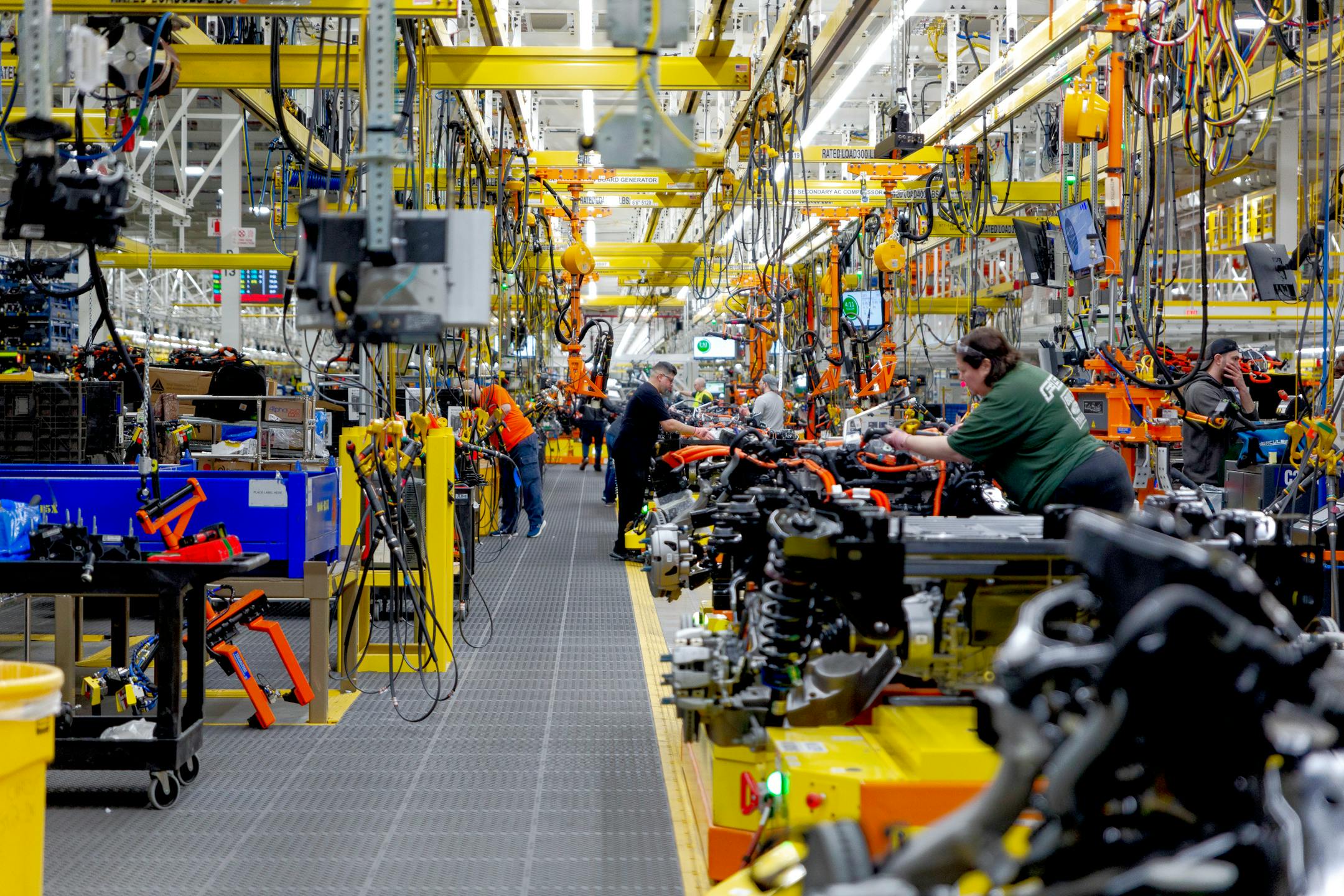
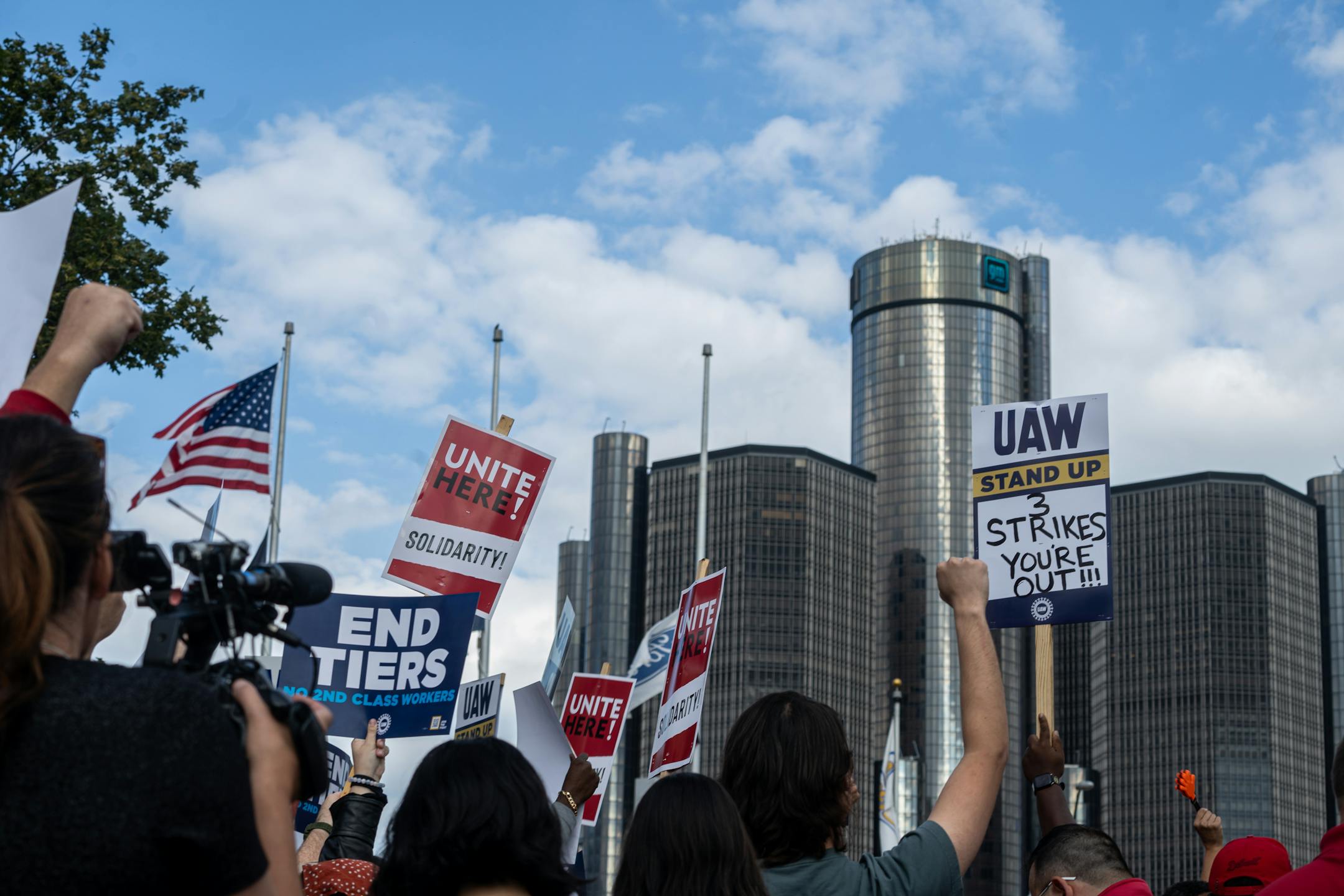
A battle between Detroit carmakers and the United Auto Workers union, which escalated Friday with targeted strikes in three locations, is unfolding amid a once-in-a-century technological upheaval that poses huge risks for both the companies and the union.
The strike has come as the traditional automakers invest billions to develop electric vehicles while still making most of their money from gasoline-driven cars. The negotiations will determine the balance of power between workers and management, possibly for years to come. That makes the strike as much a struggle for the industry's future as it is about wages, benefits and working conditions.
The established carmakers — General Motors, Ford Motor and Stellantis, which owns Chrysler, Jeep and Ram — are trying to defend their profits and their place in the market in the face of stiff competition from Tesla and foreign automakers. Some executives and analysts have characterized what is happening in the industry as the biggest technological transformation since Henry Ford's moving assembly line started up at the beginning of the 20th century.
Nearly 13,000 UAW workers walked off the job at three plants in Ohio, Michigan and Missouri on Friday after talks between the unions and the companies in three separate negotiations failed to result in agreements before a Thursday deadline. Pay is one of the biggest sticking points: The union is demanding a 40% pay increase over four years; the automakers have offered roughly half as much.
But the talks are about more than pay. Workers are trying to defend jobs as manufacturing shifts from internal combustion engines to batteries. Because they have fewer parts, electric cars can be made with fewer workers than gasoline vehicles. A favorable outcome for the UAW would also give the union a strong calling card if, as some expect, it then tries to organize employees at Tesla and other nonunion carmakers like Hyundai, which is planning to manufacture electric vehicles at a massive new factory in Georgia.
"The transition to EVs is dominating every bit of this discussion," said John Casesa, senior managing director at investment firm Guggenheim Partners who previously headed strategy at Ford Motor."It's unspoken," Casesa added. "But really, it's all about positioning the union to have a central role in the new electric industry."
Under pressure from government officials and changing consumer demand, Ford, GM and Stellantis are investing billions to retool their sprawling operations to build electric vehicles, which are critical to addressing climate change. But they are making little if any profit on those vehicles while Tesla, which dominates electric car sales, is profitable and growing fast.
Ford said in July that its electric vehicle business would lose $4.5 billion this year. If the union got all the increases in pay, pensions and other benefits it is seeking, the company said, its workers' total compensation would be twice as much as Tesla's employees.


