

We live in a time when the people who are in charge are scared of the people who aren't. Professors report being terrified of their students. Publishing executives fear the wrath of junior employees. CEOs worry about staff revolts. Museum curators watch what they say lest it lead to professional annihilation. Politicians in senior positions are nervous about the newbies — on their own side.
Some of the fear is necessary and merited. Former New York Reps. Joe Crowley and Eliot Engel lost their primaries to energetic challengers because they were arrogant and too comfortable in their incumbencies. Young employees at Goldman Sachs revolted early this year over nearly 100-hour workweeks that have the color of abuse. Overseas, one can only cheer the fact that Iran's despots are finally living in fear of the magnificent women taking off their hijabs and burning them in the streets.
But the fear is also doing a lot of damage: to the people on whom the fear is inflicted, on those inflicting it, on the welfare of the institutions to which they belong. In healthy institutions, leaders are supposed to teach, inspire and mold younger people so they can eventually inherit and improve those institutions when they're ready to take charge. In many of today's institutions, repeated abdications of authority by cowardly leaders have become invitations to arson by willful upstarts.
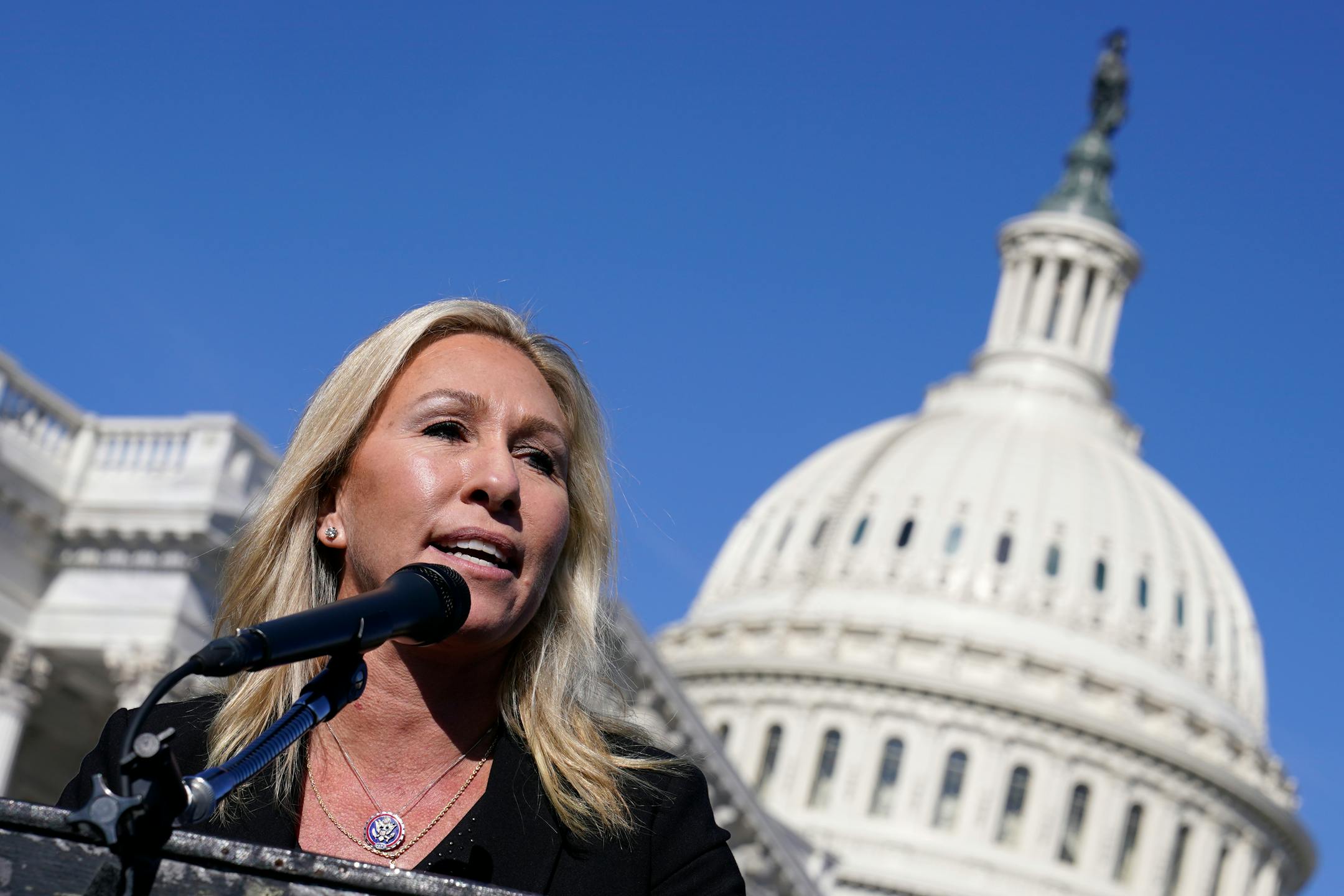
I've thought about this a lot in recent years as one organization after another capitulated in the face of outrage mobs, hanging good people out to dry to avoid having to stand on principle. I thought about it again last week when Rep. Marjorie Taylor Greene, speaking at a New York Young Republicans gala, said that if she and Steve Bannon had organized the Jan. 6 attack on Congress, "we would have won. Not to mention, it would've been armed."
The comment sparked indignation among Democrats but not a word from Kevin McCarthy, who has cozied up to Greene to win her support in his bid for the House speakership. Greene later defended herself by saying the White House couldn't take a joke — the old demagogic trick of riling the mob while playing the fool.
Meanwhile, Republican leaders and conservative pundits more or less keep mum, just as they kept mum for years over the verbal hooliganism of Donald Trump before and (except for a fleeting spasm of conscience) after Jan. 6. They tell themselves that condemning Greene or Trump only gives them the attention they crave. But they ignore the fact that failing to condemn the pair gives them the legitimacy and power they crave much more.
The problem with evil clowns is that it's the clownishness, not the evil, they soon shed.
This is not a new problem. Communist dictatorships came to power in Central Europe after World War II by pretending to play by democratic rules, until they didn't. The Nazis came to power in Germany the same way. They joined the institutions they intended to destroy. And the people who were supposed to be the keepers of those institutions, the guardians at the gate, allowed — and sometimes even helped — them to do it.


