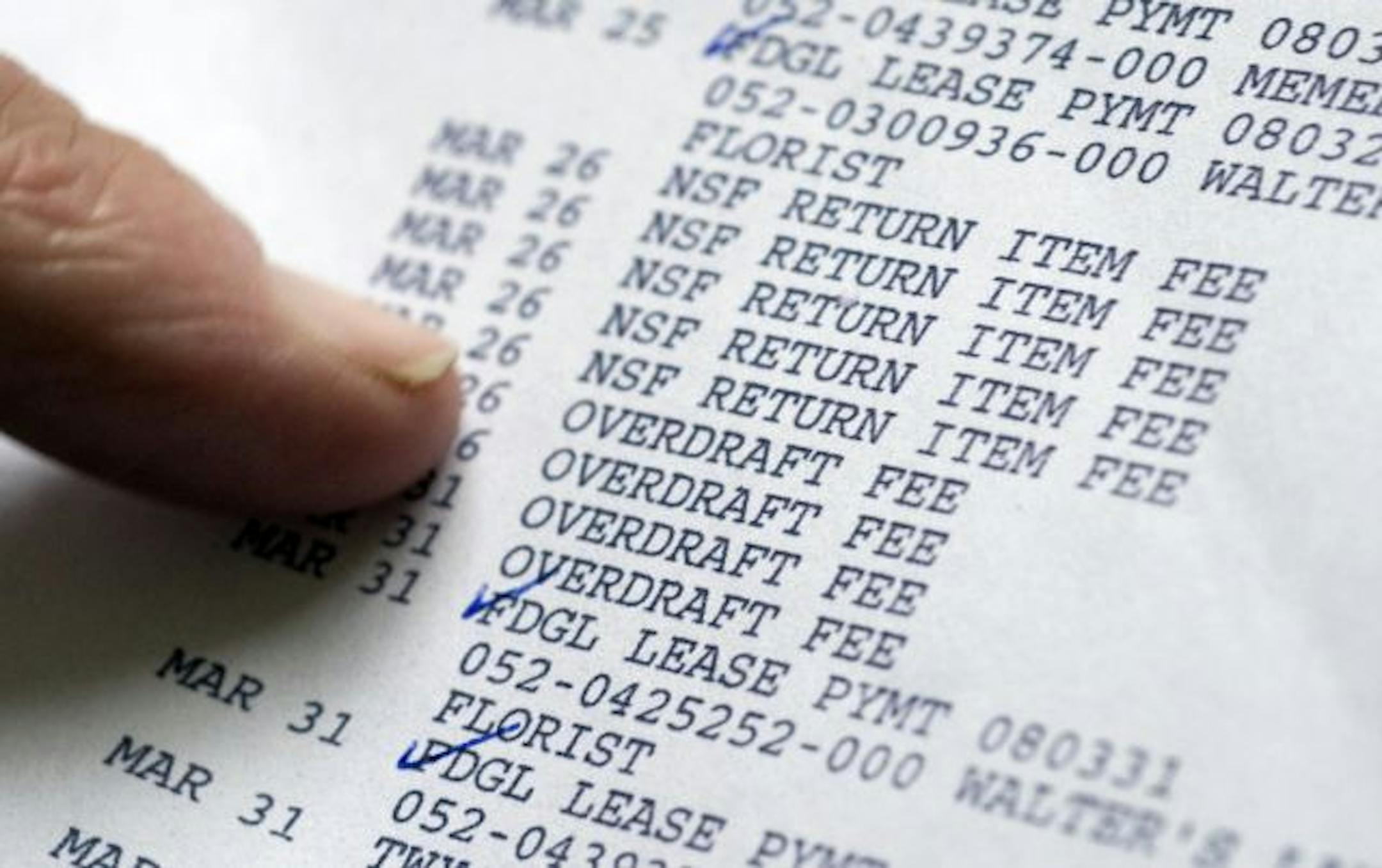
Walt Books knew something was amiss as soon as soon as he opened his Wells Fargo bank account statement and discovered $140 in overdraft fees.
Books, 78, a retired business owner from South St. Paul, dug into his bank account records and discovered what happened. Wells Fargo had drained his bank account faster than necessary by processing a large, $130 check for his health insurance before a series of smaller items, causing him to be hit with four $35 overdraft fees. One of the fees was for a $3.09 purchase of a cheeseburger and cup of coffee at McDonald's.
Had the bank processed his transactions in the order in which they actually occurred, with the insurance check processed after the McDonald's cheeseburger, Books says he would have incurred just one overdraft fee. "They made $105 [extra] by doing nothing other than manipulating my account," he said. "It's crooked."
At least one federal judge agrees. Late Tuesday, a judge in California blasted Wells Fargo's practice of processing larger checks and debit-card payments before smaller ones, rather than in the actual order. The judge referred to the practice, known as "high-to-low" check clearing, as "gouging and profiteering," and ordered the bank to pay $203 million in restitution to Wells Fargo customers in California who were hit with the fees over a four-year period.
"Internal bank memos and e-mails leave no doubt that, overdraft revenue being a big profit center, the bank's dominant, indeed sole, motive was to maximize the number of overdrafts," wrote U.S. District Judge William Alsup.
A Wells Fargo & Co. spokeswoman said the company was "disappointed" with the ruling and does not intend to change its policies as a result. The bank has argued that its customers prefer that their higher-priority transactions, such as mortgages and car loan payments, go through before the smaller ones. "We don't think the ruling is in line with the facts of the case, and we're going to appeal," said Richele Messick, a Wells Fargo spokeswoman.
Similar lawsuits pending
Books won't benefit from the ruling because it applies only to Wells Fargo customers in California. But the ruling is significant because it marks the first time a federal judge has denounced the practice. It also was good news for lawyers suing banks across the country over overdraft fees. In class-action lawsuits consolidated in Florida, about 30 large banks, including Bank of America, Citigroup and U.S. Bancorp, have been accused of posting charges in non-chronological order to maximize income from overdraft fees.