

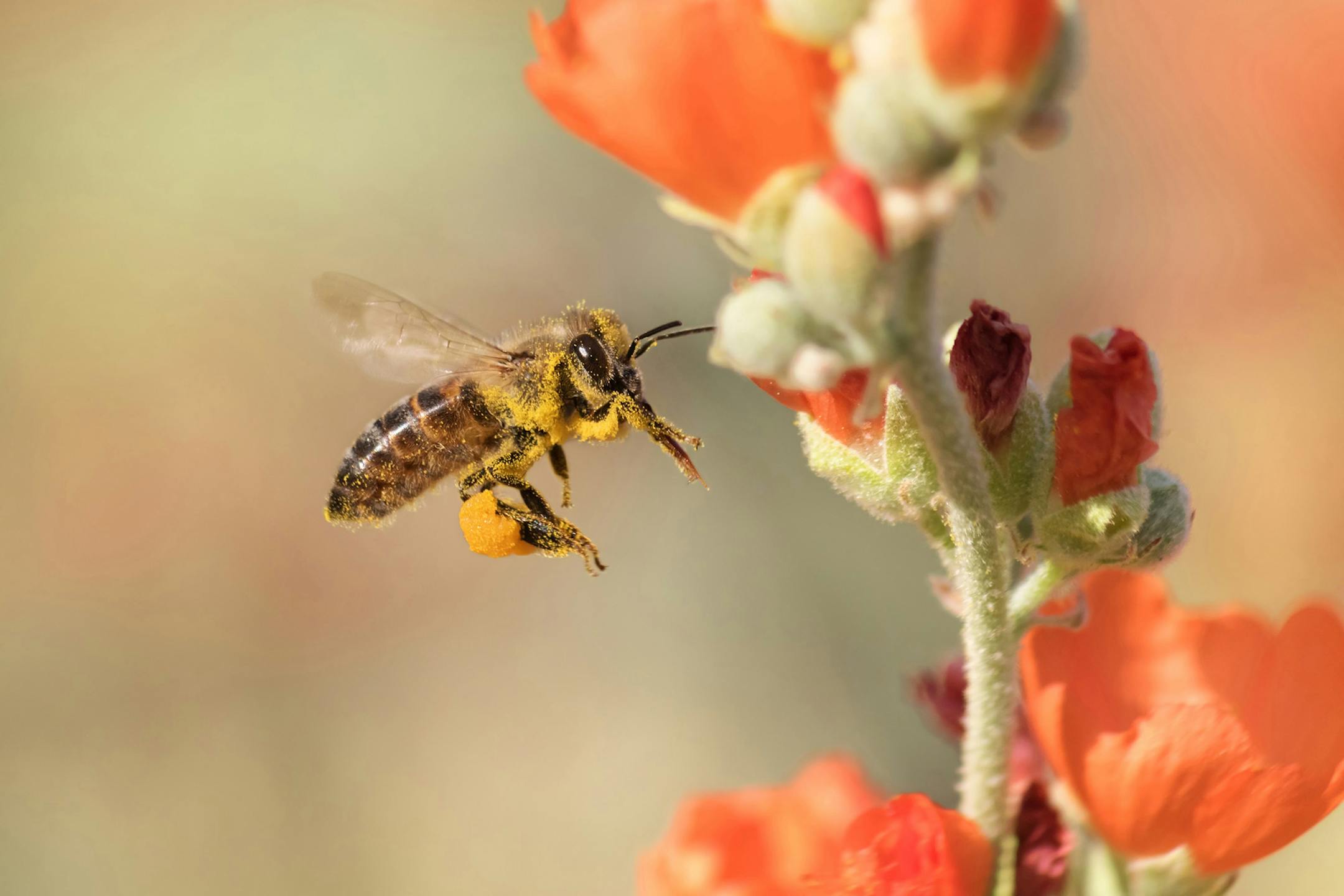
On my farm on the plains of Minnesota, I've tended honeybees for more than 40 years. I keep over 2,300 hives for honey and beeswax production. I also travel to California with my bees in the winter to pollinate crops like almonds, cherries and apples. It's my livelihood and passion.
But my bee colonies and millions of others across the country have been dying off in astonishing numbers. Twenty years ago, beekeepers considered a 10% annual loss customary. Now, 60% losses are normal for those of us operating around agricultural crops. What changed?
A peer-reviewed study published in PLOS One this week provides new insight. For the first time, it compares year-to-year changes in how hazardous U.S. agriculture is for bees and other insects. Over the past two decades, it shows an explosion in toxicity — U.S. agriculture has become 48 times more toxic to insect life, and the main culprit is a class of insecticides that were introduced in the 1990s called neonicotinoids, or neonics. Neonics are responsible for 92% of the surge in toxicity.
Neonics are now the most widely used insecticides globally, applied to more than 140 crops. In the U.S., at least 100 million acres are treated. Neonics attack insects' central nervous system. Honeybees exposed to higher levels are found on their backs, kicking violently as they die. Honeybees exposed to lower levels of neonics suffer reduced cognition, navigation and memory loss, along with impaired immune function and fertility, which results in hive mortality.
Looking at the toxic time-lapse mapped by the study, there's a dramatic increase in the burden of U.S. agriculture for bees starting in the mid-2000s. That's when beekeepers started experiencing significant losses in our hives. That's also when the companies that manufacture neonics, Bayer and Syngenta, started using them to coat the seeds of major crops like corn and soy — a practice which offers "little to no benefit" to farmers according to the U.S. Environmental Protection Agency. Seed coatings now account for the vast majority of neonic use in the United States.
These small coatings have a big impact. Only about 5% of the pesticide is absorbed by the plant — the rest remains in the soil and contaminates rivers and lakes. Unlike other insecticides, neonics can take months or years to break down, killing insects long after application. The study shows that these lingering pesticides create a compounding toxic burden in the environment.
The cardinal tenet of pollinator protection is to "keep pollinator toxic chemicals off bloom." Neonics violate this because they're absorbed into the plant itself, making even the nectar and pollen toxic. Bees simply cannot be protected from them.
The fact that our bees are under threat is devastating to beekeepers like me. Watching your herd die before your eyes each year takes a toll financially — and mentally. Several of my neighboring beekeeping families have thrown in the towel and several more are likely to get out this year.


