

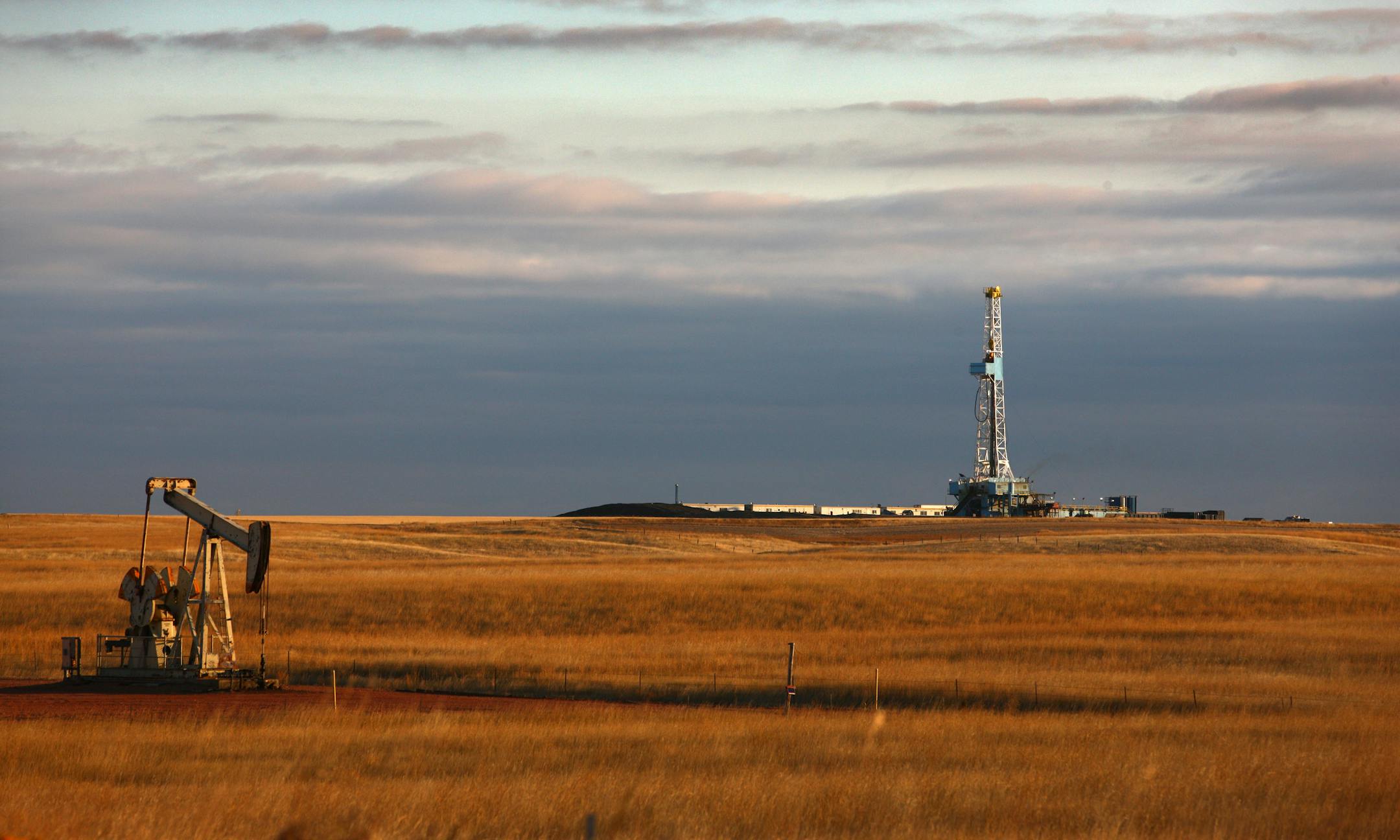
Even as it fills the railroads of the Upper Midwest with oil tank cars, the Bakken has allowed its natural gas riches to languish.
Less profitable than oil and more difficult to transport, natural gas has been so secondary in North Dakota that drillers still burn off more than a fourth of what rises from the ground. In satellite pictures, the flames sprawl across the Williston basin, lighting it up like a giant suburb.
A quiet transformation is underway, however, as the state bids to turn natural gas into a native business and drive down flaring.
A growing network of pipelines and processing plants has made North Dakota a recent target for billions of dollars of investment toward factories that convert natural gas into other products like fertilizer and plastic.
"It's the natural progression of OK, now we're pretty fully developing on the drilling side of things, and now comes the next component, which is the value add," said Cullen Goenner, an economist at the University of North Dakota. "That's where you really get the biggest bang for the buck, in terms of the employment and all those supplemental jobs, is in the value-added industries, more so than in just the extractive industries."
A group called Badlands NGL announced in a news conference with Gov. Jack Dalrymple two weeks ago that it wants to convert cheap, abundant ethane into polyethylene, the raw material of plastic bags and bottles. The $4 billion factory would churn out rail car loads of the tiny, milk-white plastic beads.
A month earlier, Inver Grove Heights-based agriculture giant CHS Inc. said it will build a $3 billion fertilizer plant 90 miles west of Fargo. Another group with board members from the North Dakota Corn Growers Association, called Northern Plains Nitrogen, is trying to raise money for a $2 billion fertilizer plant just north of Grand Forks.
None of these projects has broken ground, and flaring remains a huge and growing problem. The state flared 28 percent of its natural gas in August. By contrast, Texas flares less than 1 percent.



