

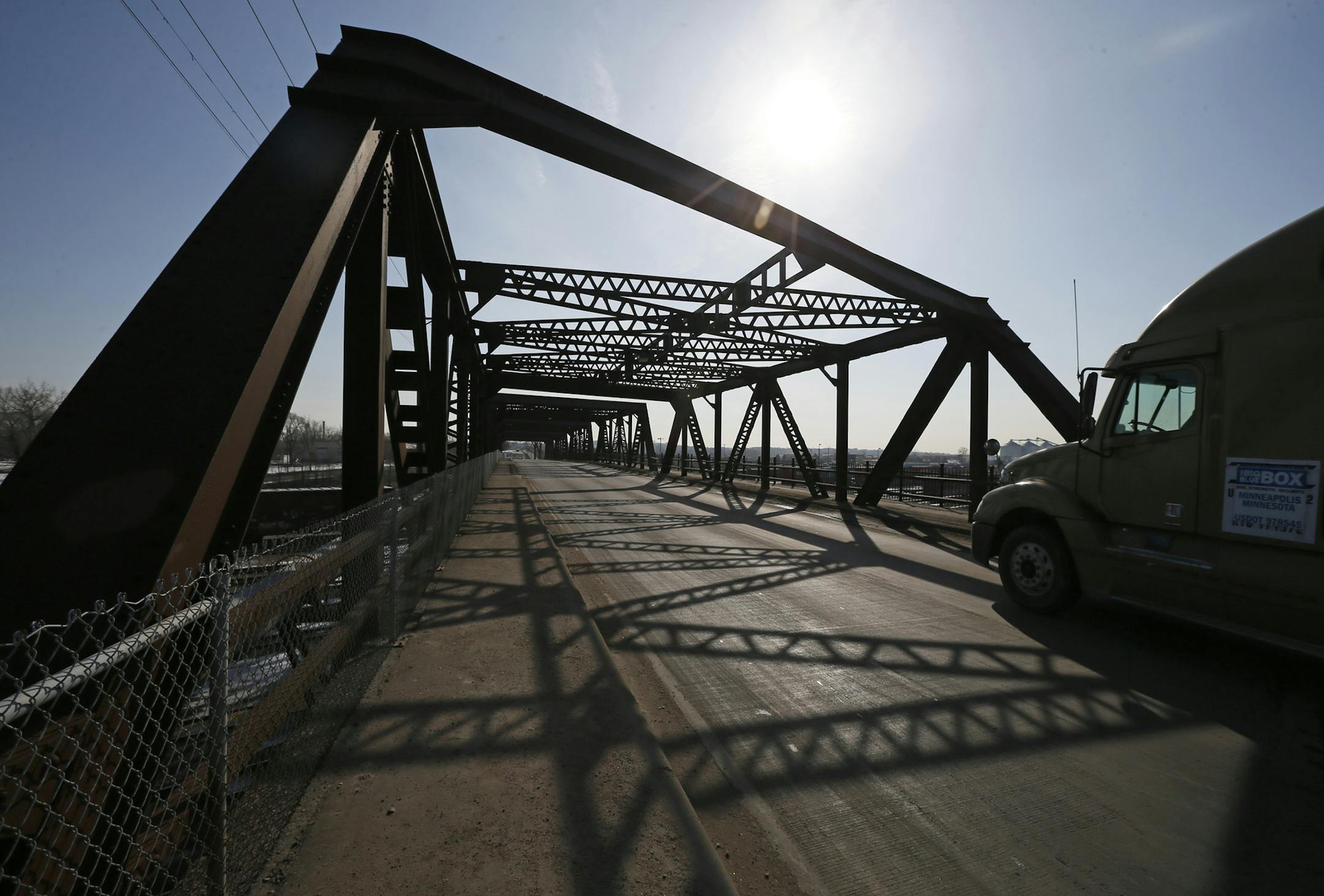
It took decades of debate to decide that it's more cost-effective to replace than fix a risky Minneapolis bridge, but before the new span is built there's still more discussion ahead on what it should look like.
The Northtown Bridge in northeast Minneapolis is the city's worst. Metro Transit buses can't use it, and there are weight limits for trucks.
The bridge is deemed structurally deficient and fracture critical, meaning a whole span could fall if a single key support failed. It's in such rough shape that it rates 2 out of 100 on a structural fitness scale used by bridge inspectors, the lowest in Hennepin County.
"It's in bad shape, and it's been a point of concern for a long time," city bridge safety inspector John Beetsch said.
The bridge carries St. Anthony Parkway over the Burlington Northern Santa Fe rail yard. Construction isn't likely to start until at least late next year on the badly corroded truss bridge that carries about 4,200 vehicles on an average day. That's despite years of load limits to protect the five-span bridge until a replacement comes;
A lengthy debate
Efforts to improve the crossing date back to the late 1980s, according to the city's Public Works Department.
But while $28 million was being stockpiled, it took years to decide whether it was more cost-effective to repair or replace the 88-year-old bridge, which spans 533 feet over about 20 tracks. That happened as cost-benefit criteria shifted and preservation authorities were opposing a replacement.
"The more analysis we did, the more expensive we found the bridgework to be," said Jack Yuzna, a city bridge engineer. Rehabbing the bridge would have been complicated because it crosses working rail lines, making the work more difficult than if the bridge spanned a river or a ravine, Yuzna said. Eventually the city concluded it would need to move the five bridge trusses off-site in order to work on them, given the roughly 100 trains per day that pass below in what is BNSF's main rail yard in the state.


