
Back to school, the extended version

Budget-conscious consumers waited longer to spend this year, leading some analysts to push the panic button prematurely.

September 27, 2014 at 9:36PM
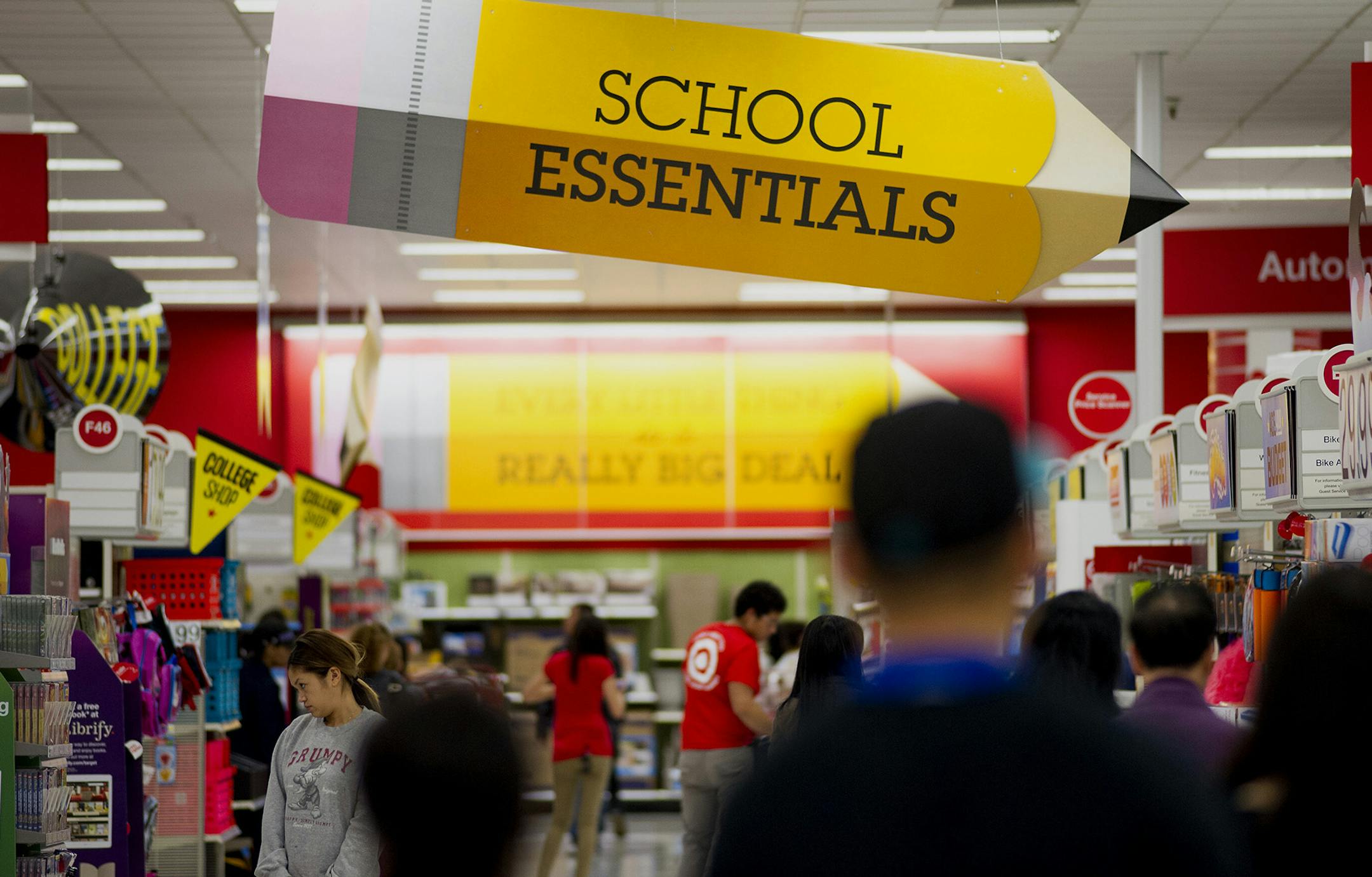
Customers shop for back to school supplies at a Target Corp. store in Colma, California, U.S., on Saturday, Aug. 9, 2014. Retailers are pushing for a longer shopping season and earlier than ever deals on order to get customers to buy more over a longer period of time, says DealNews spokesman Mark LoCastro, which tracks price and discount trends across the web, according to USA Today. Photographer: David Paul Morris/Bloomberg ORG XMIT: 506646325
Though spending was up 3 percent during the back-to-school shopping season, some analysts have deemed the season a spending failure. (The Minnesota Star Tribune)

Nearly a month after students started stuffing their lockers again, many retail analysts are calling this year's back-to-school shopping season underwhelming.

Britt Beemer, founder of America's Research Group in South Carolina, went so far as to call it a "retail disaster."

How bad was it? Spending was actually up more than 3 percent through early September, according to Connecticut research firm Customer Growth Partners.

Some analysts were hoping that broader macroeconomic gains, such as in employment and asset prices, signaled that shopping would return to the glory days of spending growth in the 5 to 7 percent range.

But that may be unrealistic in today's more modest growth economy.

"A decade ago, they would have said 3 percent is pretty good," said Marshal Cohen, chief industry analyst at the NPD Group. "Now it's just considered so-so, but the days of higher growth may be behind us."

Cohen said that too many analysts are rushing to judgment. Shopping habits have changed, and many consumers haven't purchased all of their budget items by the end of August. Even though school has been in session for weeks, the season now extends through September. "Consumers are waiting longer to buy because they believe, rightly or wrongly, that the longer they wait, the more the price comes down," he said.

Some retail sectors saw growth in August, including clothing and accessories with a 0.3 percent increase. Old Navy's sales were up 2 percent in August. Buckle and Zumiez were up 0.8 percent and 2 percent, respectively.
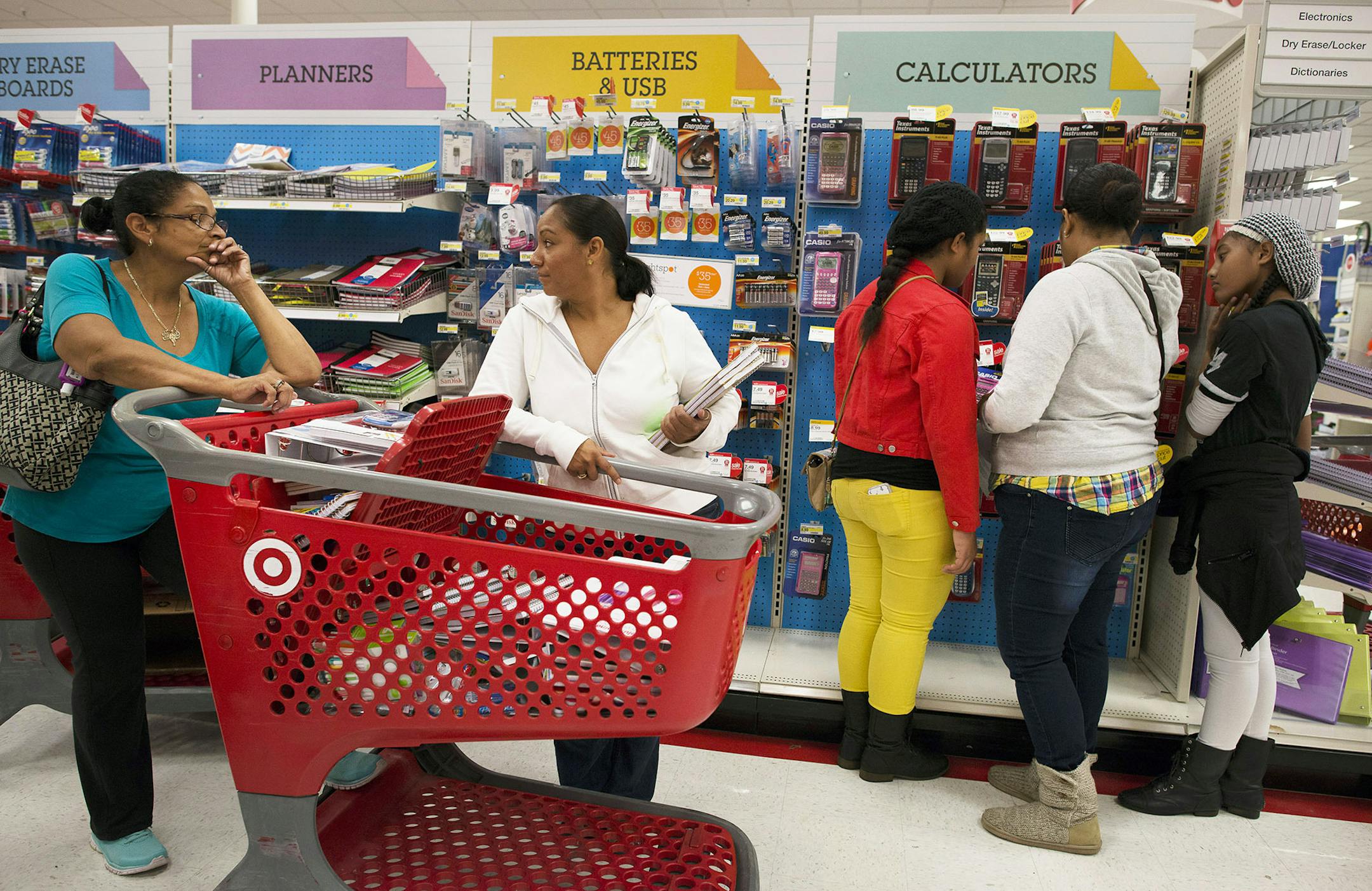
Target said it is pleased with the results of the back-to-school season. "We saw guests shop later in the season and move more purchases from July to August," spokeswoman Jenna Reck said.

Still, many retail watchers expected that sales-tax holidays and low gas prices would ignite spending more than they did. Department stores experienced small sales declines, and even discounters like Wal-Mart, Shopko and Kmart were down slightly last month.

"August is usually stronger," said Burt Flickinger III, managing director of Strategic Resource Group in New York. "We think this could be cause for concern for the holidays."

The other view: It's just another example of consumers playing the waiting game.

Beemer thinks that shoppers who didn't find the deals on apparel, accessories or electronics by the middle of this month are going to wait until the holiday season, when they expect to find better bargains. "Parents won't wait to buy school supplies, but if they don't see significant discounts on clothes, they'll wait and buy them during the holidays, wrap them, and have more presents under the tree," he said.

Last year, many predicted a gloomy holiday season after sales were down 2.9 percent during the Thanksgiving and Black Friday weekend. Traffic was up 2 million people to 141 million, the National Retail Federation reported, but the average consumer spent less during that four-day period.

What a lot of people forget is that by the time the dust settled on Holiday 2013, sales for the entire season were up 3.2 percent.

"Three percent is a respectable number, but it doesn't make a lot of noise anymore," Cohen said.

John Ewoldt • 612-673-7633

Customers shop for back to school supplies at a Target Corp. store in Colma, California, U.S., on Saturday, Aug. 9, 2014. Retailers are pushing for a longer shopping season and earlier than ever deals on order to get customers to buy more over a longer period of time, says DealNews spokesman Mark LoCastro, which tracks price and discount trends across the web, according to USA Today. Photographer: David Paul Morris/Bloomberg ORG XMIT: 506646325
Spending habits have changed since the Great Recession, and back-to-school shoppers are waiting longer than usual to spend their budgets, hoping for deals. (The Minnesota Star Tribune)
about the writer

about the writer

John Ewoldt

Reporter

John Ewoldt is a business reporter for the Star Tribune. He writes about small and large retailers including supermarkets, restaurants, consumer issues and trends, and personal finance.  

See Moreicon

More from Business

See More
card image
Spencer Platt

The U.S. stock market roared back on Friday, as technology stocks recovered much of their losses from earlier in the week and bitcoin halted its plunge, at least for now.

Attendees of Frostbike made their way through the convention Saturday at the Quality Bike Products campus in Minneapolis. ] (AARON LAVINSKY/STAR TRIBUNE) aaron.lavinsky@startribune.com Frostbike 2016 was held at the Quality Bike Products Campus on Saturday, Feb. 27, 2016 in Bloomington, Minn.
card image
