When the auto industry ran off the road in 2008, sales plunged 35 percent over two years and General Motors and Chrysler ended up in bankruptcy, borrowing from the federal government.
But now, with a modest recovery already in the rearview mirror, and GM's government loans repaid -- Chrysler is hoping to pay off its own this year -- 2011 looms as a big opportunity for the automakers.
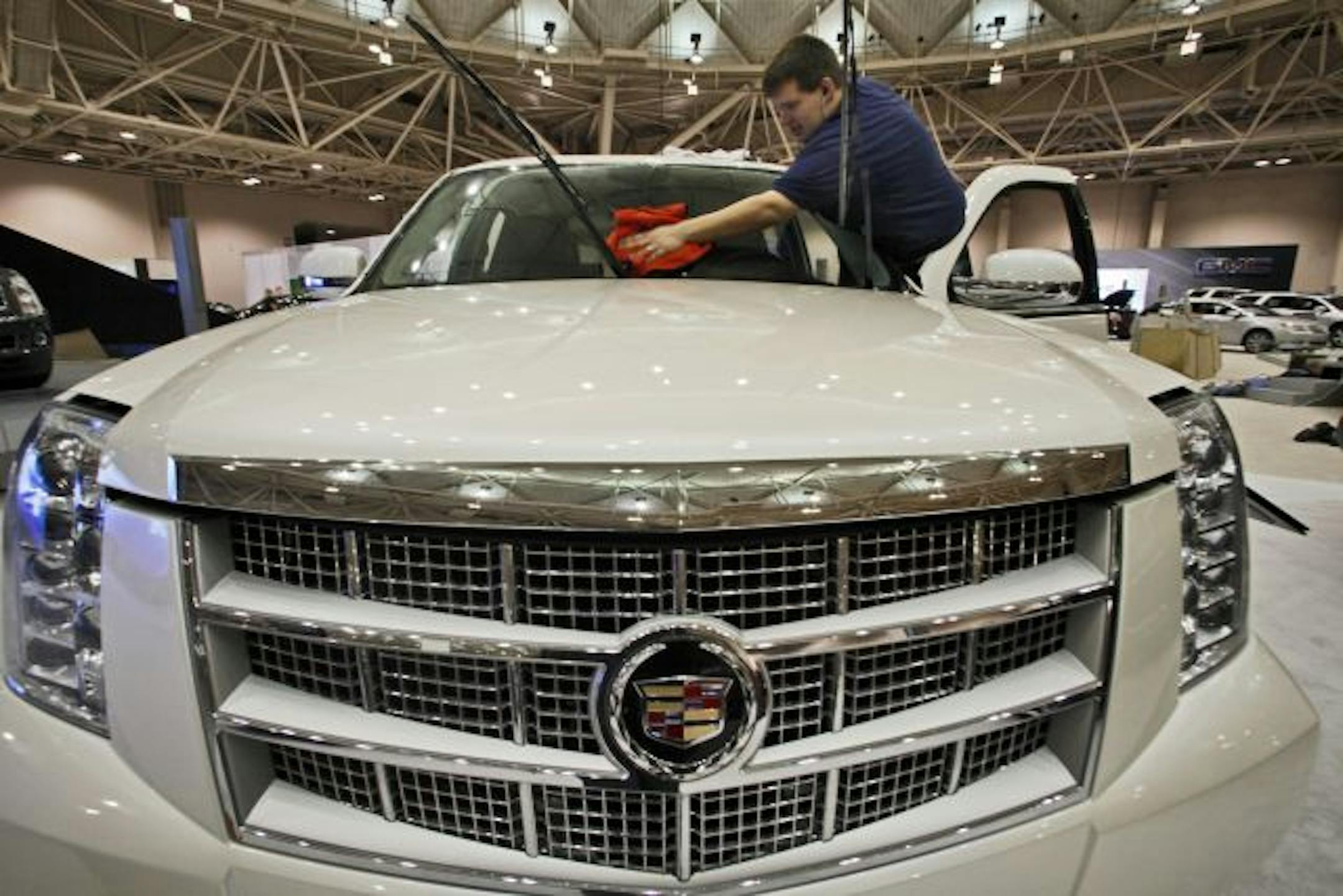
As the annual Twin Cities Auto Show opens Saturday at the Minneapolis Convention Center, auto sales are being buoyed by a combination of pent-up demand and incentives, say executives of GM, Ford and Toyota. Those companies, plus Honda, collectively account for nearly 62 percent of U.S. vehicle sales.
Industry tracker Ward's Auto says U.S. consumer car and truck sales are expected to rise 13 percent this year to 13.1 million vehicles. While that's still about 3 million vehicles shy of 2007 U.S. sales, it's up almost 3 million from 2009.
"It feels like the business is starting to come back," said Michael Sanders, vehicle field sales manager for Toyota's Chicago region, which includes the Twin Cities. "That's a good thing for everybody."
For Detroit automakers, it's about making bigger profits on fewer car sales, said Steve Finlay, editor of Ward's Dealer Business Magazine.
"In years past, Detroit auto companies made cars and figured out afterward what to do with them," Finlay said. "They had to because they had high fixed operational costs. But they often lost money on some vehicles. But now, as a result of almost going out of business, the domestic car companies have reduced car production, and they're making more money per car."
But some things don't change. It's still a horse race between domestic and imported cars in the U.S. consumer market. No. 1-ranked General Motors and No. 4 Honda are separated by less than 9 percentage points of market share, with Chrysler and Nissan not that far behind. No. 2 Ford and No. 3 Toyota traded places on the list last year when Toyota's recall problems cut into its sales, but the two are separated by only about 1 percentage point of market share.