
Australia has the world's most successful economy. Politics could mess it up

Australia and revolving prime minister's office raises questions.

October 29, 2018 at 9:57PM
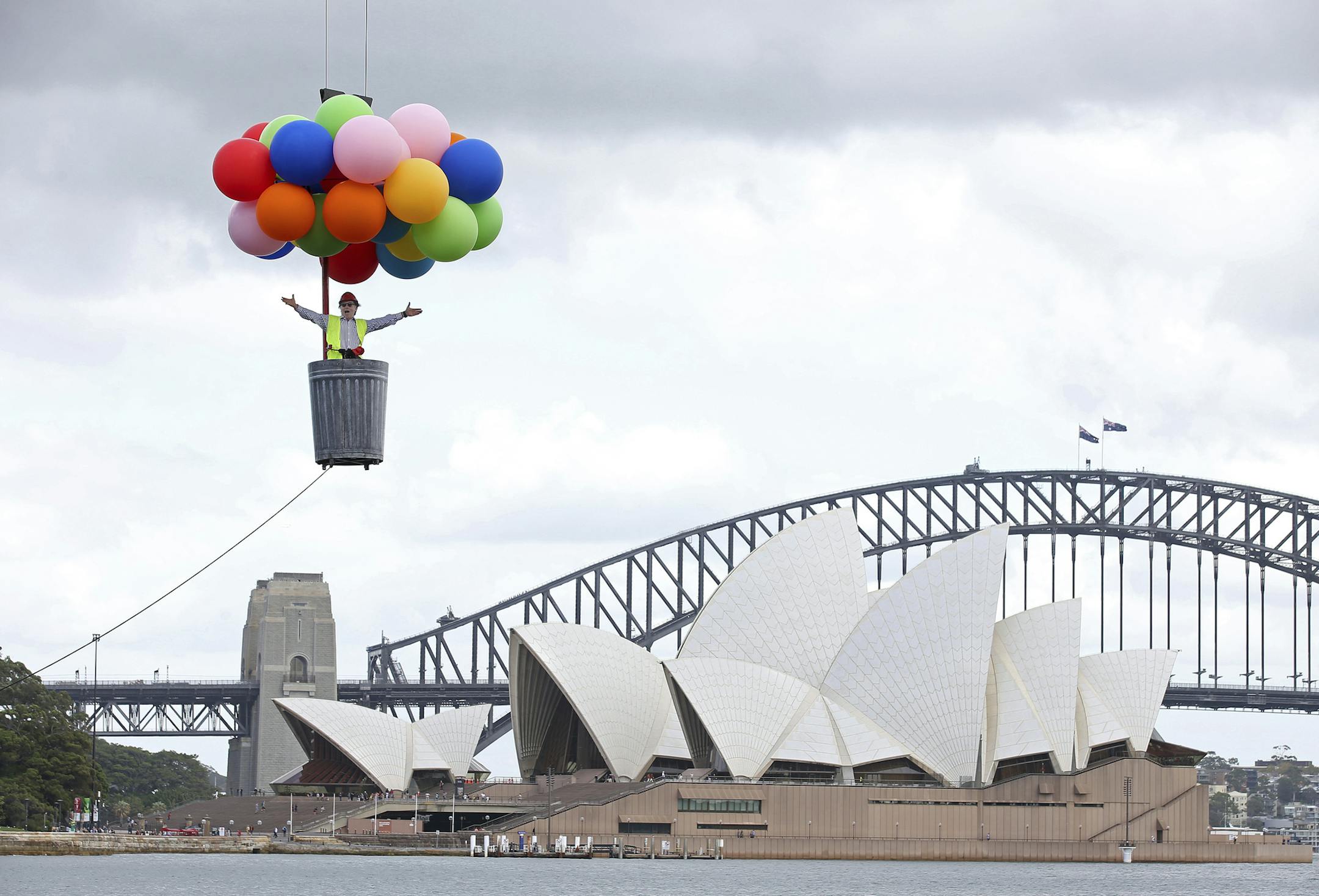
Opera Australia artistic director Lyndon Terracini rides in a garbage can under a balloon canopy over Sydney Harbour as he stands in for the character Parpignol during a test run of the prop for Puccini's La Boheme opera in Sydney, Tuesday, March 6, 2018. The production of La Boheme is set in a wintery 1960s Parisian landscape and opens on March 23. (AP Photo/Rick Rycroft) ORG XMIT: XRR101
Australia stands apart from its peers; no other rich country has ever managed to grow so steadily for so long. (The Minnesota Star Tribune)

The last time Australia suffered a recession, the Soviet Union still existed and the internet did not. A U.S.-led force had just liberated Kuwait, and almost half the world's current population had not yet been born.

Unlike most of the Asia-Pacific region, Australia was left unscathed by the Asian crash of 1997. Unlike most of the developed world, it shrugged off the global financial crisis of 2008, and unlike most commodity-exporting countries, it weathered the resources bust, too.

No other rich country has ever managed to grow so steadily for so long. By that measure, at least, Australia boasts the world's most successful economy.

Admittedly, as Guy Debelle of the Reserve Bank of Australia points out, this title rests on the statistical definition of a recession as two consecutive quarters of decline. Had the 0.5 percent shrinkage of the fourth quarter of 2008 been spread across half a year, he notes, there would be no record. Yet by other measures, Australia's economic performance is more remarkable still.

Whereas many other rich countries have seen wages stagnate for decades, Australia's have grown strongly, albeit less steadily in recent years. In other words, a problem that has agitated policymakers — and voters — around the world, and has been blamed for all manner of political upheaval, from European populism to the election of Donald Trump, scarcely exists in Australia.

And that is not the only way in which Australia stands out from its peers. At a time when governments around the world are souring on immigration, Australia has been admitting as many as 190,000 newcomers a year — nearly three times as many, relative to population, as the United States.

More than 28 percent of the population was born in another country, far more than in other rich countries. Half of all living Australians were born abroad or are the child of someone who was.

In part, this tolerance for outsiders may be a reflection of another remarkable feature of Australian society: the solvency of its welfare state. Complaints about foreign spongers are rare. Public debt amounts to just 41 percent of GDP — one of the lowest levels in the rich world. That, in turn, is a function not just of Australia's enviable record in terms of growth, but also of a history of shrewd policymaking.
Nearly 30 years ago, the government of the day overhauled the pension system. Since then workers have been obliged to save for their retirement through private investment funds. The modest public pension covers only those without adequate savings.

Australia's health care system is also a public-private hybrid. The government provides coverage for all, by paying clinics and hospitals a set fee for every procedure they perform. Those who want more than the most basic service must pay a premium. The government encourages people to take out insurance to cover the gap between the reimbursement that it provides practitioners and the rates most of them charge the public. As with pensions, everyone gets looked after, but the government bears only a relatively small proportion of the cost — an arrangement that remains a distant dream in most rich countries.

Not all is perfect, of course. A common concern is that the economy relies too heavily on China, which is the biggest buyer of Australian minerals, the biggest source of tourists and foreign students, even the biggest consumer of Australian wine. People worry that if the Chinese economy falters, it will drag Australia's down with it. Another fear, somewhat at odds with the first, is that China might try to use its economic power to blackmail Australia into weakening its U.S. alliance.

There are glaring domestic problems, too. The appalling circumstances of many Aboriginals are a national embarrassment.

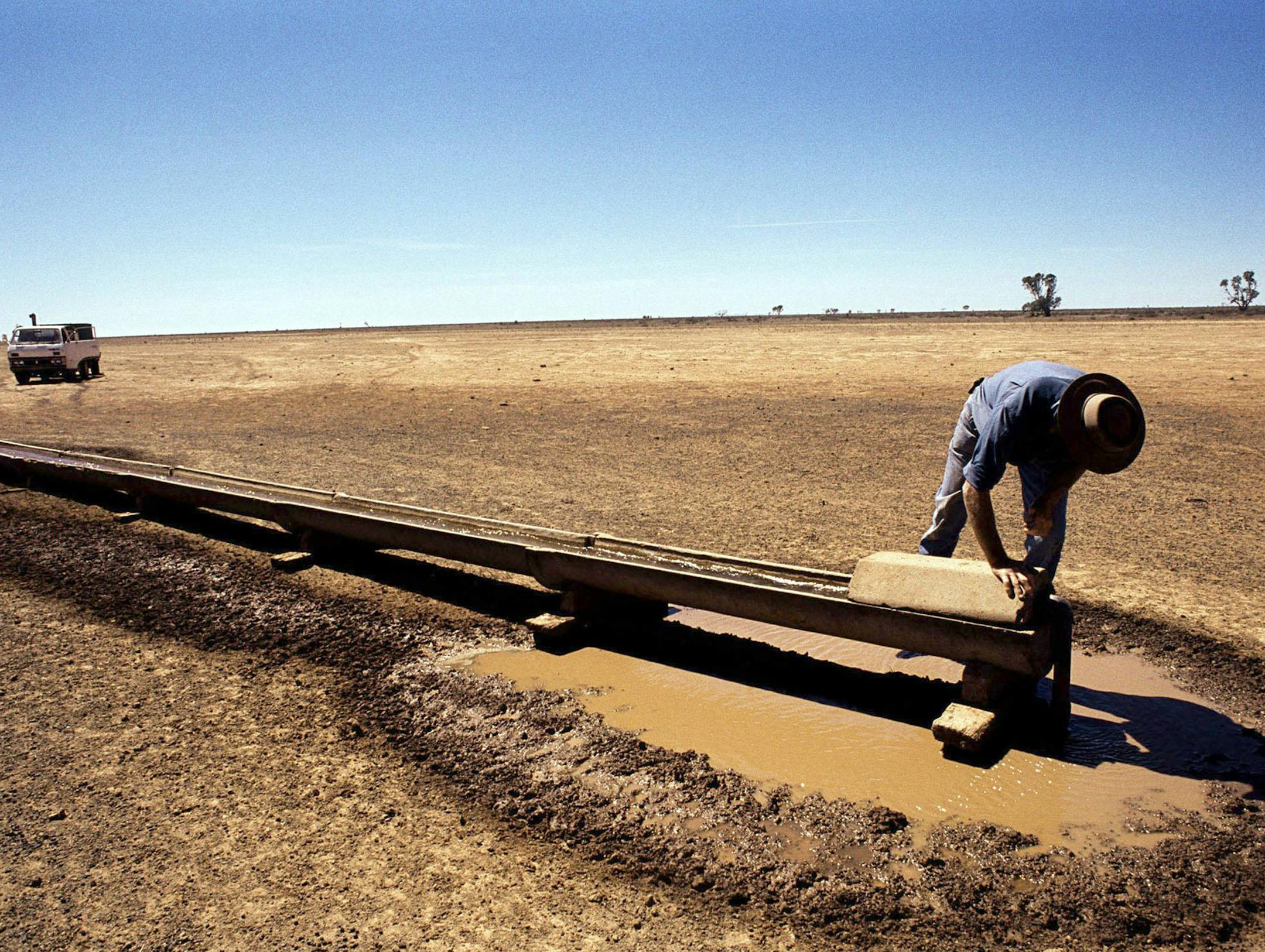
Even more alarmingly, global warming is making an already grueling climate harsher. Rainfall, never reliable, is scarcer and more erratic in many farming regions. Over the past two years unusually hot water has killed a third of the coral on the Great Barrier Reef, one of the country's greatest natural treasures.

In theory both the governing Liberal-National coalition (which is right-of-center) and the main opposition, the left-leaning Labor Party, are committed to cutting emissions of greenhouse gases. But in practice, climate change has been the subject of a never-ending political fight, in which any government that attempts to enact meaningful curbs is so pilloried that it either loses the next election or is toppled by a rebellion among its own MPs.

Some see the failure to settle on a coherent climate policy as a symptom of a deeper political malaise. Australia used to have long-lived governments. Between 1983 and 2007, just three prime ministers held office — Bob Hawke and Paul Keating of Labor, and John Howard of the Liberals.

Yet, since 2007, the job has changed hands six times. A full term is only three years, but the last time a prime minister survived in office for a whole one was 2004-2007. It is not usually voters doing the deed, but fellow MPs who dispatch their leader in hope of a boost in the polls.

For those who consider Australia's unequaled economic performance the result, at least in part, of farsighted decisions made 30 years ago, the current choppy politics seem like a harbinger of decline.

(NYT23) UNDATED -- Feb. 2, 2007 -- CLIMATE-CHANGE-2 -- A farmer on his drought-stricken property near the outback town of Deniliquin, Australia, in a Jan. 15, 2007 Greenpeace photo. In a bleak and powerful assessment of the future of the planet, the leading international network of climate change scientists has concluded for the first time that global warming is "unequivocal" and that human activity is the main driver, "very likely" causing most of the rise in temperatures since 1950. (Greenpeac
Global warming is making a grueling climate harsher as rainfall becomes more erratic in many farming regions. (The Minnesota Star Tribune)
about the writer

about the writer

Economist

More from Business

See More
Hennepin Healthcare Clinic and Specialty Center,l 8th Street between Park Av and Chicago Av.
The Minnesota Star Tribune

Minneapolis-based Hennepin Healthcare says it also will suspend contributions to some worker retirement plans while pausing $24 million in capital projects.

The newly renovated Parkway Theater is next door to the new restaurant El Burrito Mercado.
card image