

"I guess this is just another lost cause, Mr. Paine. All you people don't know about lost causes. Mr. Paine does. He said once they were the only causes worth fighting for and he fought for them once. For the only reason any man ever fights for them. Because of just one plain simple rule: Love thy neighbor."
— Jefferson Smith, played by Jimmy Stewart, in "Mr. Smith Goes to Washington," 1939.
• • •
If ever there was a "lost cause" in modern American society, it had to be the fight against the Dakota Access pipeline, a $3.8 billion project to ship fracked oil from North Dakota across the U.S. heartland to lucrative markets.
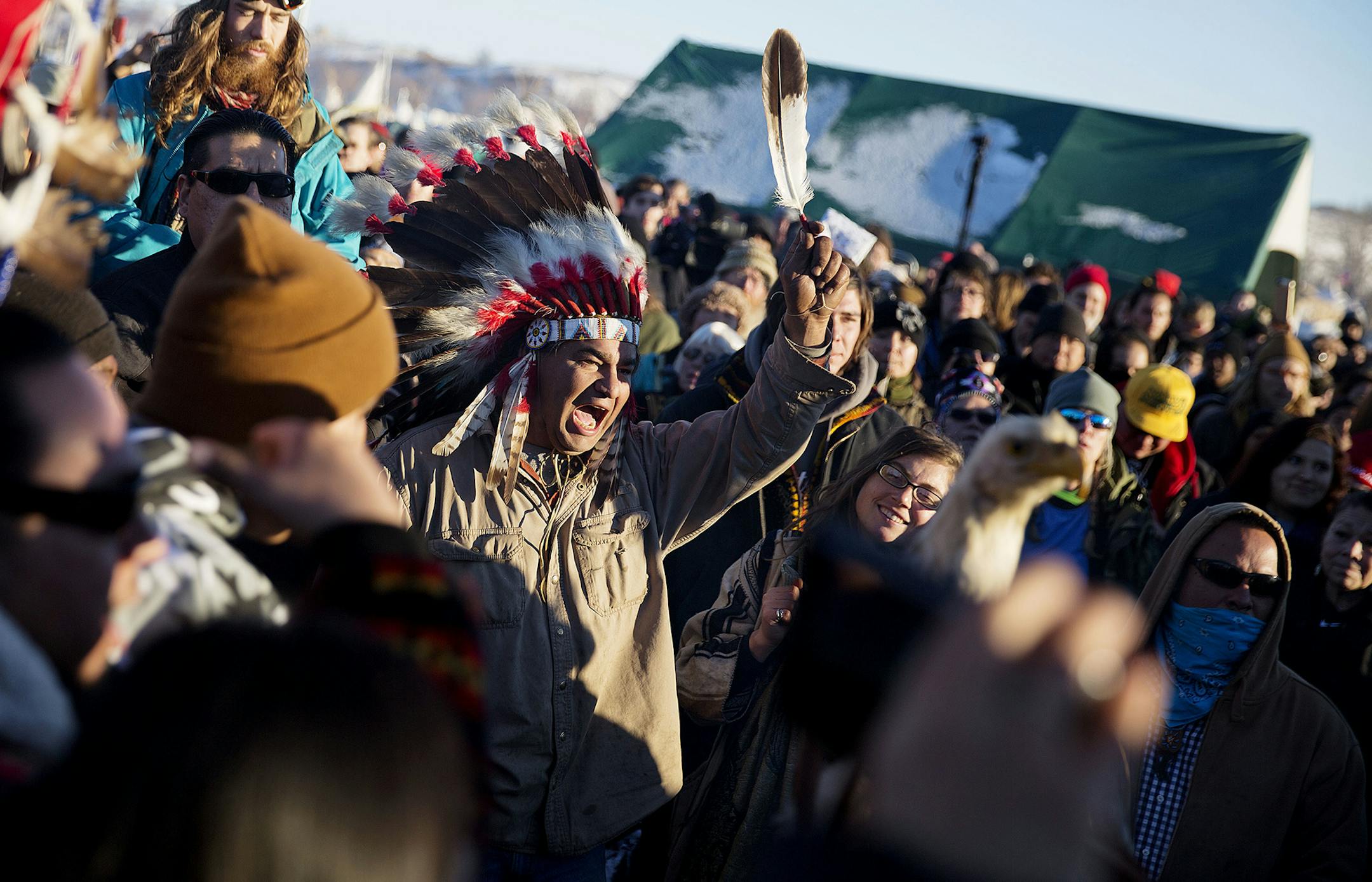
The battle pitted some of the world's richest oil companies and their powerful political allies against what started as a small band of the Standing Rock Sioux tribe in North Dakota, soon to be joined by other indigenous tribes, environmental activists from all over the country, even military veterans.
The Native Americans and their allies had some powerful moral arguments: First Nation peoples had been given little or no input, the pipeline cut through land that tribal citizens believe is sacred, and local residents could not abide the risk of a potential leak as the oil crossed the Missouri River, their sole source of clean drinking water.
In the hardened world of political punditry, the odds of stopping the project looked highly unlikely. The opponents had entered the battle late; much of the pipeline across four states has already been built, and the U.S. Army Corps of Engineers had granted at least tentative approval to finish the rest. Despite this, the Standing Rock Sioux were willing to put their bodies on the line for the things that mattered: respect for indigenous people and their rights, as well as the right to clean water. The foes called themselves "water protectors," a name that resonated with all who learned of their struggle.
The protest followed a classic pattern. First, the politicians and the national news media ignored it. They seemed to view North Dakota as if it were Outer Mongolia, an exotic and inaccessible land. Then, when the protest was dramatized by one intrepid journalist, Amy Goodman of Democracy Now, people switched to ridiculing it, these Native protesters and their naive belief they could defeat Big Oil and the political establishment. Then officials fought it, with vicious security dogs that nipped at and injured demonstrators, by arresting or charging journalists like Goodman or anyone else who tried to document the protests, by attempting to blockade the protest encampment, and firing water cannons at the group in subfreezing temperatures.
And when all seemed lost, when a bitter cold winter was descending on Standing Rock, when authorities seemed ready to clear the camp and the rabidly pro-oil administration of Donald Trump was just weeks away from moving into the White House, they won.
Sunday's stunning announcement from the U.S. Army Corps of Engineers — ordering a halt on work to complete the pipeline and a new plan that would reroute it away from the Standing Rock Sioux and require an extensive environmental review — was a stunning victory for people power. And it came right at the moment when fear for the future of American democracy was at its greatest.


